By She Skates
There seems to be a never-ending fascination with comparing girls and boys in skateboarding. Who’s more impressive? Who’s more committed, more hardcore, more talented? Who’s most deserving of praise?
But there’s a problem with comparing the groups: it assumes we’re all working towards the same thing and that we’re measuring success in the same way.
We’re not sure we are.
At least, that’s not how we experience it.
She Skates is a Dorset-based skate community that burst out of a ladies-only night put on by Happy Skateboarder School. Since then, it’s grown into a formidable crew, with a busy Instagram account (@sheskatesco) logging the sessions, the spills and everything in between. The objective is simple: women on skateboards, having a damn good time. We meet every Monday night at Prevail Junior – an indoor skatepark in Bournemouth – for a skate session and lesson. And it’s packed.
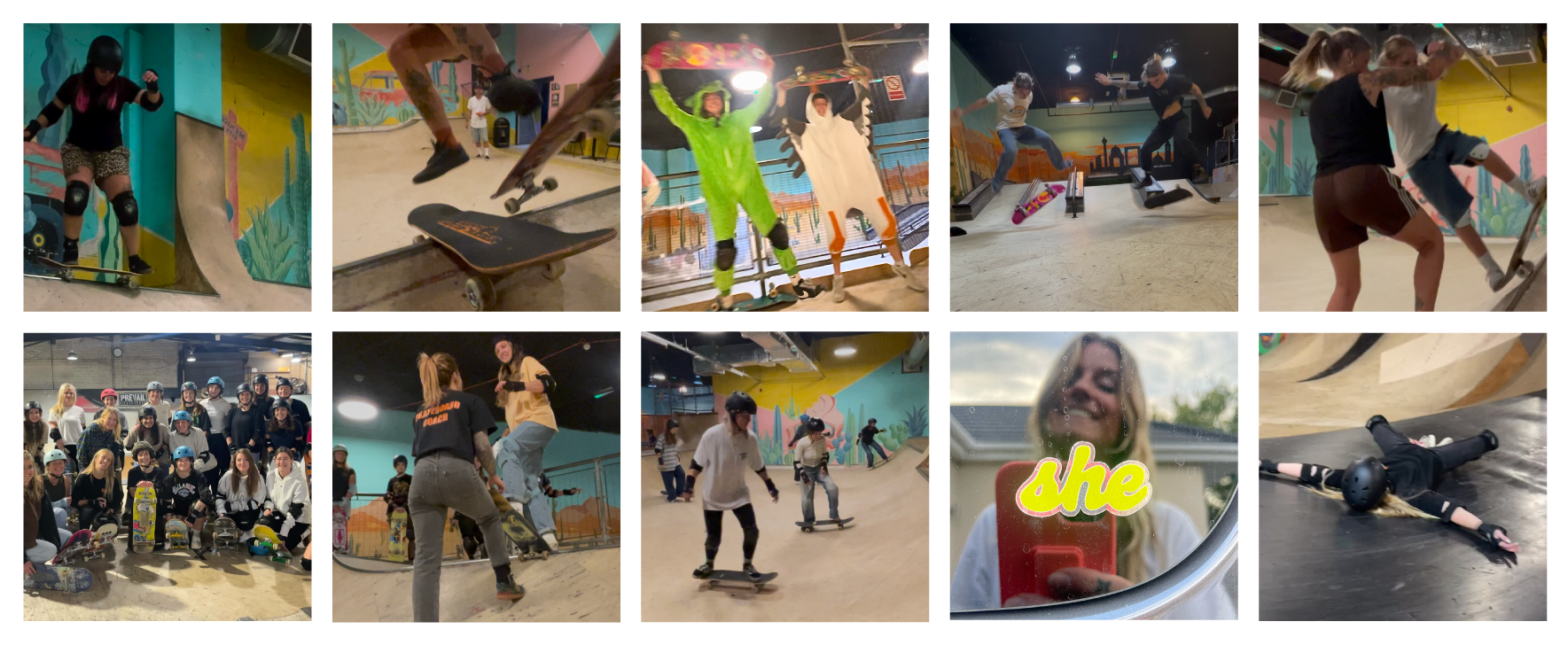
“The feeling of stoke and community makes this session so special that I travel over 90 mins each way to go each week” – Kirsty, 52
We’ve had nurses, CEOs, business owners, teachers, silversmiths, creatives and even an oyster farmer. There is currently a 35-year age gap between the youngest and oldest skater. And none of it matters because skateboarding is an equaliser. Whatever your job, your age, your income or your life outside the park, you all turn up and humbly push a wooden plank about.
And yes, people learn to skate here. They get better, they nail tricks, they land things they couldn’t land a few weeks ago. But that’s not necessarily the best bit. It’s got to be the experience of doing it together. Sharing the thrills and the spills – the adrenaline, the fear and the excitement. And the icing on the cake is knowing you are surrounded by people who are rooting for you, who scream for you whether you make it or don’t, who laugh with you and who knock their boards for you.
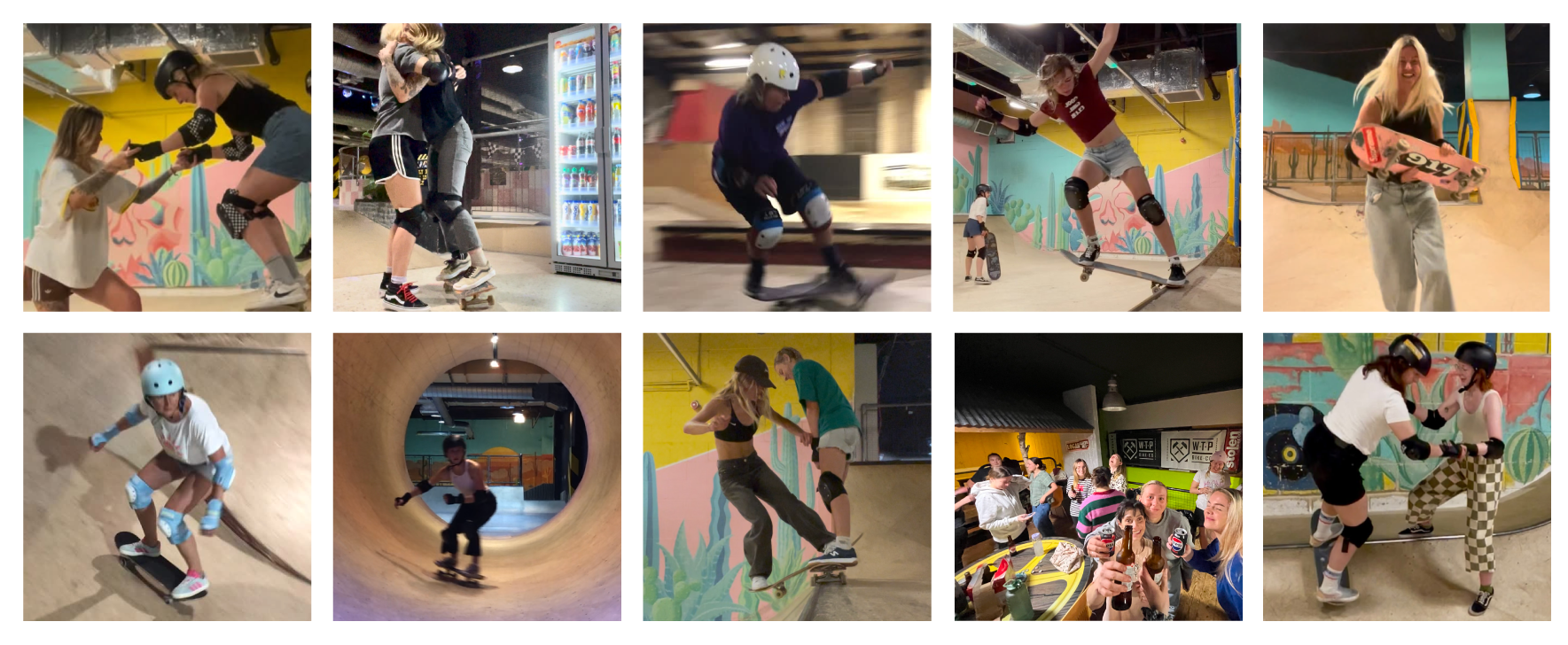
“I laugh till my face hurts every week” – Molly, 28
There’s something about being around people who just get it. A skatepark can be an intimidating place. You’re learning something difficult in public, on a board that is actively out to get you. It’s very easy to become self-conscious and to worry about looking stupid, so much so that you bottle it before you even try.
“The vibe of the community is infectious. We win some, lose some but most importantly have a fuckin’ laugh” – Laura, 38
But when you feel that the people around you have your back, something changes. The fear doesn’t necessarily disappear. You just become less afraid of being seen being scared. You laugh (and maybe cry a bit) and get back up. You practise becoming brave and god, does skateboarding favour the brave. Slowly, you get more comfortable being uncomfortable and perhaps most importantly, you start to feel safe. Not safe in the sense that skateboarding suddenly stops being a dangerous pain in the arse. It doesn’t. Learning to skate is hard. You’re definitely going to fall and it will probably hurt. But you fall with other people who will pick you up (metaphorically but sometimes literally too).
“I was terrified the first time I went but was instantly put at ease” – Jules, 42
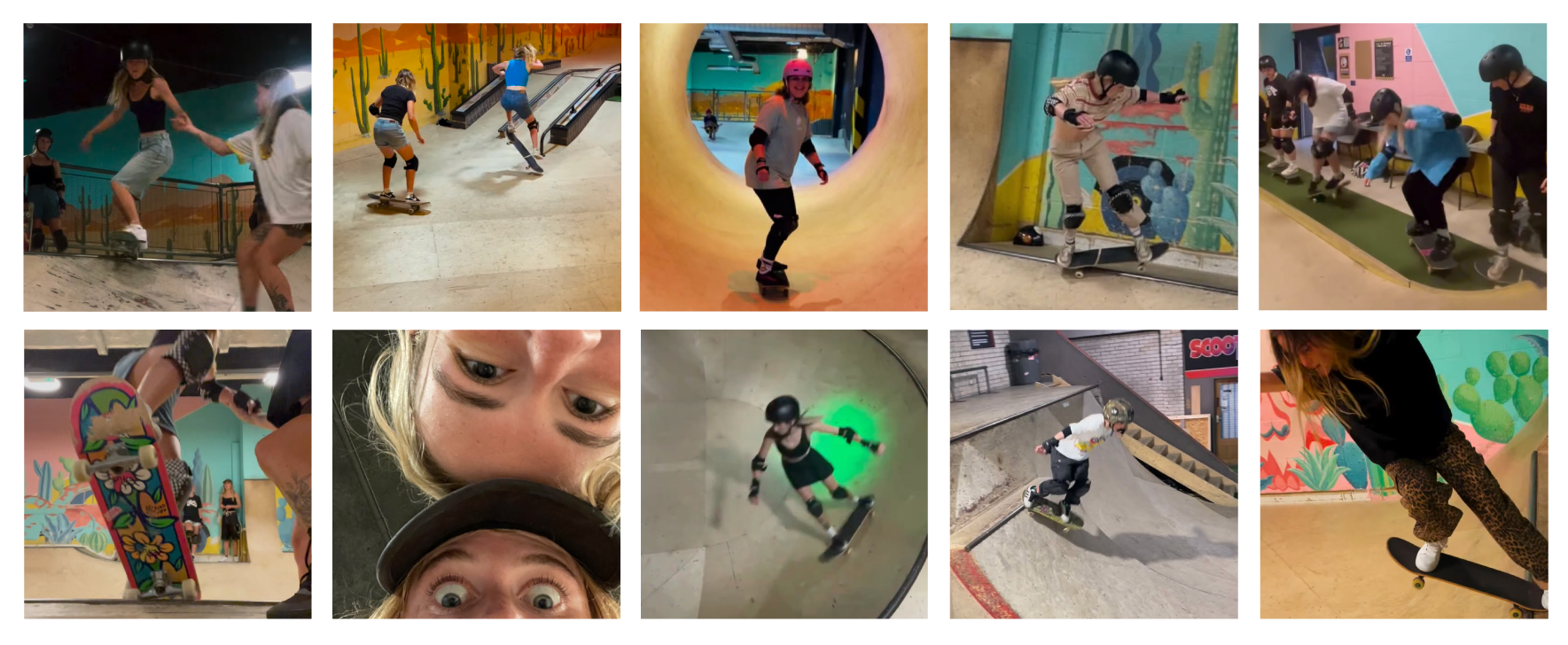
In our experience, women-only skate sessions are what make skateboarding accessible to so many women. Accessibility isn’t just about having the opportunity to take part, but about feeling comfortable and confident enough to do so. For many women, past experiences can make entering a women-only space feel safer and less intimidating. These sessions help remove some of those barriers, offering an alternative introduction to skateboarding where women can find their feet and build confidence at their own pace.
And representation matters too. It doesn’t always have to be grand or political. Sometimes it’s simply seeing someone like you take up space and give it a go, and thinking, maybe I can do this too.
“I have found my people here… even if they’re double my age” – Emilie, 18
Of course, progression feels amazing. There’s nothing quite like finally landing the thing you’ve been working on, then wanting to learn the next thing and the next. But progression doesn’t have to be the be-all and end-all. Sometimes what you get from skateboarding has less to do with what you can actually do on a board. You get an hour away from the pressures of your life. You get hyped and supported when you need it. You discover you’re capable of doing things that scare you. You become part of a community. You form bonds. You might even find your people.
Maybe that’s why the constant comparison between girls and boys feels so limiting. If we only value who can do the biggest trick, progress the fastest, take the most risks or look the most impressive, we’re measuring skateboarding against a very narrow definition of success. Because skateboarding wears a lot of hats. It can be exercise, therapy, a social life, a way to switch off, a way to challenge yourself or simply to have fun.
When there’s less pressure to chase a standard of success that has historically been narrow, competitive and comparison-driven, there’s more room to value all the other things skateboarding gives us. For 99% of skaters, there are no prizes and absolutely nothing to prove. You don’t have to be the fastest, the most fearless or even particularly good.
You can just skate.
“Skateboarding is my life” – Emilie