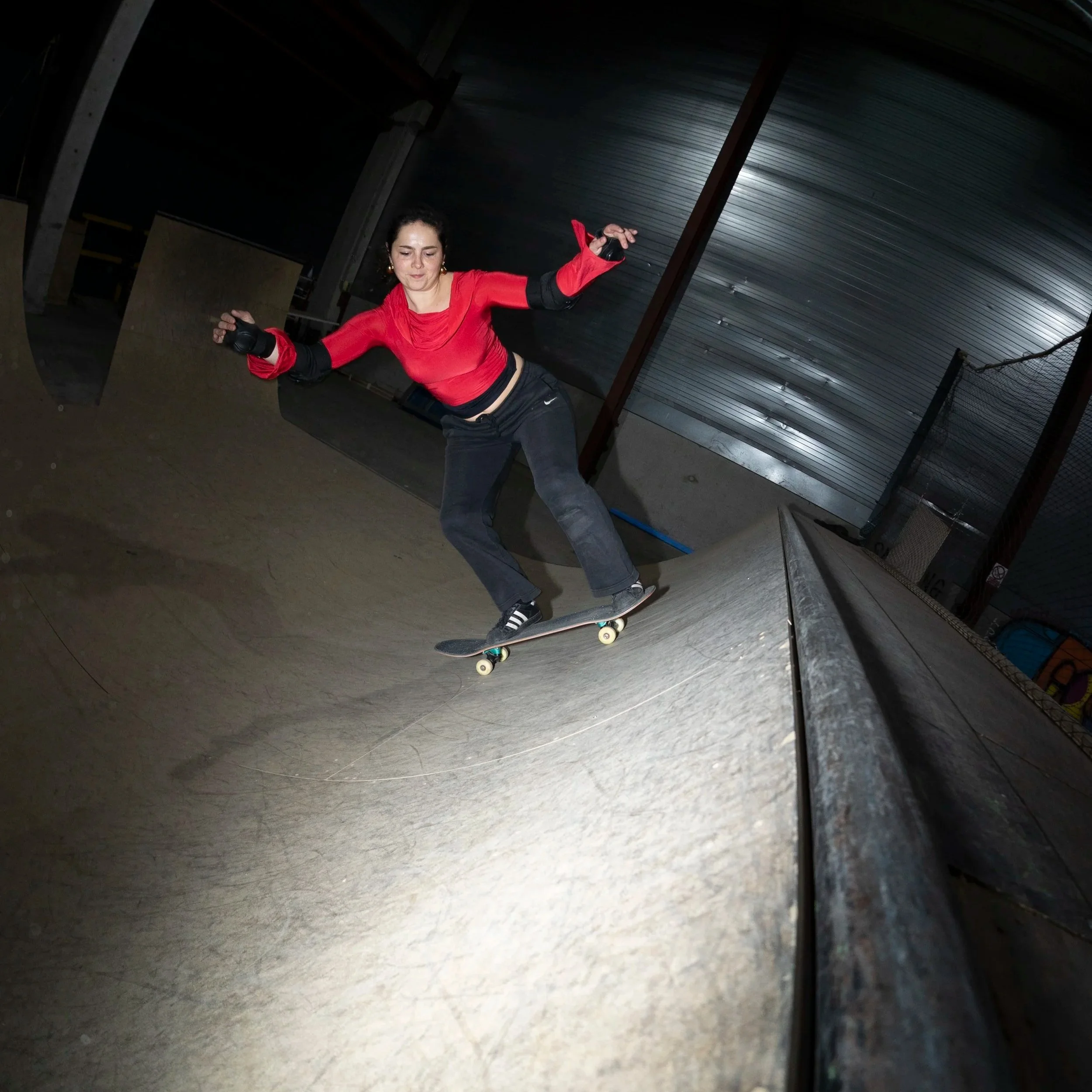
Creating space to belong
Written by Leentje Vermeire
Photography by Amandine Laurent
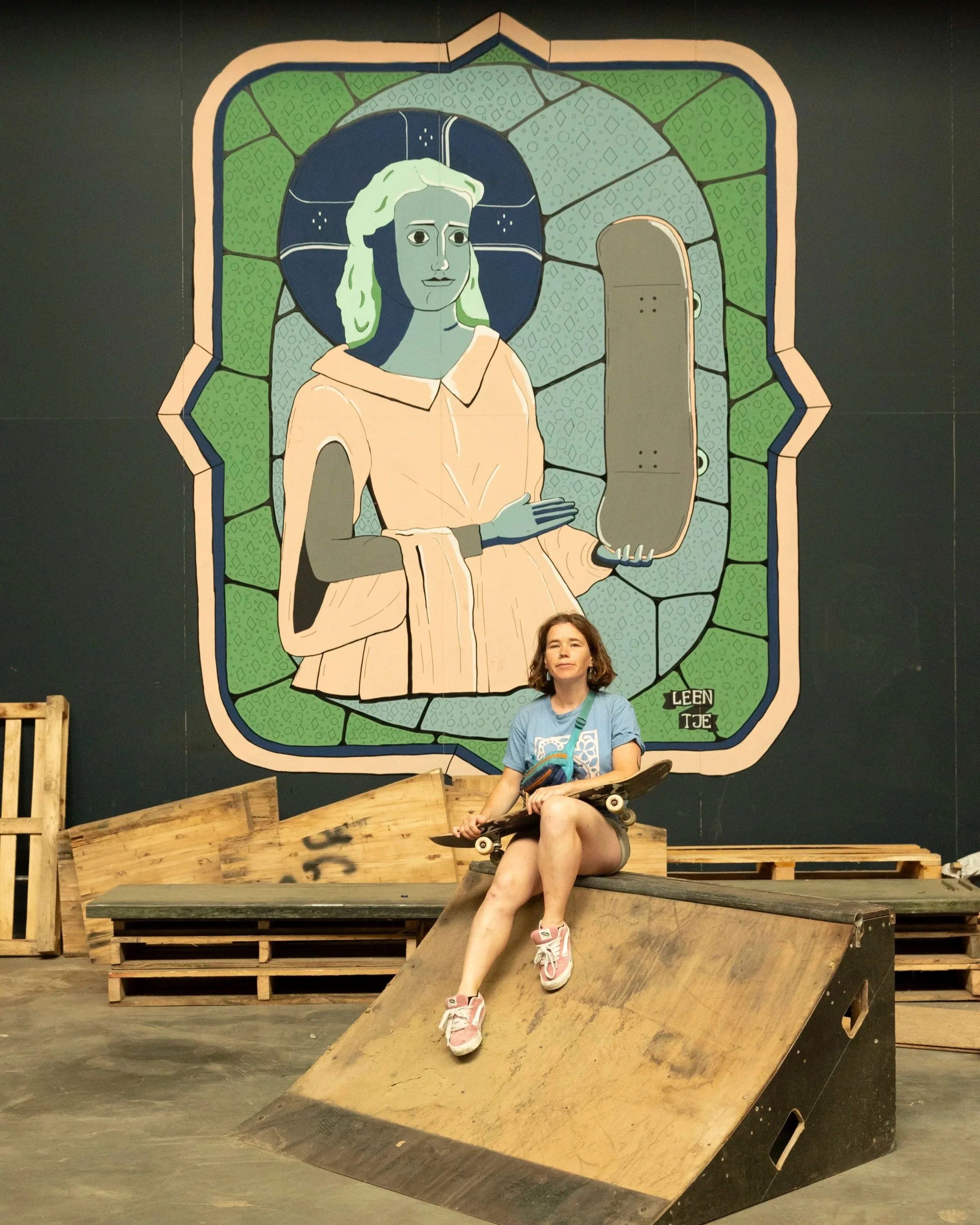
Ever since I can remember, I dreamed of being able to skate. As a little girl, I asked Santa Claus for a skateboard, but when I went to my local skatepark in a small Belgian town, the skaters were far from welcoming. They made it clear that skateboarding was not for girls. With no other suitable place nearby to practice, I put my dream away.
As an adult, I kept dreaming, but I assumed it was too late to start. After all, isn't that something you learn as a child? And what would I, as a grown woman, be doing embarrassing myself in a skatepark full of skilled skaters?
One day I realised that if I could live my life over again, I would not change a thing, except learning to skate as a child. I decided after all to try the second-best option, learning now. At the age of 34, I finally cared much less about the looks and judgments of others. Even so, for my first attempts I went out early in the morning to practice on an empty street, hoping to avoid other people's gaze.
After a month, I decided to try a skatepark at a time when it would be empty, so no one would question whether I belonged there. With no understanding of any tricks, I tried things out and attempted something I now know as a fakie kickturn. A young man passing by kindly asked if he could give me a tip - the problem (as it always is) was in the shoulders. To my great delight, I could finally turn 180 degrees. I never saw him again, but I hope to thank him someday, because that moment set everything in motion. Realising how valuable feedback could be, I searched for skate lessons for adults and found one in another city. It was a considerable journey, but for an enthusiastic skater it was a small one. I started the first lesson with my knees literally shaking, but my progress through the class was undeniable. I signed up for one course after another, in total at nine different locations. With this came a heartwarming bonus: the creation of a network of other adult beginner skaters, with whom I could meet up to practice. I no longer felt alone.
The first time I went skating "publicly" was for the opening of a new skatepark in Brussels. It was, of course, very crowded, and I felt so nervous and out of place that I considered giving up altogether. Fortunately, a friend from a skate lesson kindly offered to ride a line for me so I could follow behind. After a while, I forgot all my fears and doubts and became completely immersed in skating. I happily kept skating the exact same loop until late in the evening. A skater laughed at me for it, and although this hurt, it didn't damage my confidence. As a beginner, I had just as much right to be there.
Some of the lessons I attended were for women only, and I noticed that for some, this was truly important. Sometimes for cultural or religious reasons, but more often because, as a woman, it is harder to claim a place. Some skaters are quick to make you feel like you're in their way, and as girls we were taught to be polite and not inconvenience others. Moreover, when you spend your entire life being told, both directly and indirectly, that certain activities are not meant for you, it becomes difficult to imagine yourself taking up space in the traditionally male-dominated world of skateboarding. I have never seen a beginner female skateboarder in the middle of a skatepark, unless she was with others or the park was empty. On the sidelines, however, I see them all the time.
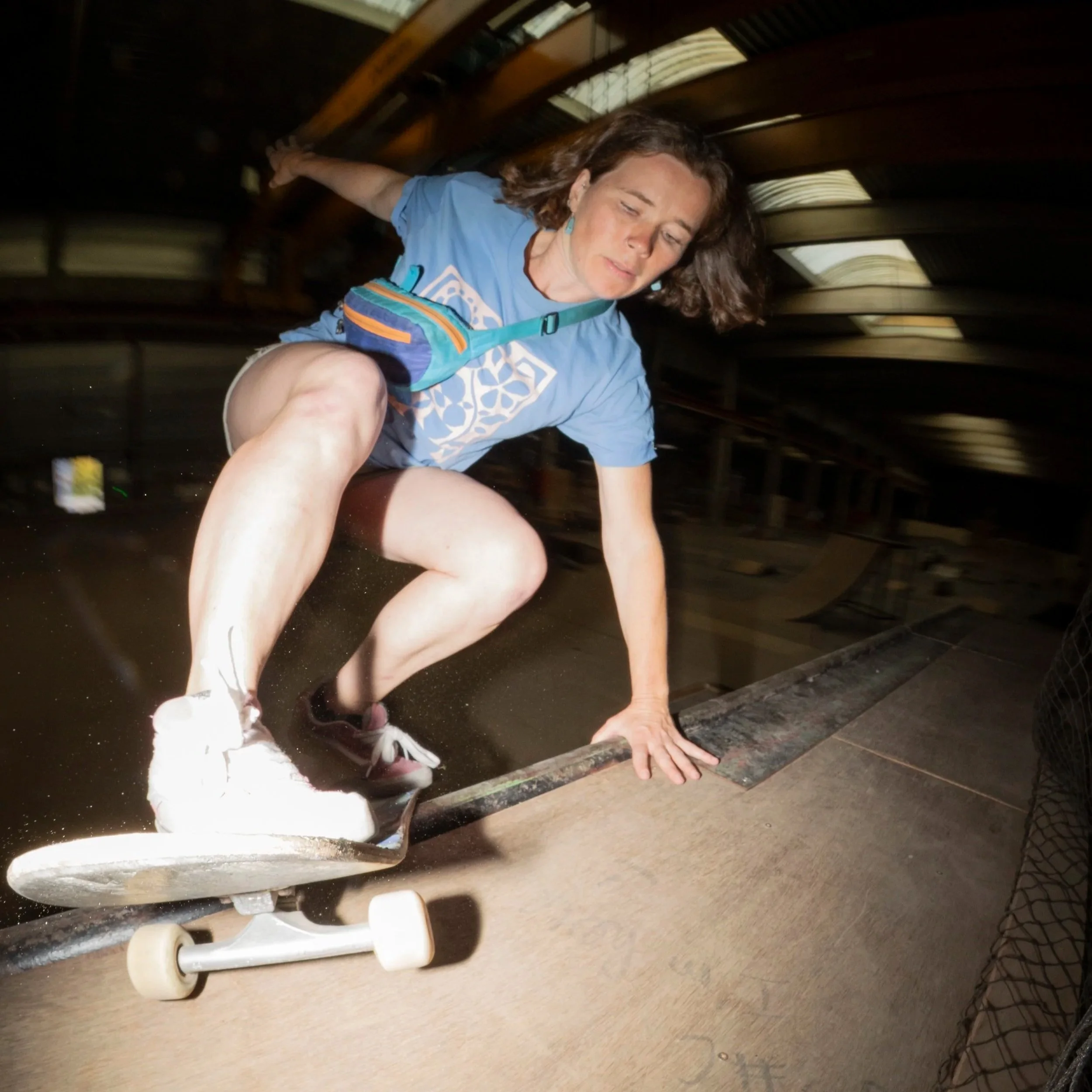
By then, I had become increasingly active in the local skateboarding community. When Skatelab, an indoor skatepark in Brussels, opened its doors, I was given the wonderful opportunity to paint a mural. For my design, I invented the "patron saint of skateboarding," consciously making her a woman, to give greater visibility to non-traditional skaters. Soon after, I proposed organising skate sessions for women and LGBTQI+ people, creating a safe space where they could practice, meet peers, and build their own network. To my delight, the other volunteers fully supported the idea.
Unfortunately, announcing these sessions attracted negative reactions. Several skaters felt it important to send me personal messages saying they could not understand why women would want to learn skating separately, and that it would "divide the community". Separate sessions, however, are never about division. They are about creating a bridge between watching and participating, between doubt and confidence, between feeling unwelcome and feeling at home. Once people feel they belong, it is far easier to join skate sessions with traditional skaters.
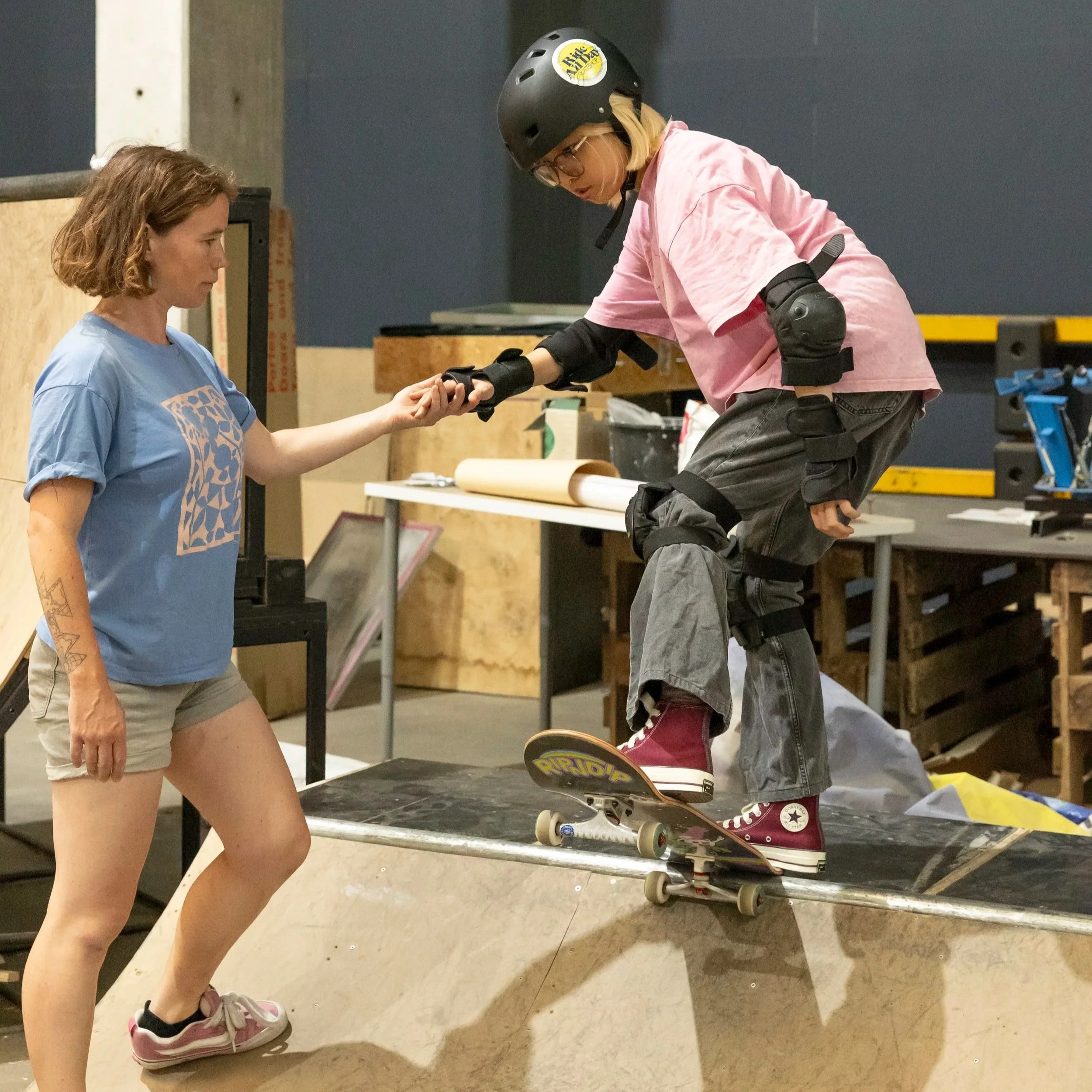
The participants' reactions were completely different: they were overwhelmingly positive and confirmed the need for such a space. Month after month, they return to practice in a safe environment, and they thank me for providing this opportunity. Every session brings newcomers, and I have the privilege of helping them take the first steps in their own skateboarding journey.
Two years later, thanks to several proactive participants, we have been able to expand these safe spaces with another monthly session for LGBTQI+ skaters and a monthly session for beginner skaters, because some beginner adult men also find it more enjoyable to practice in a calm and encouraging environment.
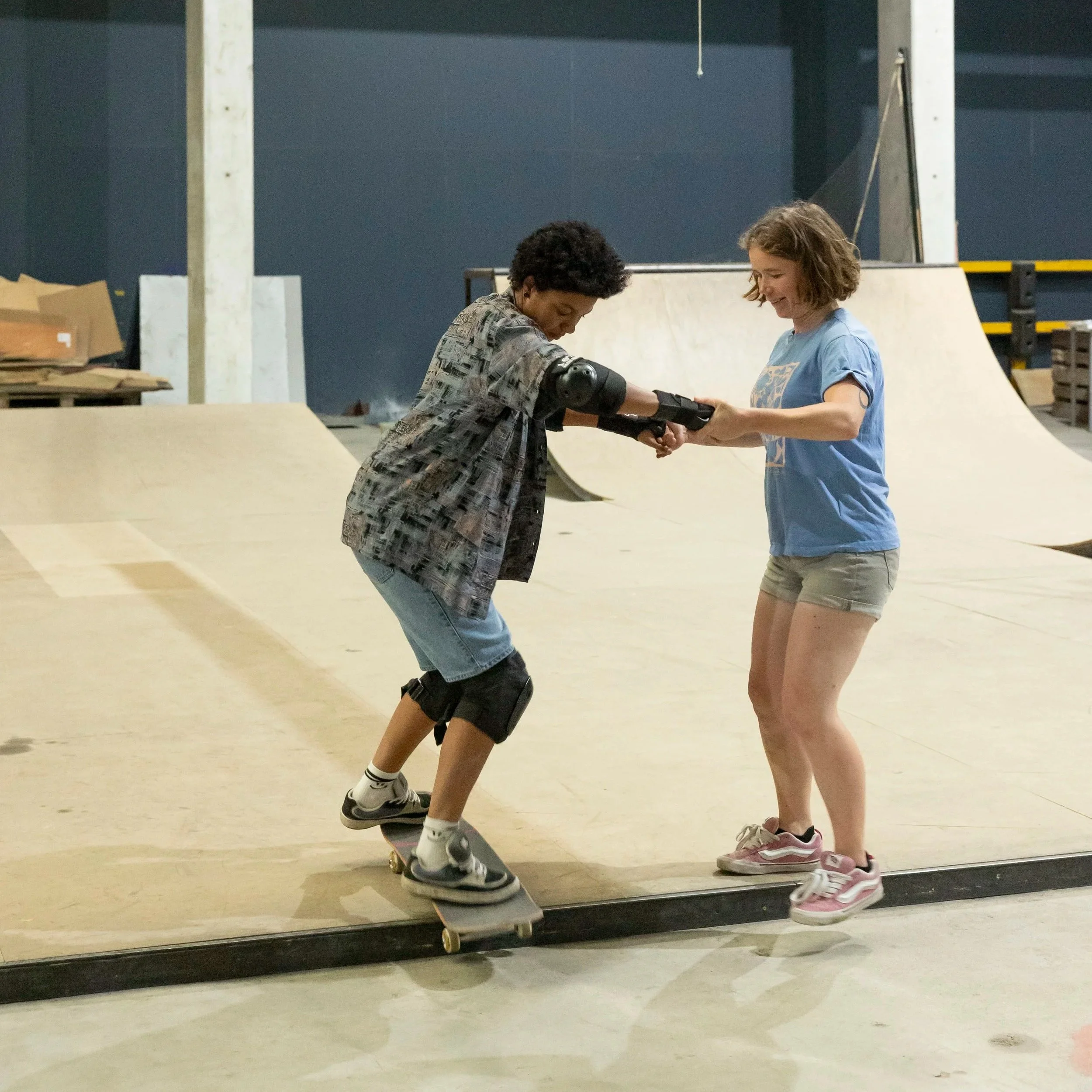
When I look around Skatelab now, during our "regular" sessions for all skaters, I no longer see only the traditional skaters who have always felt comfortable taking up space. I see people who once stood hesitantly at the edge of the skatepark now confidently claiming their place and feeling they belong.
As a child, I thought skateboarding was a world that had no place for me. Today, I help ensure that anyone who wants to be part of it finds an open door.