From EMB to Paris: A Trip to Remember at ÉPICENTRE Paris
Written by Samantha Bache
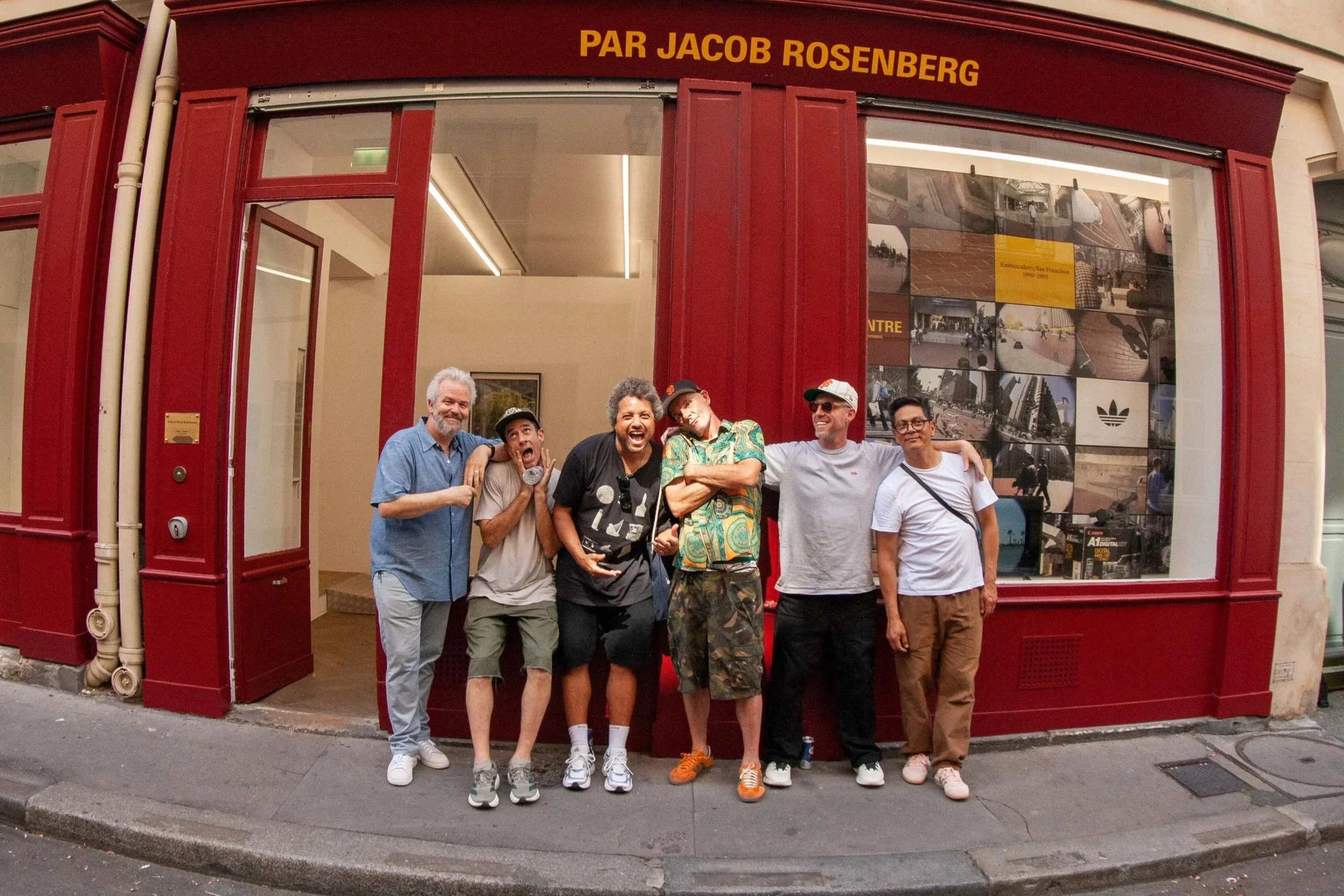
Some stories deserve to travel. And the story of Embarcadero Plaza, the concrete expanse in San Francisco that quietly changed the course of street skateboarding forever, has done exactly that.
Last week I found myself in the heart of the Marais district in Paris for not one but two evenings at ÉPICENTRE Paris, Jacob Rosenberg's stunning photography exhibition presented in partnership with Adidas Skateboarding. I had covered the San Francisco show for Girl Skate Mag earlier this year without being able to attend in person, so when the opportunity came to go to Paris I knew I had to be there.
I almost talked myself out of it about a hundred times. But I went. And it was two of the most incredible evenings of my life.
The first night was the press and VIP preview. Intimate, quiet and full of meaning. The kind of evening where you actually get to stand in front of the work and really absorb it, where conversations go deep and people take their time. This was the night i got to speak to Jacob 1-on-1, the night I spoke with Ted Barrow about the history and significance of EMB, the night I heard stories that I will never forget.
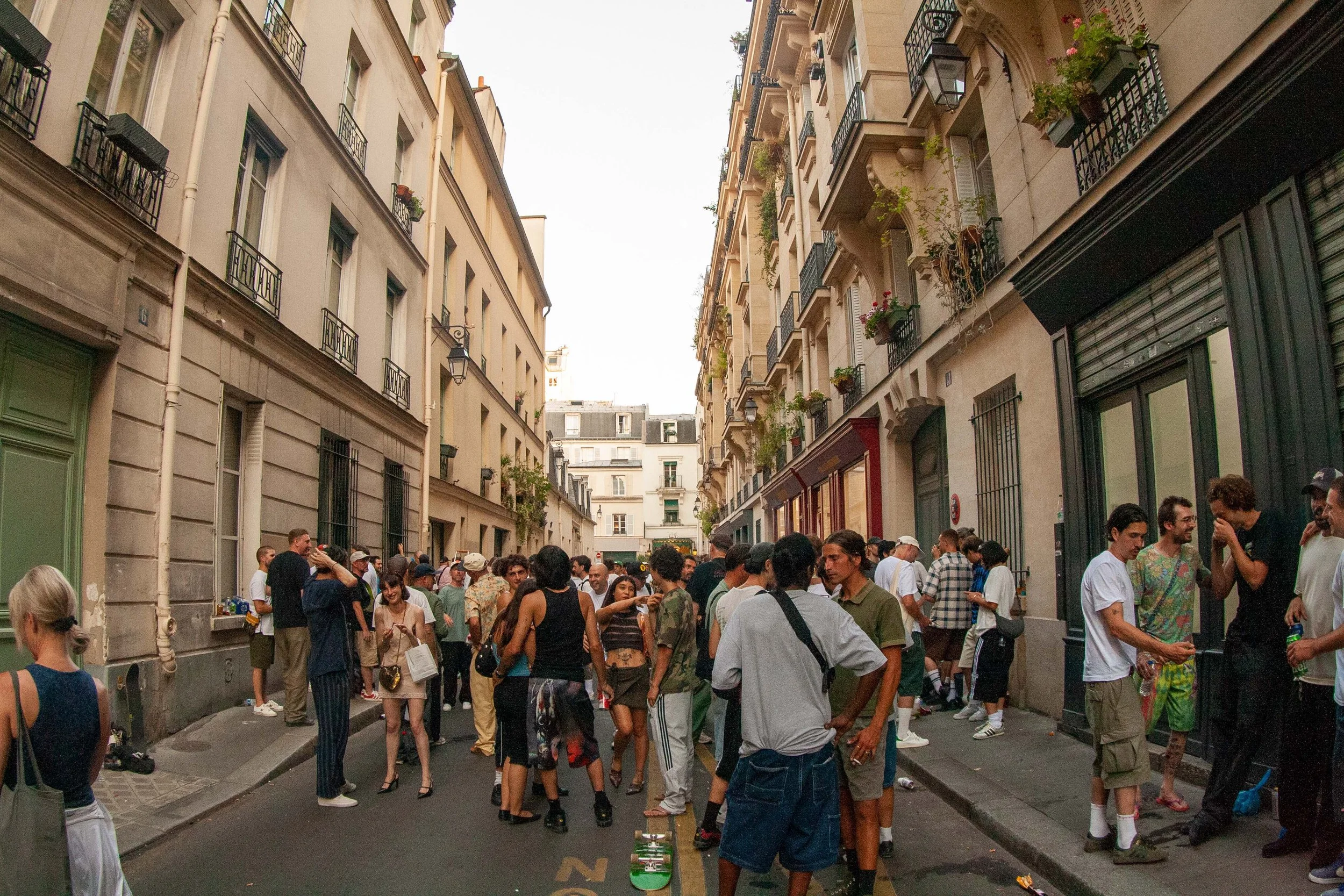
The second night was the grand opening and it was a completely different energy. More of a party, more of a get together, the wider skate community pouring in to celebrate. Louder, more electric, the kind of room where you look around and cannot quite believe you are there. Both nights were special in completely different ways and together they told the full story of what ÉPICENTRE Paris really is, not just an exhibition but a community coming together.
The moment you walk in
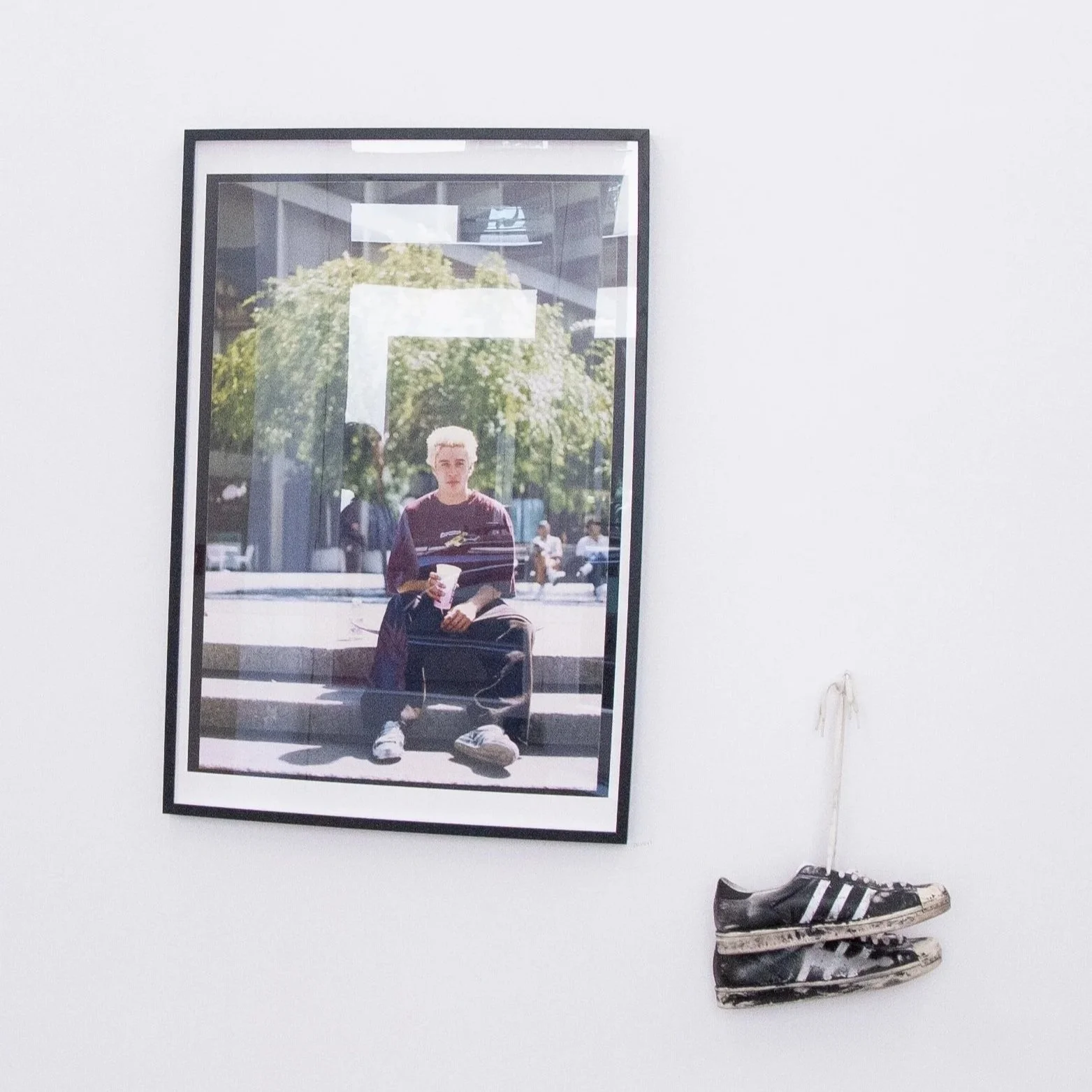
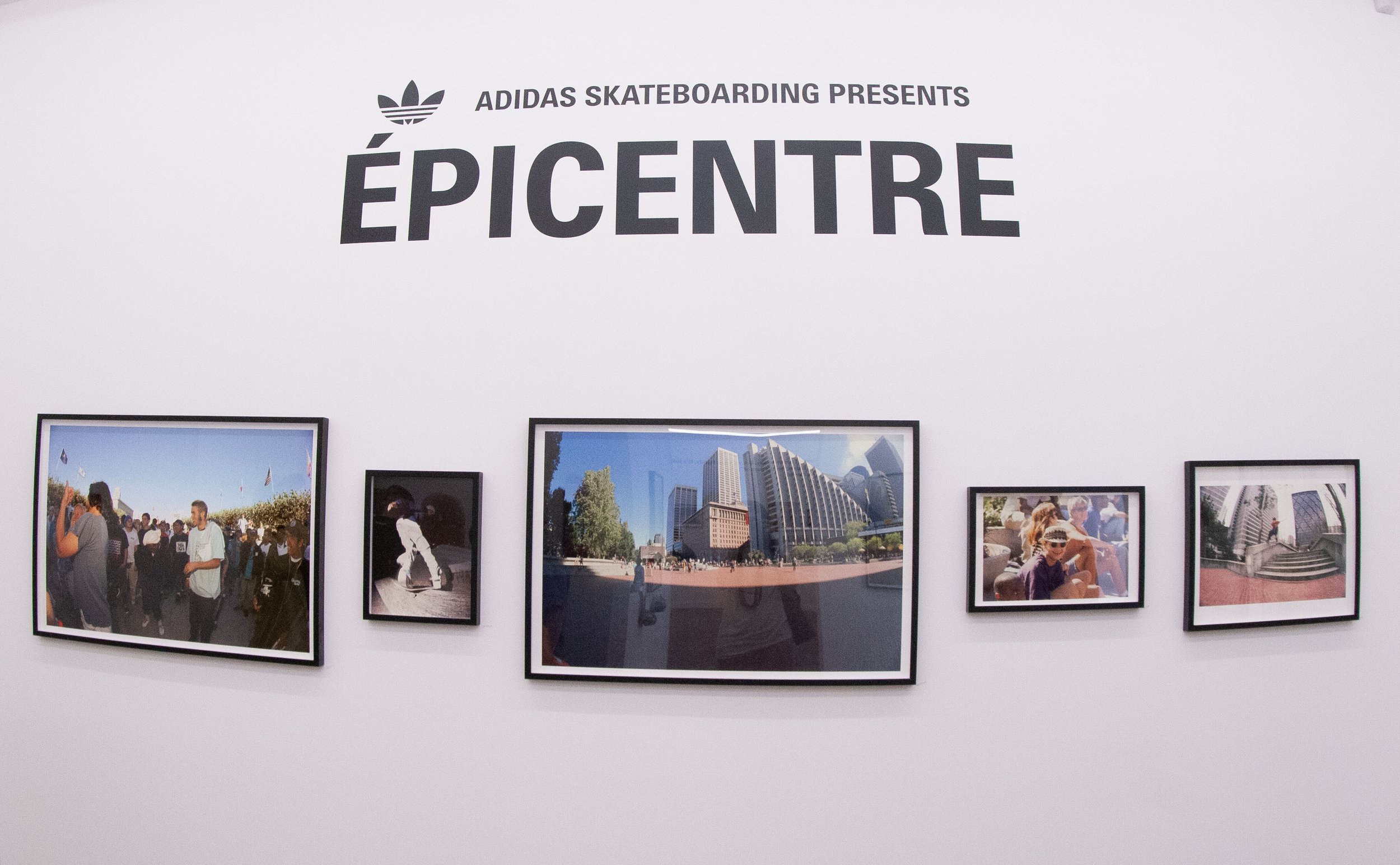
The first thing you see when you walk through the door stops you in your tracks. A pair of Adidas trainers, hand customised by Mike Carroll with a black sharpie when he was a teenager. Simple, imperfect, iconic. The fact that the entire exhibition is presented in partnership with Adidas makes that opening image feel like the most perfectly placed detail in the room. This is where grassroots skate culture and a global brand meet, and it starts with a kid and a marker pen.
The first room sets the entire context of the exhibition and it does it beautifully. On the wall in large text is a quote from Jacob Rosenberg in French. No Way Magazine represented my legitimacy, my cameras were my motto, and EMB, my proving ground. Six words into the exhibition and you already understand everything.
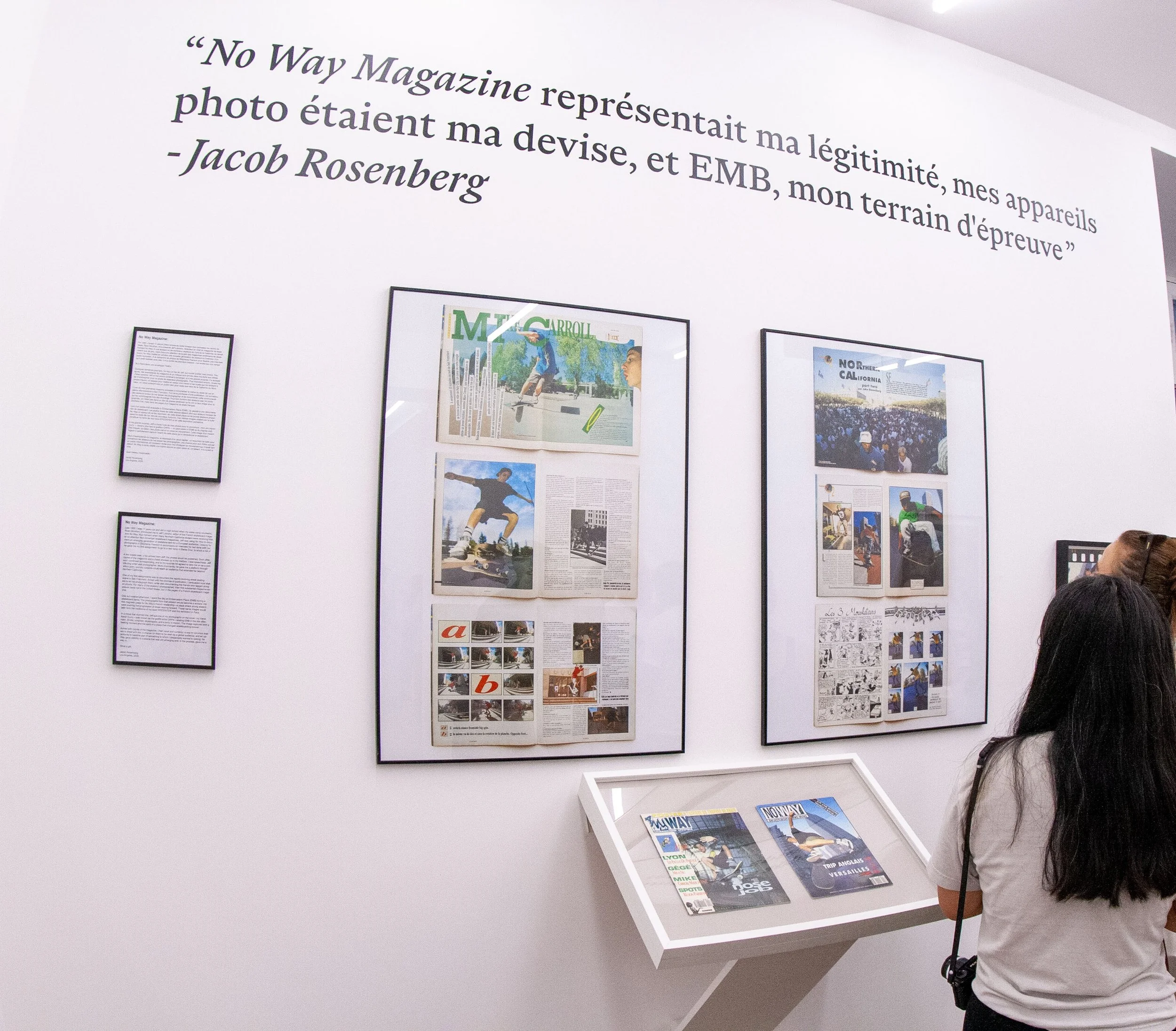
Below that quote, framed on the wall like fine art, are the original No Way Magazine spreads from 1991. Jacob's actual published work, the photographs and articles that made him an international name before American magazines had even figured out what EMB was. Mike Carroll skating, NorCal coverage, the work of a seventeen year old kid who drove from Palo Alto every day and somehow ended up on the walls of a Paris gallery thirty five years later.
And in a glass display case below the spreads sit two original No Way Magazine covers. The actual physical magazines from 1991. You can lean in and look at them up close and the whole story of why this exhibition is in Paris and not anywhere else suddenly makes complete sense.
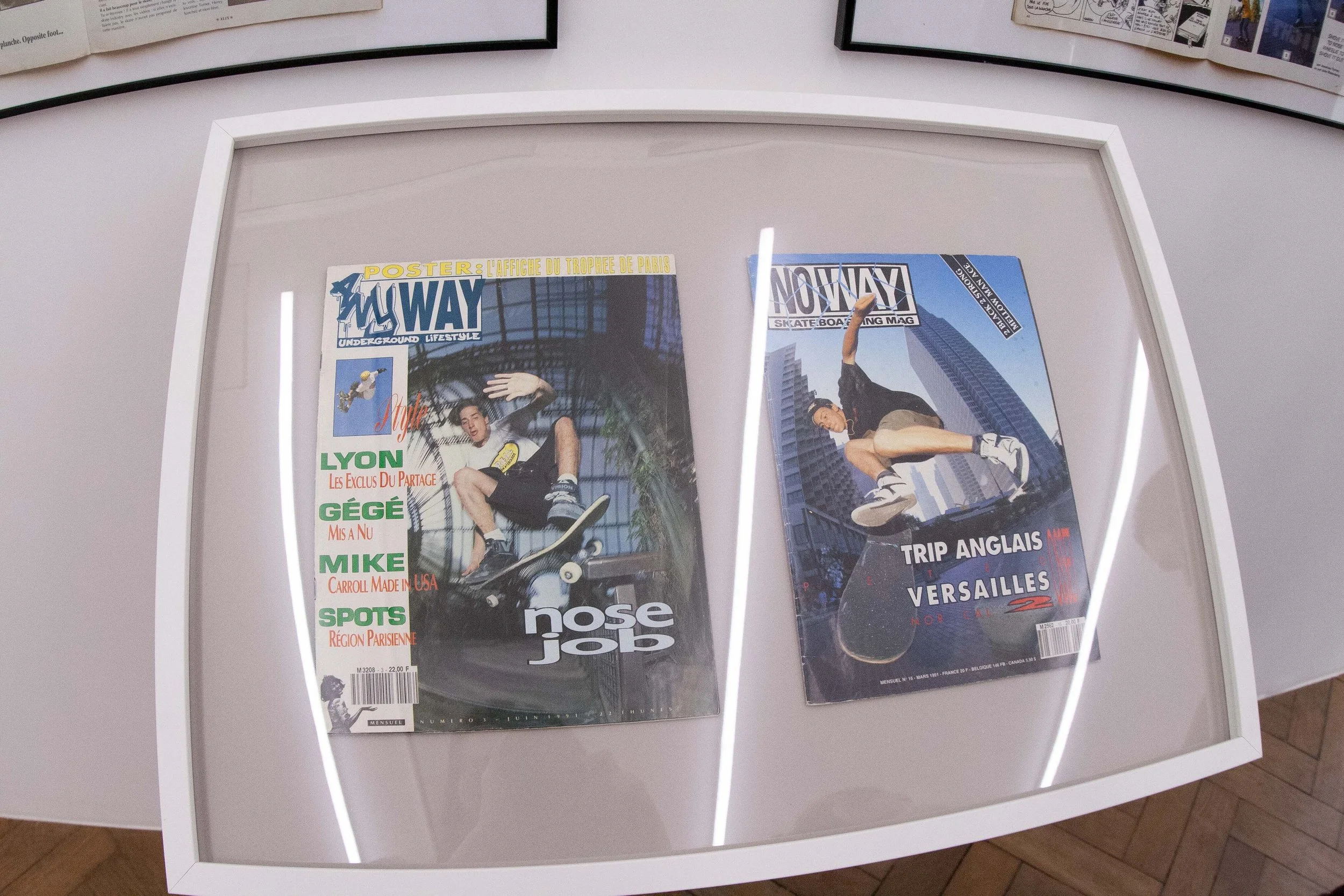
The legitimacy that Paris gave Jacob Rosenberg in 1991 is literally on the wall in Paris in 2026. That full circle moment is what this room is all about.
Alongside the No Way Magazine wall, the room also contained photographs of Embarcadero Plaza as a place, the energy and community that gathered there, a photograph from when Jason Lee visited the spot. Everything you need to understand what EMB was and why it mattered, before you move deeper into the exhibition.
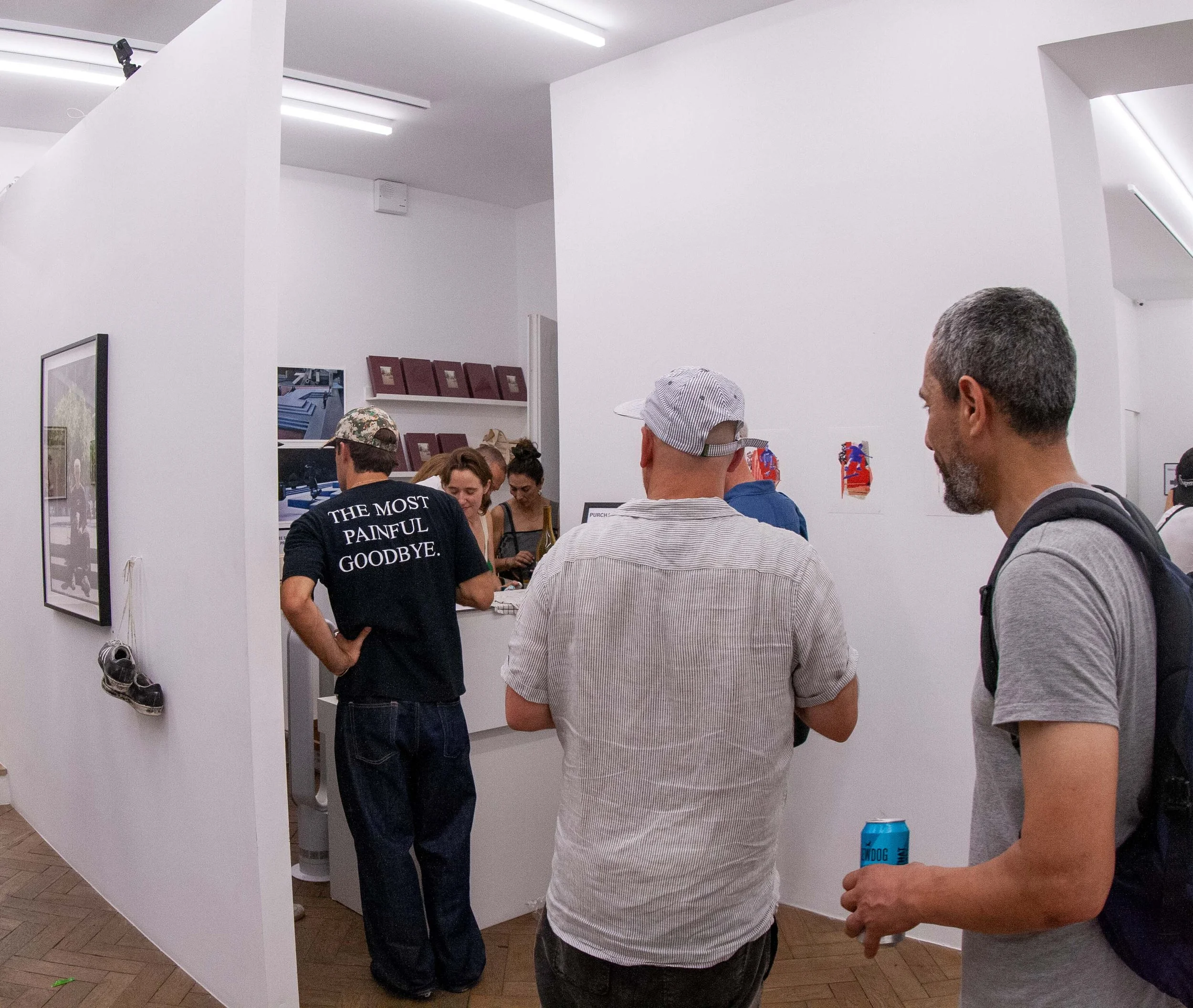
The room also had a bar, and copies of the second edition of Rosenberg's monograph EPICENTER alongside prints and skateboards for sale. It was busy, warm and buzzing from the moment the doors opened.
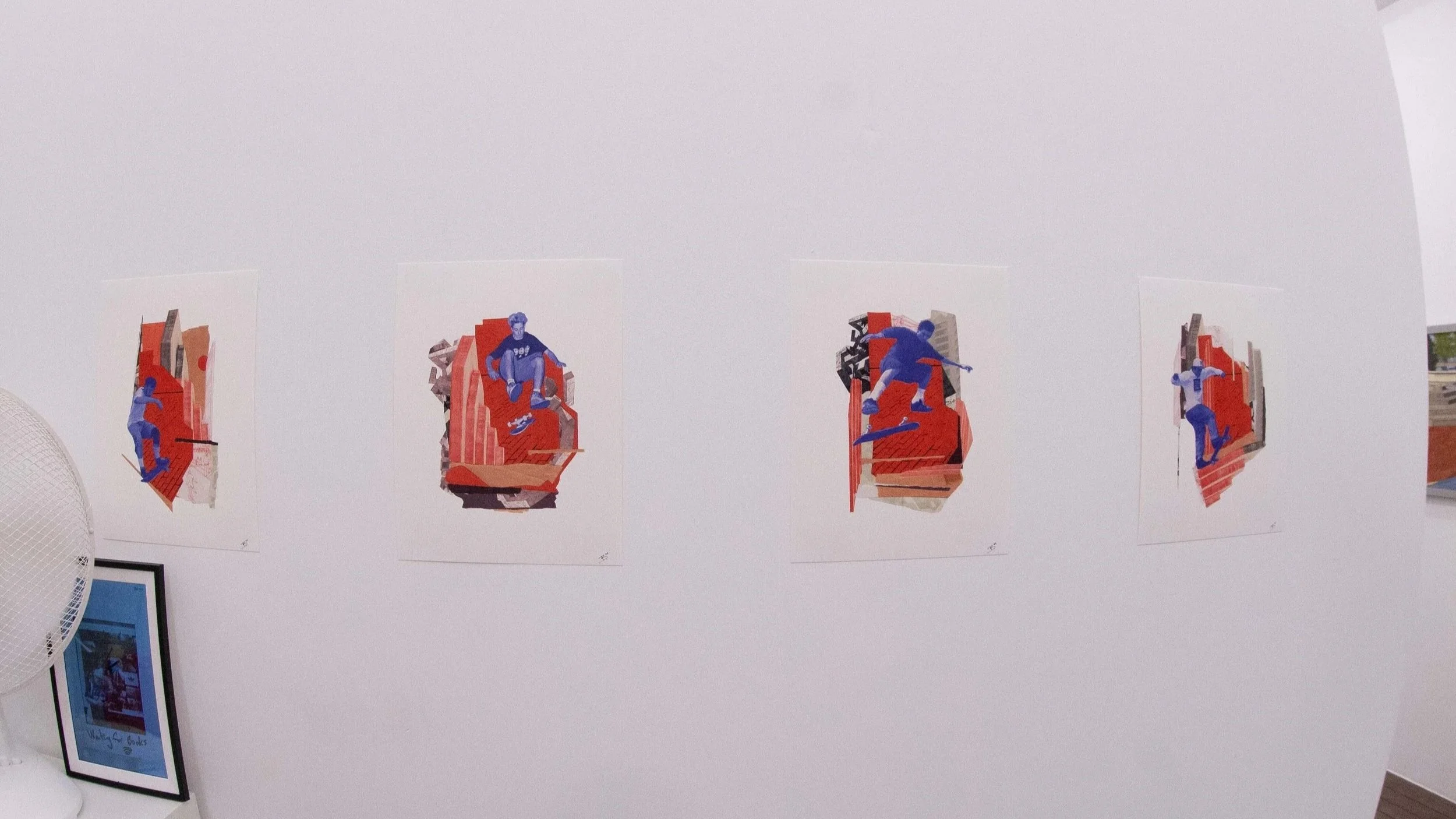
Also in the room and well worth stopping for was a series of artworks by Curb Cuttings, an artist who had a conversation with Jacob Rosenberg and from that collaboration took screen grabs from Jacob's footage and chopped them up in the way he usually works, creating a series of four pieces featuring Mike Carroll, Rick Ibaseta, James Kelch and Chico Brenes. Each one of those skaters was going to be in the room on the night, and the decision to feature them specifically feels deliberate and right.
After the exhibition I reached out to Curb Cuttings to find out more about his work and what the show meant to him. This is his era of skating. Jacob's work is so special to him because of that personal connection. He missed the San Francisco show but there was no way he was missing Paris.
He told me it was lovely seeing Joey after 30 years, and that he had not seen Rick in a long time either. Getting to meet Chico, Mike and James in that context, his artwork on the walls alongside Jacob's photographs, being associated with the people who defined his era of skating, he said he was so stocked to be part of it and so glad that Ted and Jacob gave him the opportunity.
Standing in that first room looking at his work, knowing he had rolled those same bricks and was now showing art inspired by the people who made them legendary, felt like exactly what this exhibition is about. Community. Connection. The way skateboarding holds people together across decades and continents.
The heart of the exhibition
Through to the left of the first room and you are in the most photograph rich space of the whole exhibition. Wall after wall of images from EMB between 1990 and 1993, the skaters, the spot, the community, the moments. On the wall in large text is a quote from Mike Carroll, one of the most iconic skaters of his generation and one of the legends of the EMB era. He describes EMB as family. A place where people pushed each other without knowing where it would lead.
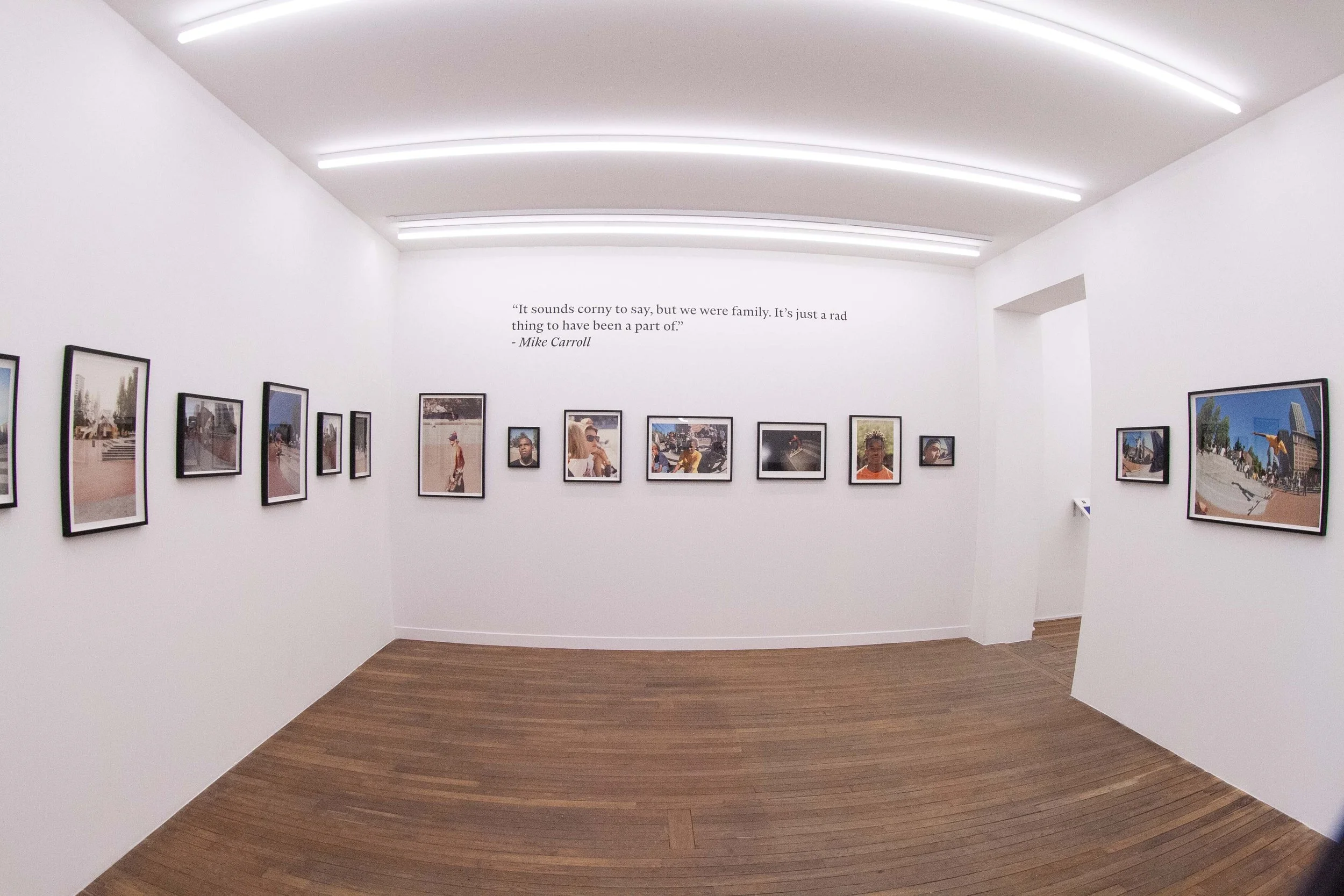
What struck me most about the photographs in this room was the imperfections. The grain, the light, the slightly off moments that a more polished photographer might have left on the cutting room floor. Rosenberg kept them all and the exhibition is so much richer for it. These photographs feel true because they are true. They were made by someone who was part of the culture, not standing outside looking in.
One photograph in particular stopped me completely. A woman wearing sunglasses, and in the reflection of the lenses you can see Embarcadero Plaza. It is one of the most quietly beautiful images in the whole show and it speaks to something important. Rosenberg was not just photographing tricks. He was photographing everything around the culture, the witnesses, the bystanders, the people who were there but not always centre frame.
In the corner of the room an old television plays footage from the era. No flatscreen would have had the same effect.
The soundtrack of a movement
There is a room in ÉPICENTRE Paris that does not ask you to look at anything. It asks you to listen.
Room three is dedicated to the music that soundtracked the EMB era, Soul of Mischief and Hieroglyphics, two Bay Area hip hop acts whose work was woven into the skate videos Jacob Rosenberg filmed during those pivotal years between 1990 and 1993. Standing in that room listening to those tracks, knowing they were playing underneath footage of Mike Carroll and Chico Brenes pushing the boundaries of what was possible on a board, felt like being transported somewhere completely.
But it is the objects in this room that really stop you in your tracks.
On the shelf sits the actual Plan B Virtual Reality VHS tape alongside a Sony Hi8 tape in Jacob's own handwriting. Not a reproduction. Not a print. The real thing. Sitting there quietly on a shelf in a Paris gallery like it had just been rewound and put back.

And then on the wall, mounted in a clear case, is a cassette tape with a handwritten note in Jacob's handwriting that reads: First Two Hiero Bootlegs. Ripped from Mikey who got from Jovontae.
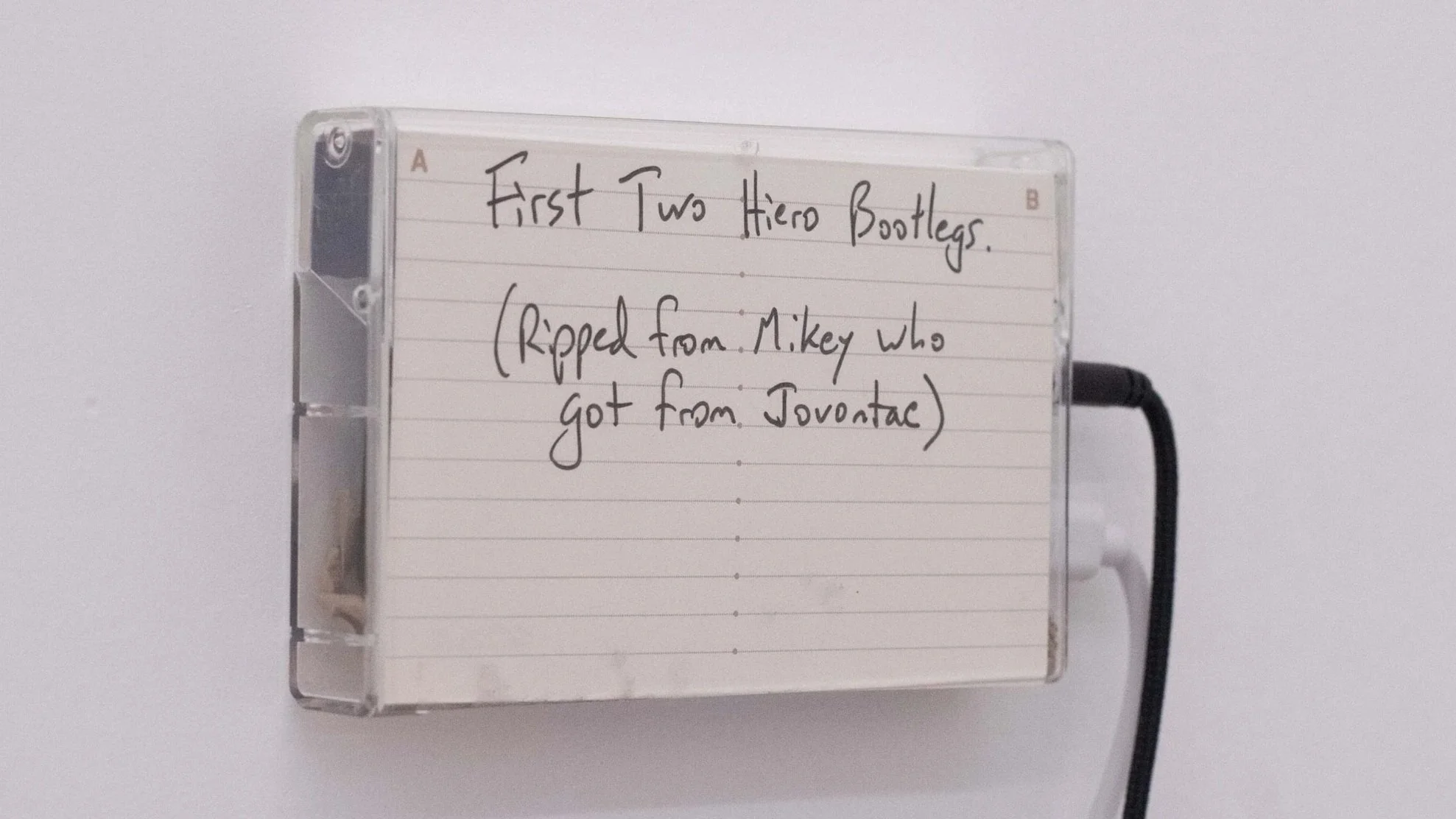
That cassette is everything. Before streaming, before downloads, before any of it, music travelled through the skate community hand to hand and tape to tape. Jovontae Turner passed it to Mikey, Mikey passed it to Jacob, Jacob put it in the skate videos, and Hieroglyphics went on to become huge in Europe partly because of that journey. A bootleg cassette that changed the course of music culture on an entire continent, now mounted on a wall in Paris.
Also on the wall in this room is a framed photograph of what appears to be members of Hieroglyphics in a room surrounded by music equipment, an Ensoniq keyboard on the floor, tapes everywhere. It is intimate and real and completely of its time.
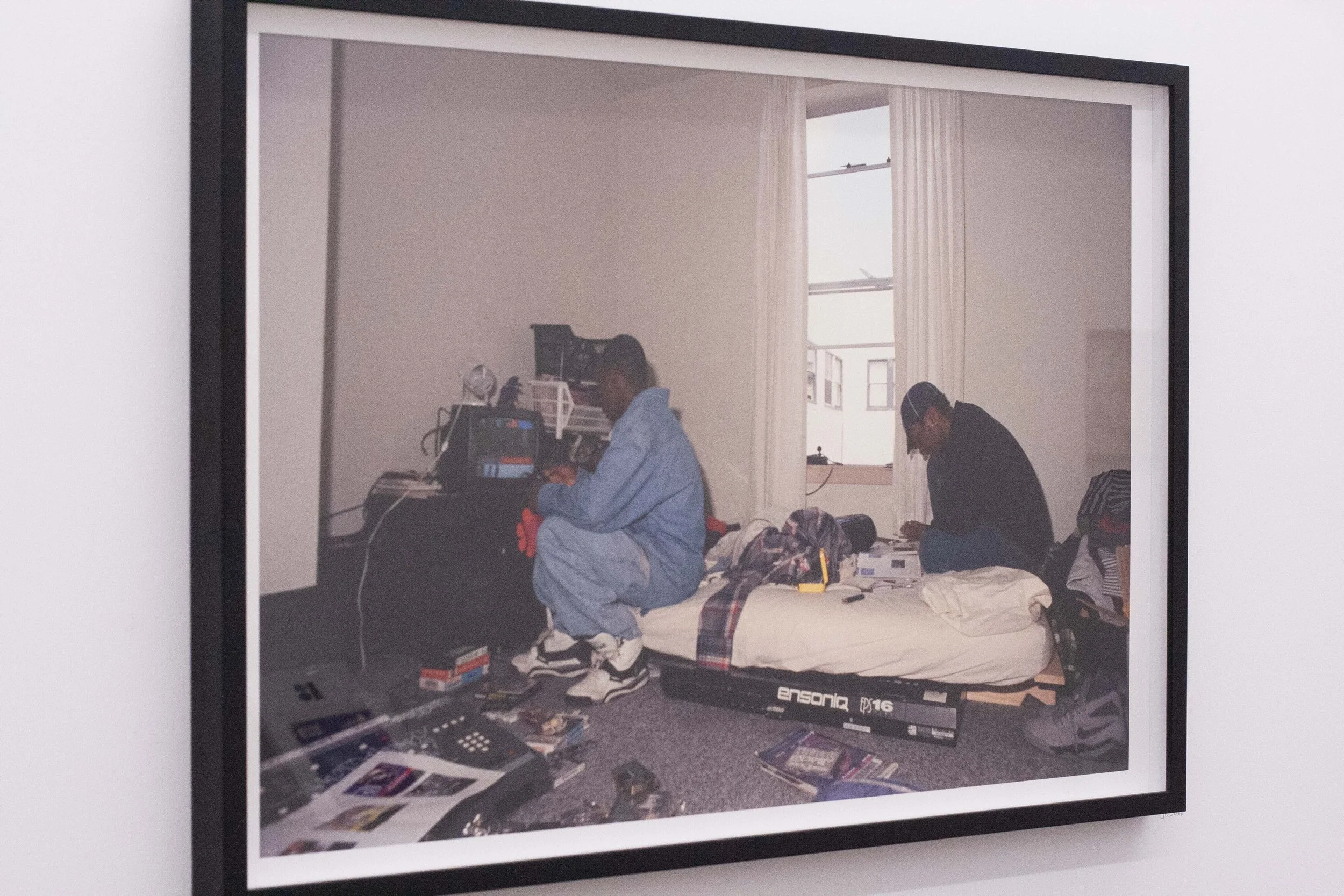
What makes this room so powerful is what it says about how culture actually travels. Not through official channels or marketing campaigns. Through people. Through friendship. Through someone saying here, you have to hear this, and passing you a tape.
Art, memory and loss
Moving through the exhibition you encounter the work of two artists whose paintings respond to Rosenberg's footage in completely different ways. Eric Merrell's painting brings colour and energy to the room, vivid and alive. Beside it hang two paintings by Lee Smith, one darker, one lighter, both created from screen grabs of the original footage. The upper painting includes the Vaillancourt Fountain, the brutalist sculpture that was the trademark of Embarcadero Plaza and that has now been torn down by the city of San Francisco.
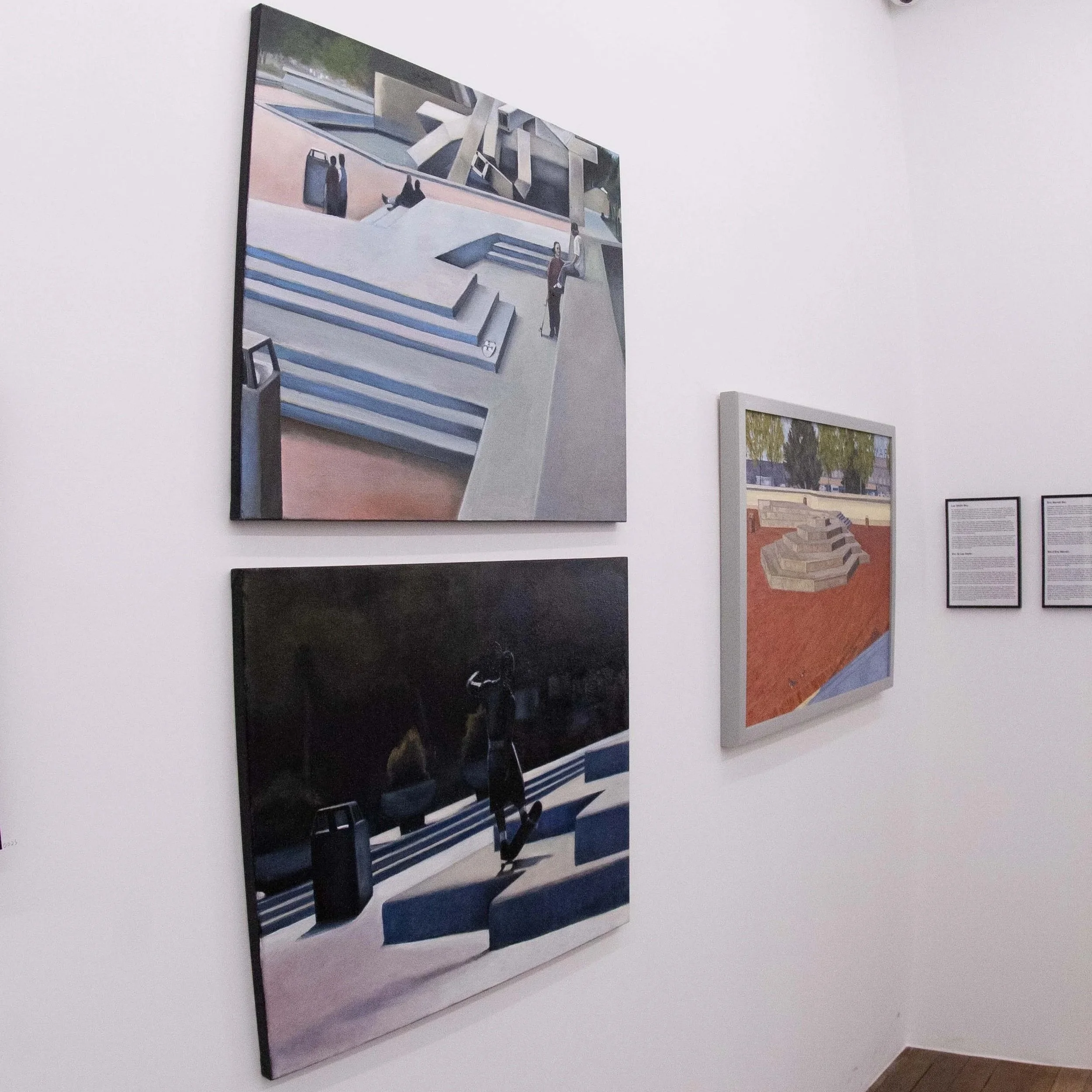
I got to speak with Lee Smith during the evening. He is an EMB era skater himself, now based in Brooklyn, turned artist. Seeing his paintings in that Paris gallery, knowing he was actually there on those bricks in the early 90s, gave the work an extra layer of meaning that is hard to put into words.
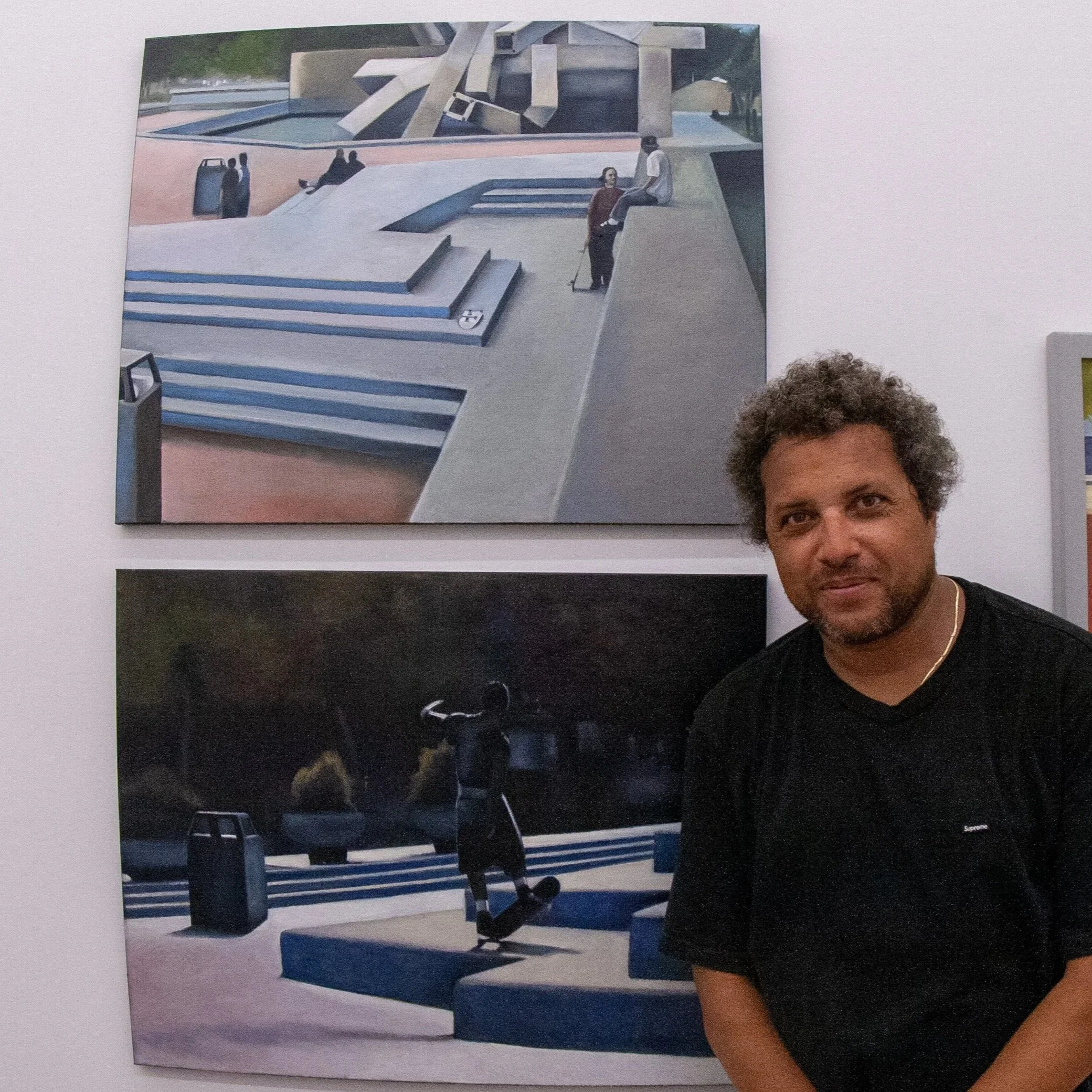
Also at the exhibition was Olivia Ibaseta, daughter of EMB legend Rick Ibaseta, who works in architecture conservation. She told me that she and Ted Barrow held an event by the canal before the Vaillancourt Fountain was demolished, a last hurrah for the space, a goodbye to a piece of brutalist architecture that had launched a cultural movement. The image of that, Rick Ibaseta's daughter standing by the fountain her father skated around, saying goodbye to it before it was torn down, is one of the most moving things I heard all evening.
Where it all began
One of the most unexpectedly intimate rooms in the exhibition features photographs that Jacob took before EMB, while he was still finding his way as a photographer. Among them is a photograph of his childhood bedroom. Skateboard posters on the walls, soccer and baseball awards, a basketball poster, the beautiful mess of a kid growing up in early 90s California. Next to it a light drawing photograph, early experimentation, a young photographer figuring out his voice.
Ted Barrow told me that Jacob felt it was important to include these pieces. And standing in front of them I understood why. Before the Plan B videos, before the exhibitions, before Paris Fashion Week and adidas Skateboarding and rooms full of legendary skaters, Jacob Rosenberg was just a kid in a messy bedroom who loved skateboarding.
Ted smiled at the awards on the shelf in the photograph and said something that I thought was so perfectly observed. Those kinds of participation awards are very American, he said. They give them out for everything, even just taking part. And then he paused and said, I think they just want to feel seen.
Standing in a Paris gallery looking at a photograph of a teenage boy's bedroom, I thought about how that is really what all of this is about. The photographs, the exhibition, the skate community, Girl Skate Mag. Everyone just wanting to feel seen. Everyone just wanting to belong somewhere.
The footage that only exists in that room
Tucked away at the back of the exhibition, through the first room and to the right, was the most quietly extraordinary space of the whole evening. A room showing an hour of never before seen archival footage from 1991 to 1993. Footage that will never be available online. The only way to see it was to be standing in that room in Paris during those five days.
And people stood. No chairs, no comfort, just a group of people gathered around a screen watching something they instinctively understood was rare. I dipped in and out of that room throughout the evening, catching snippets of footage between conversations, and every time I went back it pulled me in again.
Watching that footage, grainy and imperfect and completely alive, reminded me of what it feels like to skate with my friends. Not the tricks, not the spots, just the feeling of being together somewhere, pushing each other, belonging to something. Thirty years apart, different countries, different eras, but the feeling is exactly the same.
The people in the room
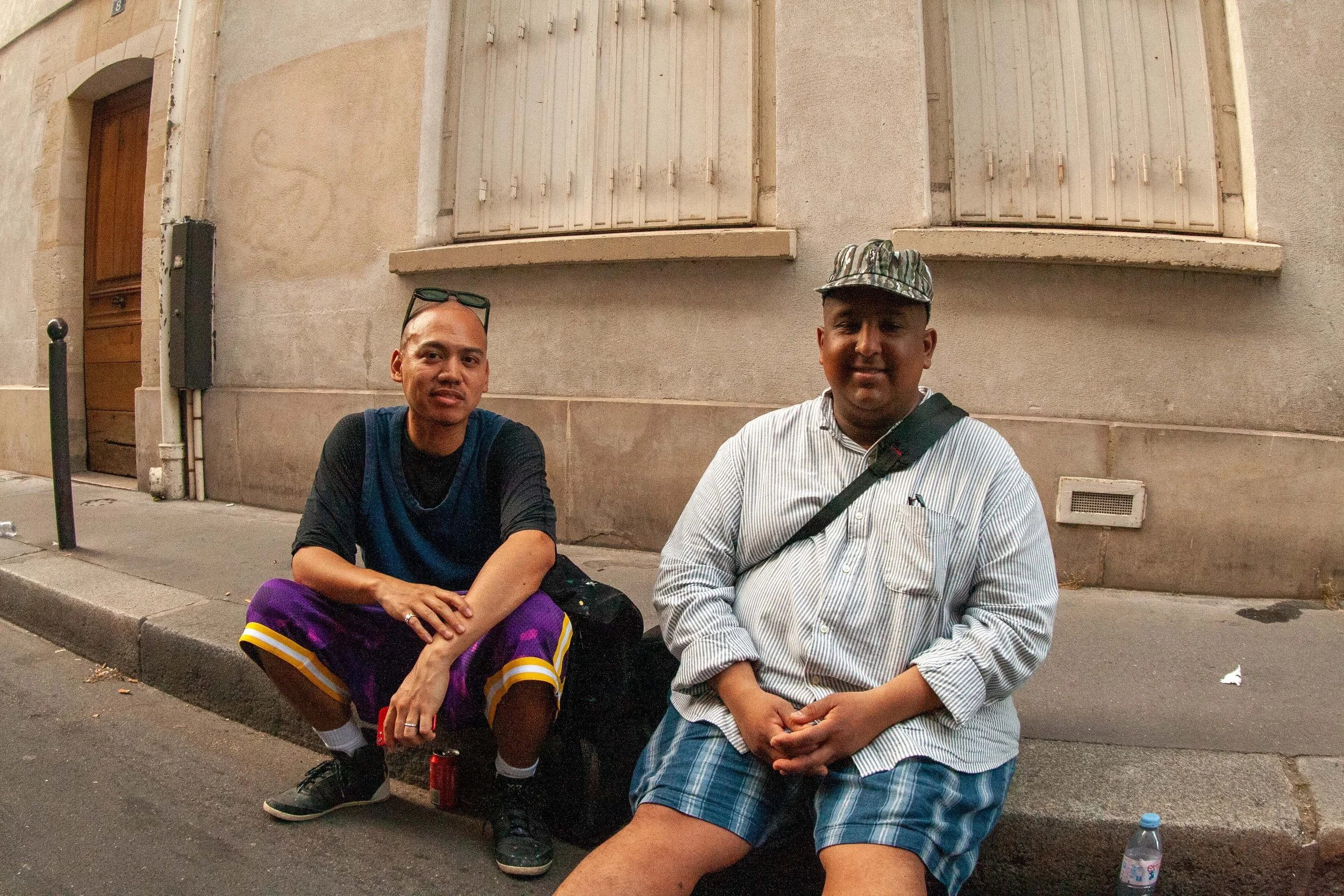
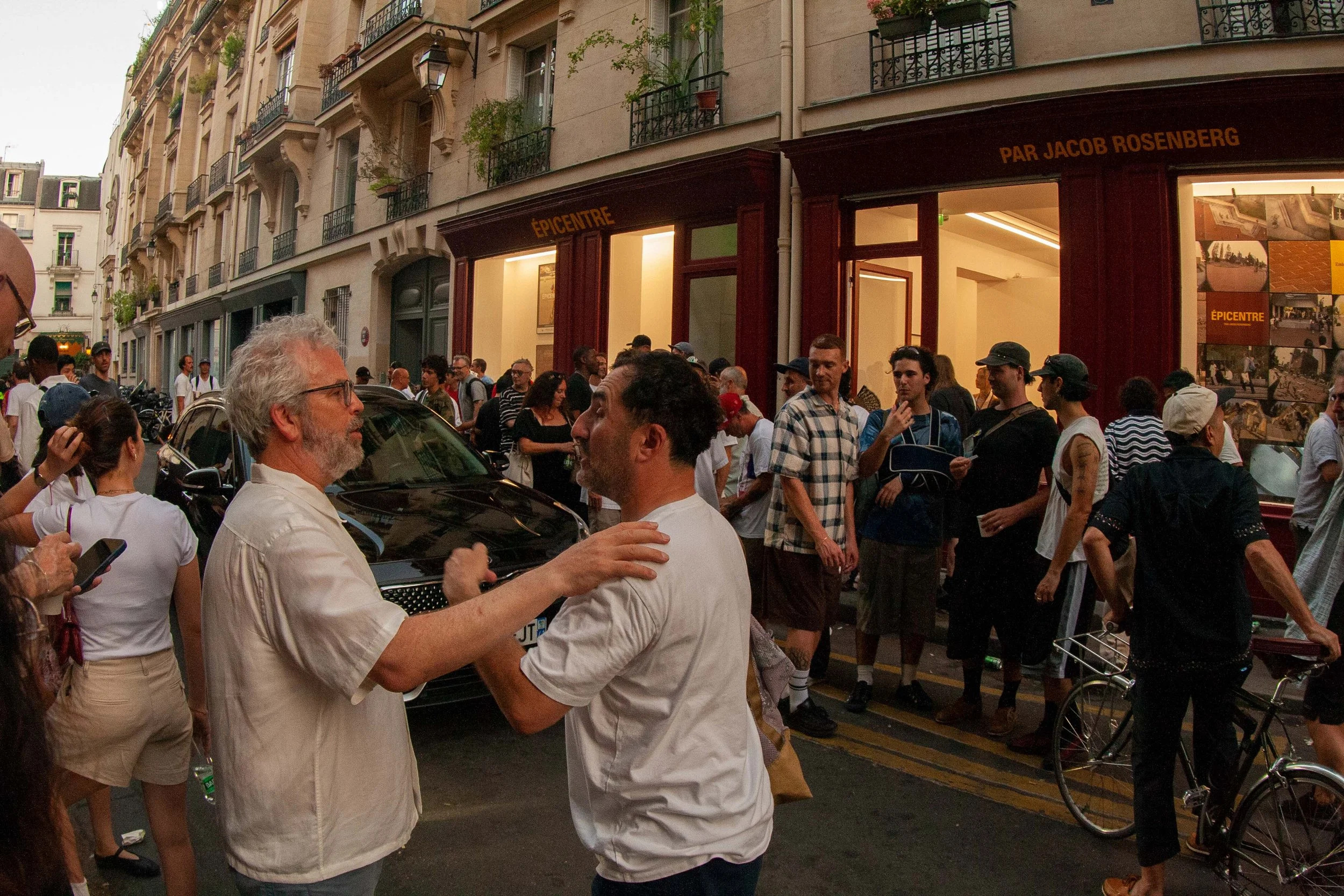
But an exhibition is not just its walls. And this one was full of people whose names I have known for years.
The room that evening included Sam Smyth, Atiba Jefferson, one of the most important skateboarding photographers alive, Joey Tershay, and Jessie Van. I did not get to speak to all of them but being in the same space as people like that has its own kind of energy. You feel it.
The first person who really made me feel at ease was Jamie Gray Hyder. She was warm and genuine from the moment we spoke, hyping me up and telling me I was supposed to be there. When you are standing in a room full of people you have admired from afar and you are not quite sure where to put yourself, having someone look you in the eye and say you belong here means everything. I will not forget that.
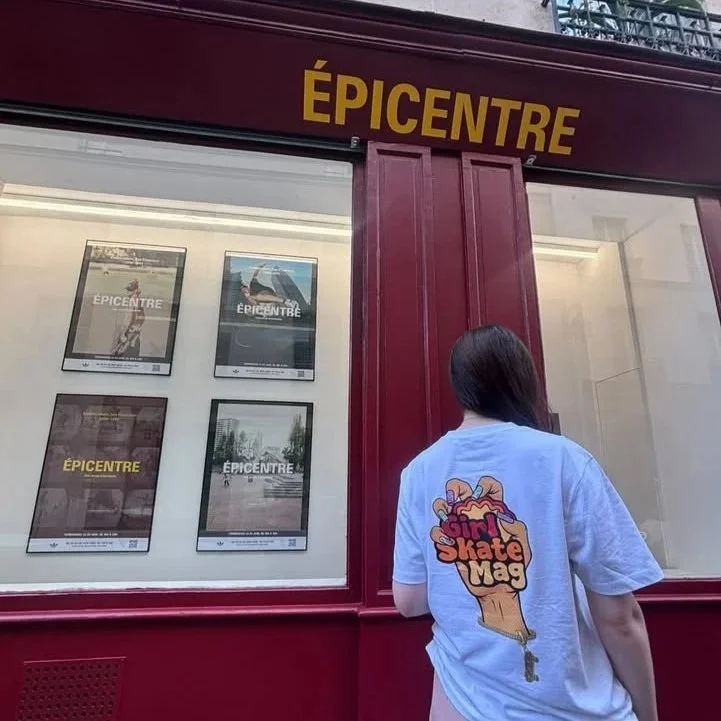
Photo taken by Jamie Gray Hyder
Meeting Mike Carroll was one of those moments where you expect to feel starstruck and instead you just feel at ease. We spoke briefly but what stayed with me was how much he understood it. The community, the culture, what it means to people. He is one of the biggest names in the history of skateboarding and he carries it like it is the most natural thing in the world. Just a normal person who happens to have shaped an entire culture.
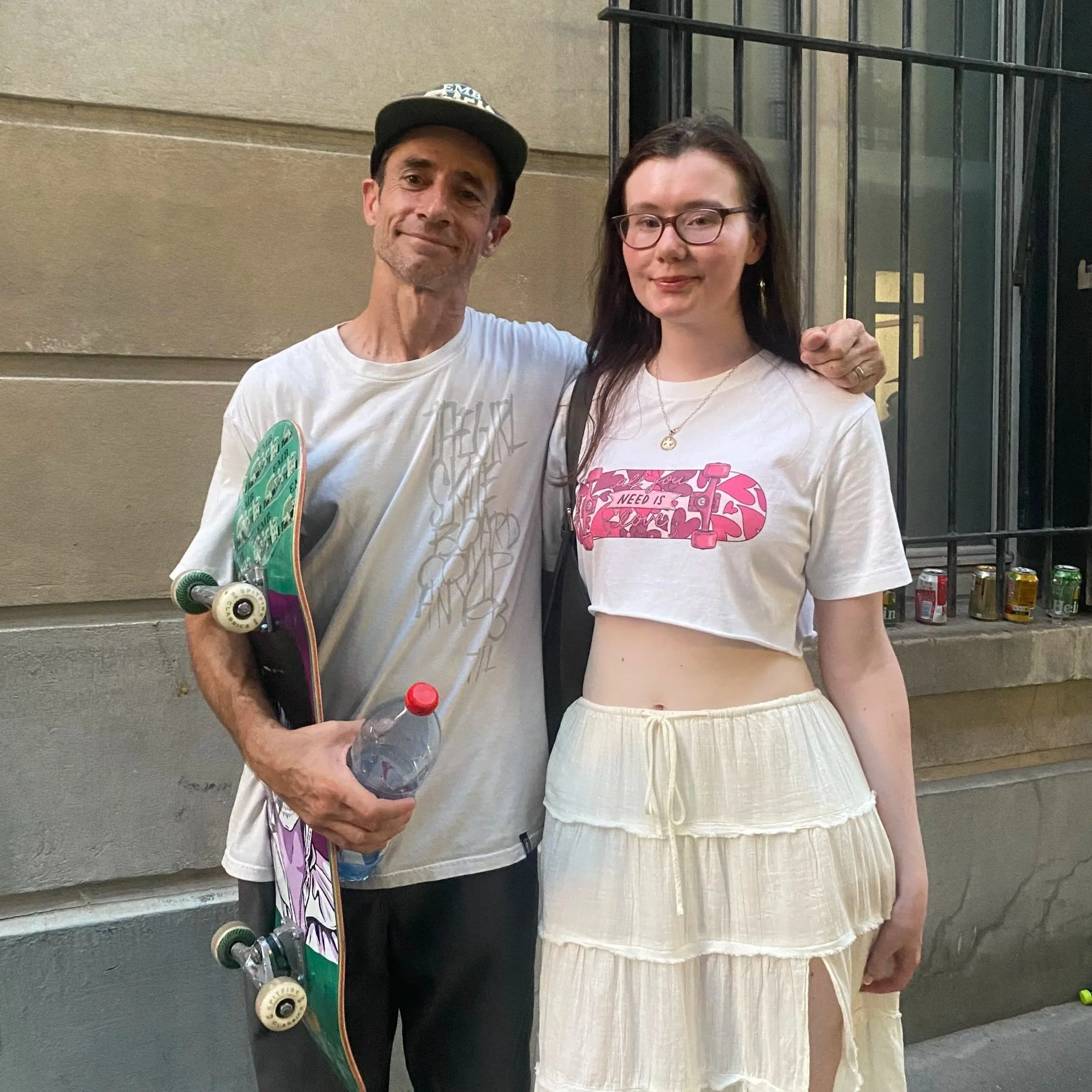
If Mike Carroll made me feel at ease then James Kelch made me laugh. In my opinion he had the best style of anyone in that room and I mean that in every sense, his fashion was incredibly colourful and his personality matched it completely. At one point I asked him to do a spin so I could see his outfit properly and without hesitation he spun around and then lifted his trouser leg to show me his spotty socks. He gave me a hug and I left that conversation grinning. A total superstar and a complete goofball in the best possible way.
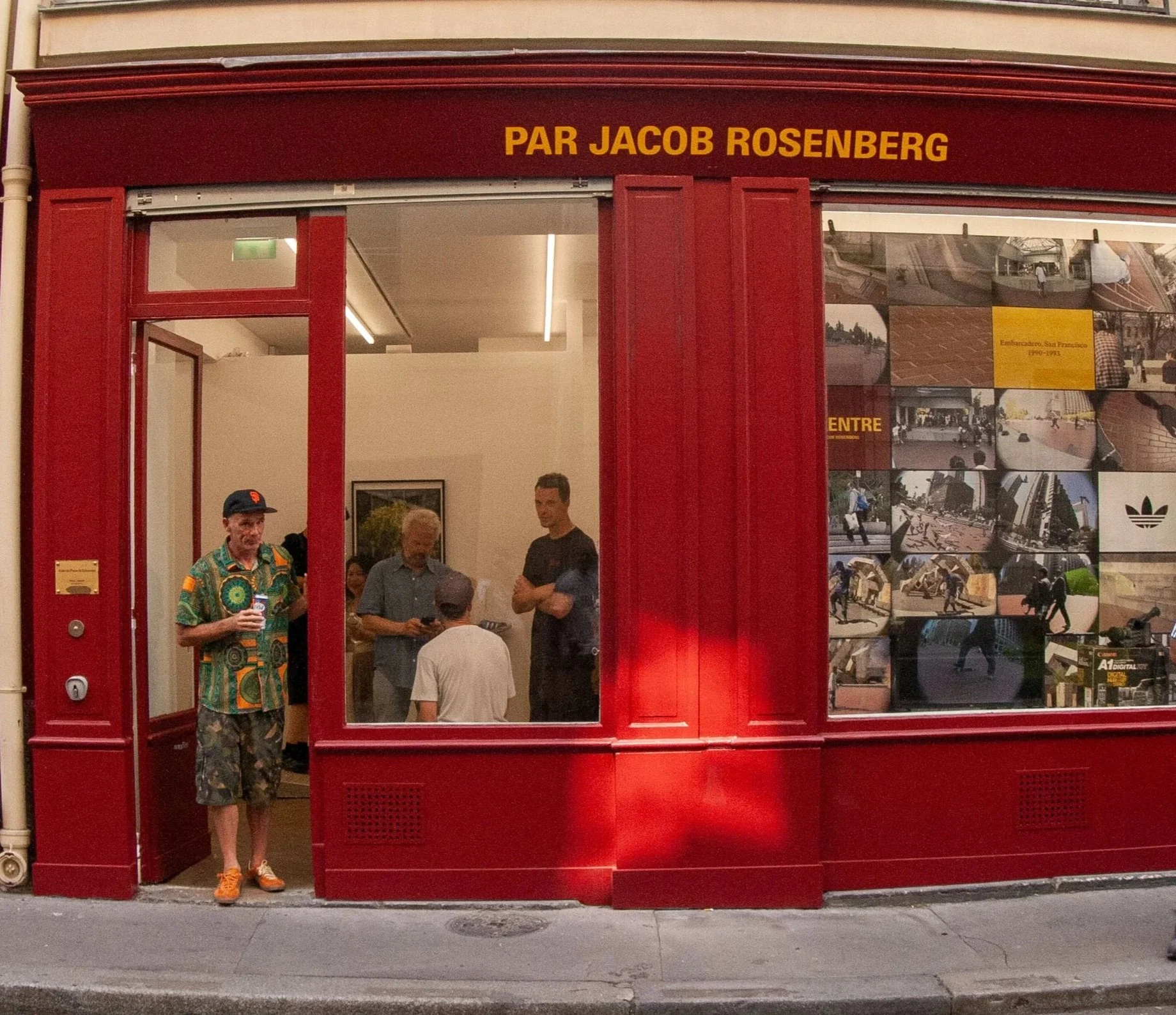
Chico Brenes and I did not get to talk properly but the moment I remember most clearly is him showing us that he had been featured in a cycling magazine. He is on a serious health kick at the moment and was out skating Bastille in the blazing sun at 9am both days. I also got to meet his wife who was absolutely lovely. There is something really beautiful about seeing these legends of the skate world just living full joyful lives beyond the culture that made them famous.
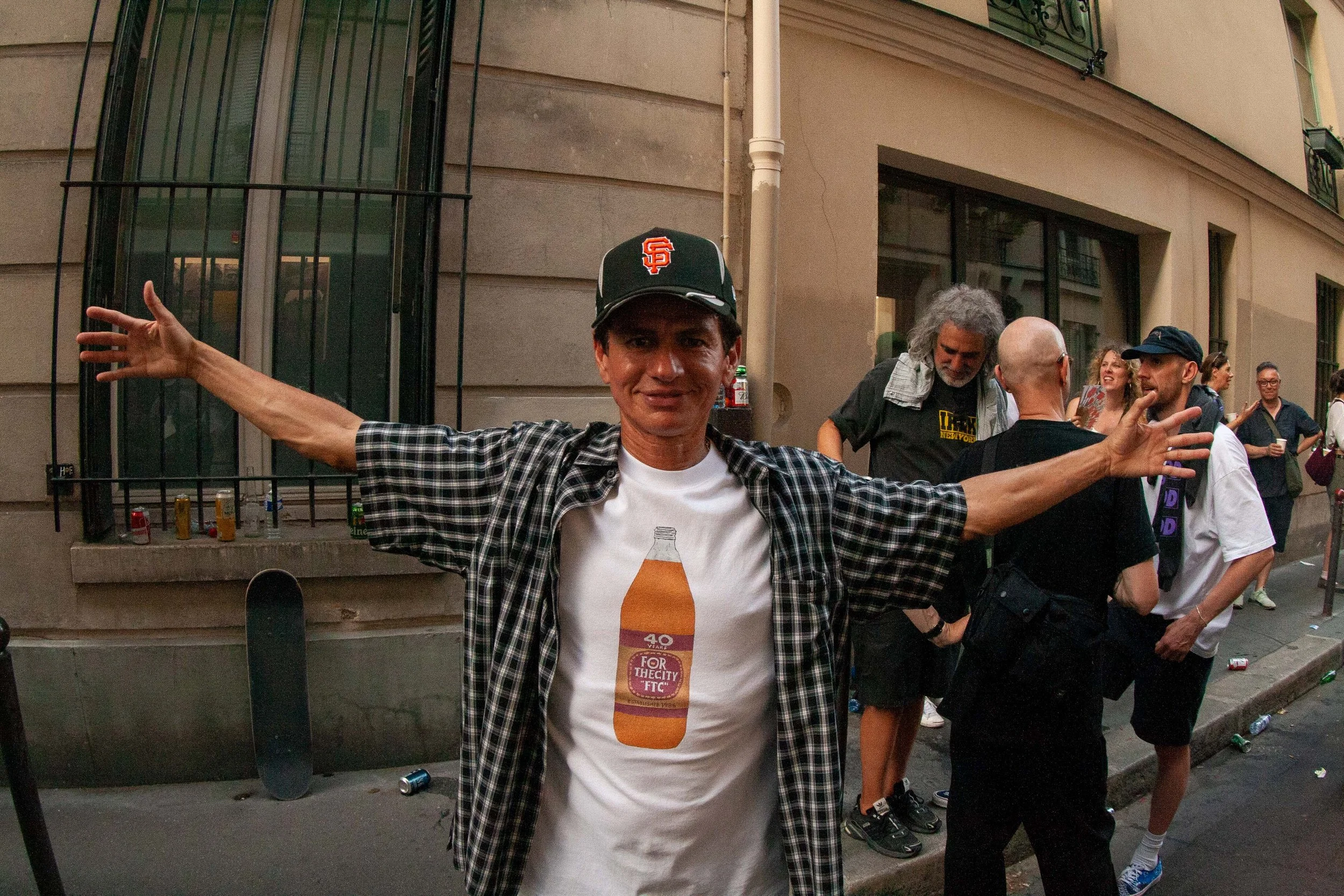
Rick Ibaseta had his camera with him on the night and when we got talking he showed me the photographs he had taken during the evening. He asked me about Girl Skate Mag, whether it was print or online, and when I told him he said something that has stuck with me. He said so many magazines these days are not printed and that he misses the newspaper paper that Thrasher used to be printed on back in the day. A change that happened before I was even born and he still feels the loss of it. There is something really moving about a man who has dedicated his life to visual culture mourning the feel of a particular paper.
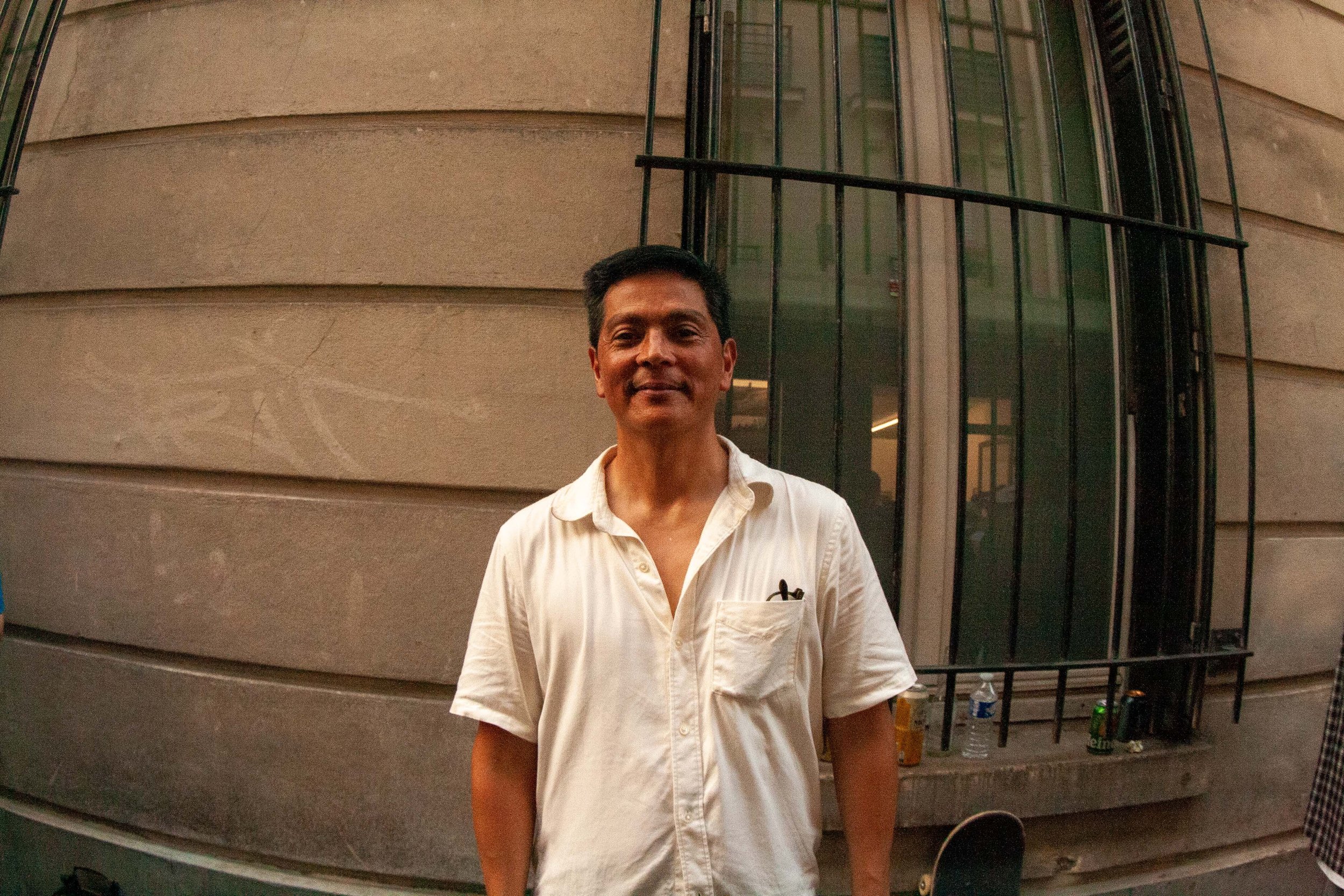
I spent a lot of time with Lee Smith during the evening, moving between his paintings and conversation. He is an EMB era skater turned artist, now based in Brooklyn, and his paintings were some of the most striking work in the whole exhibition. But the thing he said that I keep coming back to is this. You do not have to be amazing at skating to be in the industry. You just have to have a love for it. That is what matters. For anyone reading this who has ever felt like they are not good enough to be part of skate culture, from one person who has felt that way to another, Lee Smith said it best.
Anthony Claravall knows a lot of the British skate scene and one of my favourite moments of the whole evening was the two of us looking at our mutual follows on Instagram and realising how connected the global skate community actually is. At one point he mentioned Forde and I said I love Forde and he said he is such a dude, he was on the Brain Drain podcast recently. Those small world moments in a Paris gallery at Fashion Week are the ones that remind you that skateboarding really is just one big community wherever you are in the world. I also asked him about his approach to filming, whether he plans shoots in advance or goes with the flow. He said it really depends on the person or the spot. Simple and true and somehow exactly what you would want to hear.
One of the most charming details of the whole evening came from James Anderson, one of the event producers. Throughout the night he was moving around the room taking polaroid photographs of people. I asked him about it and he said he does not want people to just sign them. He wants them to doodle whatever they want on them. In a room full of photographs documenting one of the most significant eras in skate history, someone was quietly making new ones and asking people to make them their own. I loved that.
The women of EMB
I had the privilege of speaking with Ted Barrow throughout the evening and he told me something that has stayed with me. There were women skaters at EMB during this period. Two of them, part of the community, part of the family. They are not in the photographs.
Ted was thoughtful and honest about this and it is a reflection of its time rather than anything else. What matters, and what I think is genuinely important for every Girl Skate Mag reader to know, is that women were there. At one of the most significant moments in street skateboarding history, women were part of that community. They were part of that family. Their story is missing from the archive but they were not missing from the spot. And it is nice to know they were there.
Jacob Rosenberg — skateboarding is about connections
I spoke to Jacob himself during the evening. There was so much we talked about moving through those five rooms but the thing he said that I have not been able to stop thinking about is this. Skateboarding is all about connections. Really he started all of this just as a way to make friends.
Every single photograph in that exhibition, every video installation, every painting, every quote on the wall, every legend in that room on those two warm Paris evenings, it all started because a kid wanted to belong somewhere.
I think every single one of us who has ever picked up a skateboard understands exactly what he meant.
By the end of the first evening I had lost my voice completely from talking so much. By the end of the second I had made memories I will never forget. I said my goodbyes, stepped out into the warm Paris night and walked back through the Marais to my hostel. I put a bit of ABBA on and just enjoyed the memories.
A girl from the Midlands, walking through Paris at night, after two evenings with the legends of skateboarding, with ABBA in her ears and no voice left.
I would not change a single thing.
ÉPICENTRE Paris runs until June 28 at 13bis rue Arquebusiers, 75003 Paris. Free entry, Thursday to Sunday 11am to 6pm.