By Vlada
I remember when I first started skateboarding. I had just learned how to ollie, and honestly, I thought I was the coolest person ever. I could spend an entire session doing the same trick over and over again, and somehow, it never got boring.
I remember doing a tiny ollie over a book and being genuinely excited about it. The smallest ollie ever! Something that probably wouldn't even count as an obstacle to me today. But back then, it felt like a huge achievement. I wanted to show everyone what I could do.
There was something special about those sessions. I wasn't worried about my skill level or what I should learn next; I was just happy to be there.
Everything was new. Every little improvement felt unbelievable. Learning how to drop in, trying my first fakie pop shuvit, or simply getting more comfortable on my board was enough to make my day. I remember feeling like I was progressing incredibly fast. And maybe I was, at least compared to what I knew before.
But somewhere a few months into skateboarding, something started to change.
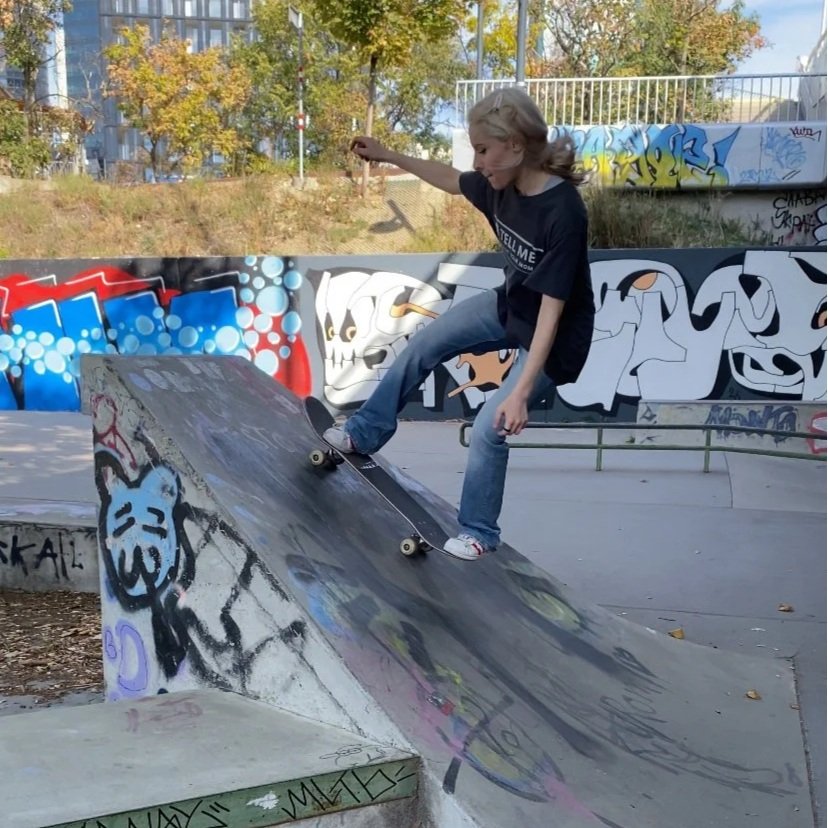
It wasn't like I suddenly stopped loving it. I still had amazing sessions, and I still do. But that feeling became much rarer. I started understanding what cool skateboarding actually looks like and began noticing the difference between basic tricks and more advanced ones. I watched better skaters doing insane flips, learned about new tricks and realised just how much there was to learn.
And I think that's when I started putting pressure on myself.
Doing the same ollie that once made me so happy wasn't enough anymore. Learning a new basic trick was exciting, but the excitement didn't last as long. I wanted more. I wanted to learn harder tricks, progress faster and become a pro.
The funny thing is that tricks I once thought were impressive have become very common to me. I can learn some easy switch tricks like a switch frontside pop shuvit in a few minutes and barely think about it afterwards. A year ago, I celebrated a fakie ollie, which wasn't even high.
It's strange how your perspective changes.
Maybe it's like being a child. When you're young, everything feels brighter. Time seems to move slower, and even small things can make you so happy. You are excited about your birthday, Christmas and every little surprise. Then you grow older, and those same things don't feel quite as magical. You still enjoy them, but the excitement is different.
I think skateboarding can be like that, too. The more tricks you learn, the more you get used to things that once seemed very, very impressive. Your expectations grow, and what once felt like an achievement becomes just another thing you can do.
There's also a stage that I find draining: when your old tricks are no longer exciting, but the new ones you're trying to learn are still far away.
This is probably one of the least enjoyable parts of progressing. You're spending session after session trying to figure out one trick. You know what it should look like, you've watched other people do it hundreds of times, but your body just doesn't seem to understand it yet. You go home feeling like you can't skate.
But I think I've started to understand something about this process.
Learning a difficult trick is a little like studying for an exam. Nobody is particularly excited about sitting down with maths exercises for hours. It can be boring. But then you walk into the exam, solve the problems and realise that all those hours of studying actually paid off. Suddenly, the result feels amazing.
Skateboarding has the same kind of reward. After days, weeks or even months of trying, you finally land the trick. And it's not just about the trick itself. It's about everything that comes with it: remembering how difficult it used to be, knowing how many attempts it took and finally being able to put it into a line, film it or show it to someone.
So, there's something satisfying about being able to show the result of your own effort.
However, I don't think the solution is simply to keep learning harder tricks.
Sometimes I think we forget that skateboarding is supposed to be something we play with.
Think about children and their toys. Give a little girl a Barbie doll, and she might not even play with it the way the instructions suggest. She'll invent her own stories, give the doll an unusual haircut, dye its hair black and turn it into an emo girl. She doesn't need someone to explain what she is supposed to do with the toy. She experiments, and that's why she enjoys it.
And maybe that's something we lose as we get better at skateboarding.
We start thinking too much about what a session should look like. We come to the skatepark with a list of tricks to learn, a goal to achieve and sometimes even a video we want to film. But we shouldn't forget that we can simply mess around. Try something ridiculous, repeat an old trick in a different foot position or spend twenty minutes doing something that doesn't even have a name.
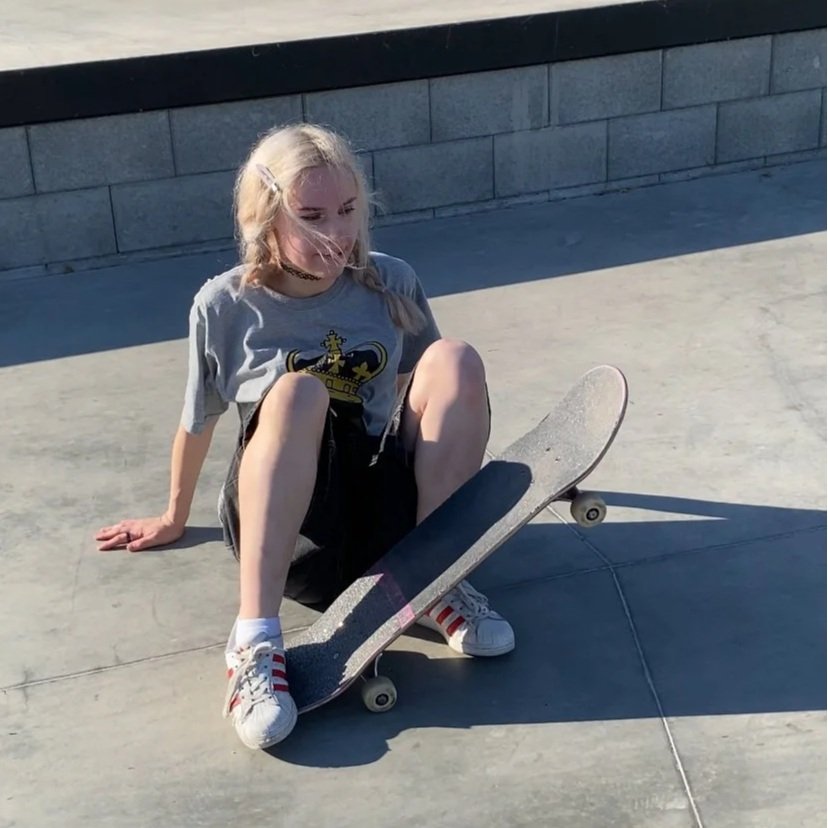
Not every session has to be productive, and not every trick has to be difficult. Sometimes doing an ollie over a random object just because it feels funny is enough.
And I actually think this is where a lot of progress comes from. When you're having fun, you're more willing to experiment, try things without overthinking and spend more time on your board. You might end up learning something without even realising it. I remember the day I accidentally landed a kickflip body varial while trying to varial flip!
You can chase big tricks, work hard and take your progression seriously while still allowing yourself to be a beginner at heart sometimes.
After all, we're not just here to collect tricks. We're here to heal our souls and have fun.