Wheels of Her Own: A (Not So Brief) History of Women in Skateboarding
Written by Patricia Machado
If you've spent any time at a skatepark lately, you'll have noticed something that would've seemed unthinkable a couple of decades ago: girls, actually taking up space. Dropping in, bailing hard, getting back up, no permission required. It feels new because the visibility is new. The history's been quietly grinding along since the very beginning.
The OG: Patti McGee
Rewind to 1965. Skateboarding barely existed as a "sport," more like a fringe hobby surfers invented for flat days. And yet a 19 year old surfer named Patti McGee became the first female professional skateboarder, landing a handstand on the cover of Life Magazine and doing tricks on The Tonight Show in a mini skirt like it was nothing.
McGee wasn't some token novelty act. She won the National Skateboard Championships, and was, by most accounts, just as good as her male peers. But when the skateboarding industry crashed in the late 60s (plastic wheels on sidewalks weren't the safest combo), so did her career, and with it, the visibility of women in the sport for a solid two decades.
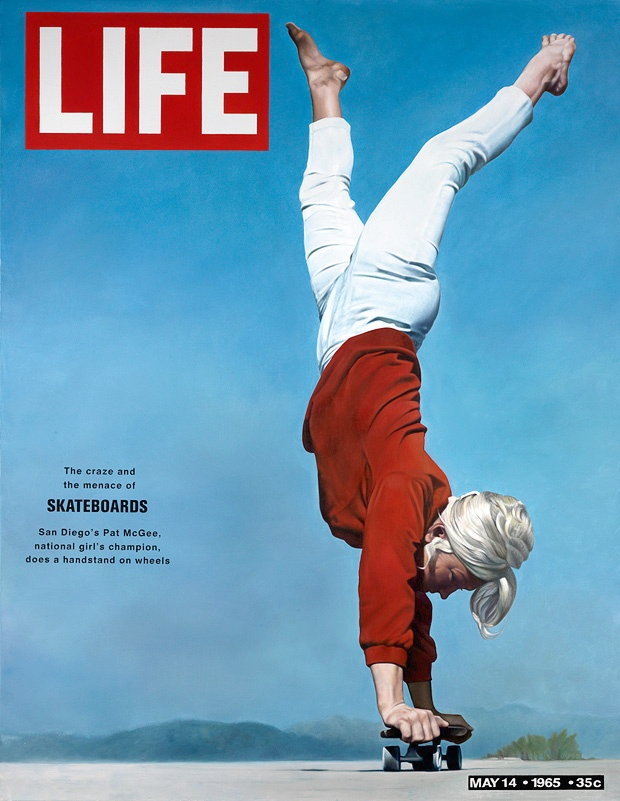
Life Magazine cover, May 1965 (Patti McGee)
Nerd fact: that Life cover is considered one of the reasons skateboarding got taken semi-seriously as a physical discipline in the first place. Not bad for a "fad."
The Dark Ages (aka the 70s and 80s)
Skateboarding came roaring back in the 70s with urethane wheels, then again in the 80s with vert ramps and the birth of street skating. Girls were still out there. They just weren't getting magazine covers, sponsorships, or really much of anything, while an entire industry built itself around a very specific image of who "belonged" on a board (spoiler: teenage boys in baggy jeans). This gets remembered as skateboarding's golden age, and design-wise, sure. But it's a pretty one-note story about who got to be the face of it. Not because the girls weren't ripping, just because nobody was pointing a camera at them.
Elissa Steamer Cracks It Open
Fast forward to the late 90s: enter Elissa Steamer, the skater widely credited with dragging women's street skating into the mainstream, whether the mainstream wanted her there or not. First woman with a signature shoe (Etnies), first female skater in the Tony Hawk's Pro Skater franchise, which if you were a kid in 1999 was basically a hall of fame induction. Steamer skated aggressive, technical street lines, the kind typically reserved for the guys, without softening her style to be more "marketable." That refusal to compromise made her a blueprint for everyone who came after.
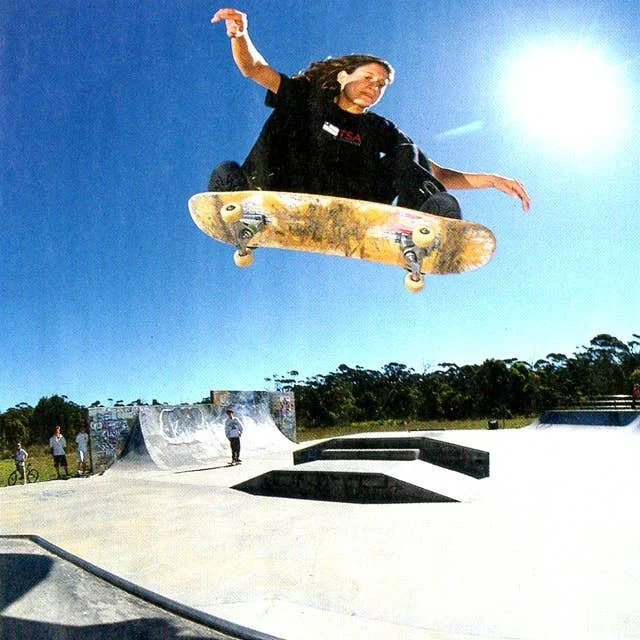
Vert air, early 2000s (Elissa Steamer)
The 2000s: Slow Growth, Real Cracks in the Wall
The 2000s brought X Games women's divisions, more (though still painfully few) sponsorships, and skaters like Lyn-z Adams Hawkins and Alexis Sablone, who balanced competing with, respectively, an X Games gold medal and an architecture degree from MIT. Progress here was less "revolution" and more "chipping away." Prize money stayed embarrassingly low compared to men's well into the 2010s, and coverage was thin, but the skill level kept climbing regardless: the sport got harder and more technical, on a fraction of the resources.
Tokyo 2020 (Held in 2021, Because 2020 Had Other Plans)
If there's a single moment that cracked things wide open, it's skateboarding's Olympic debut. The headline wasn't even a grown adult: 13 year old Momiji Nishiya took gold in street, with 13 year old Sky Brown taking bronze in park. Suddenly women's skateboarding wasn't a niche subculture footnote, it was primetime television. That moment did for girls' skateboarding roughly what the Tiffany blue box does for a jewellery box: it signalled this was legitimate, worth paying attention to. Except unlike a marketing stunt, this one had substance behind the hype.
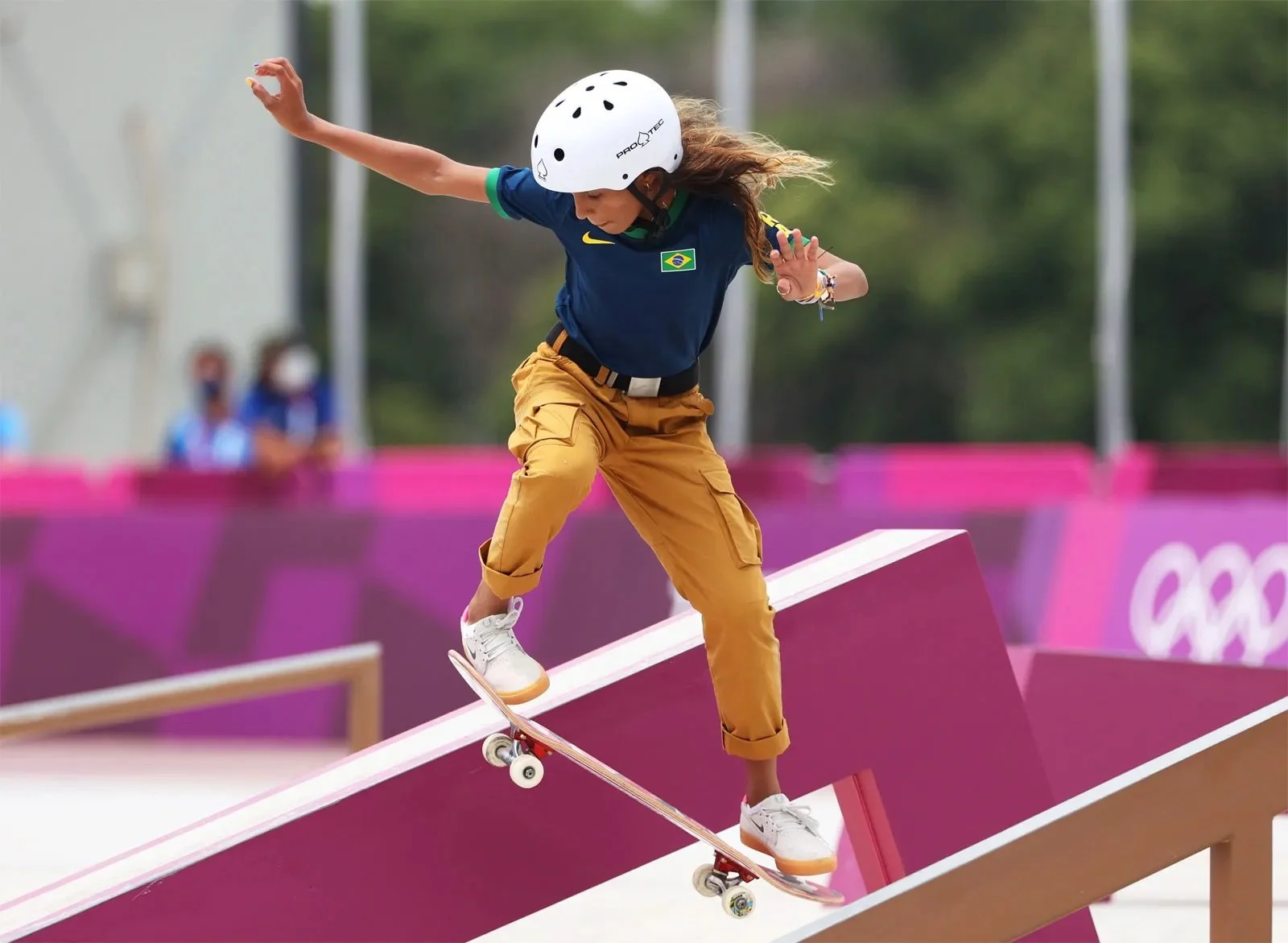
Tokyo 2020, women's street final (Rayssa Leal) - Rayssa Leal on the rail at Ariake Urban Sports Park, 13 years old and already good enough to take silver. She'd go on to become a two-time Olympic medalist and four-time SLS Super Crown champion.
Enter the Collectives: GRLSWIRL and Board Women
Individual trailblazers like McGee, Steamer, or Sablone proved it was possible, but they were mostly doing it alone, one woman surrounded by a sea of guys. The next real shift was women deciding to stop skating alone altogether.
Take GRLSWIRL: founded in Venice Beach in 2018 by Lucy Osinski, a former professional ballerina who noticed how differently she got treated skating solo versus with a crowd of women, and started recruiting for "comfort in numbers." The group still runs nighttime meetups along the boardwalk, singalongs included. Their motto, "world's okayest skaters," is the whole ethos in three words: you don't need to be good to belong. What began as one local crew is now an international movement with tour stops from Austin to Bangkok.
Board Women takes a different angle, aiming at the demographic skate culture ignored entirely: women in their 30s and beyond, on the premise that you don't age out of trying something that scares you a little. And these two are just the headline acts in a much bigger chorus, Shred Sirens in Nova Scotia, Rollin' With The Girls in Leeds, the Babes Brigade in Toronto, FT Crew in the Philippines. Same origin story every time: a handful of women got tired of being the only girl at the park, so they made it not that way anymore.
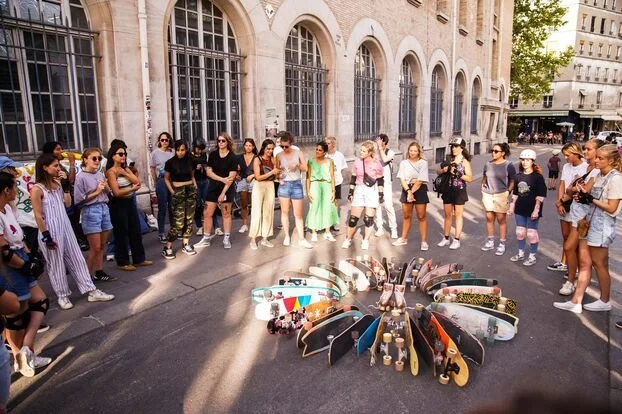
GRLSWIRL-style street gathering, Paris
Where We're At Now
Today the landscape looks almost unrecognizable next to the 80s. Skateparks run all girls sessions. Brands that once treated women's skating as an afterthought now build entire campaigns around it. Skaters like Rayssa Leal and Arisa Trew are landing tricks that would've been unthinkable for anyone, of any gender, ten years ago.
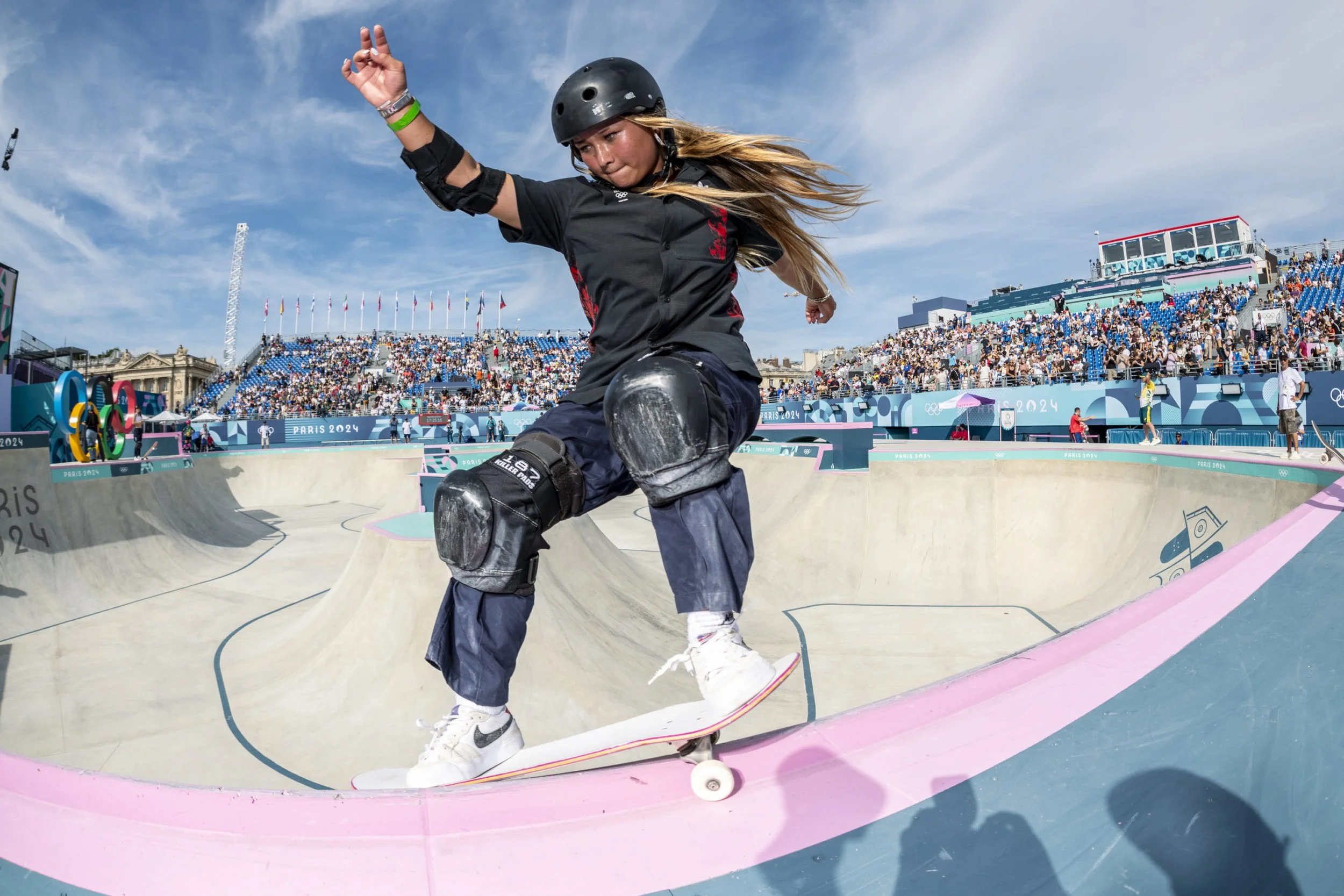
Paris 2024, women's park final (Sky Brown)
Sky Brown drops into the bowl at Place de la Concorde. She took bronze here at just 16, three years after becoming Britain's youngest-ever Olympic medalist in Tokyo.
The through line from Patti McGee to now isn't really about equipment or medals. It's a simple, stubborn idea: a girl on a board isn't an exception to the sport, she's always been part of its foundation. The industry just took its sweet time catching up to what was true from the very first handstand on that Life Magazine cover.