Written by Louisa Joy
In a consistently male dominated world, women have been stuck between a rock and a hard place. No matter how skilled or how polished an image they have, they’ll be offered just a fraction of their male equivalents. For so long, traditional media, sponsorships, and brand deals controlled women’s narratives and profits, keeping them financially dependent on the misogynistic systems in place. Generationally women have found their power within the thresholds constrained to them by society, and an increasingly platformed route is the monetising of the male gaze for career progression.
Now, female athletes, creators, and public figures are bypassing gatekeepers by monetising their image and sportsmanship and audience through social media monetisation, online digital product paywall sites and online subscription platforms, independently or under big names like OnlyFans, gaining financial and creative independence. However, this naturally has been met with polarised reactions through relevant communities as well as a wider reach. From social media outrage over Sydney Sweeney’s provocative brand deals to contempt shared on podcasts. This reaction exposes society’s hypocrisy: it’s fine when men profit from women’s sexualisation, but it suddenly becomes hostile when women use that power for independence.
Recently, comedian Shane Gillis made misogynistic remarks about women’s gym attire within the format of his SNL monologue, calling women in shorts at the gym "dressing like whores now" exemplifying the persistence of this narrative in mainstream media. It’s important to note that the women in this example are not the issue, but the misogynist being platformed continuously. But this outright misogyny has been met by backlash in droves - showing just how not willing to take it as a society we are. With SNL UK’s Ania Magliano hitting back on this side of the pond, just this past weekend Inde Navarette also made a jab about her own gym clothes in his direction this weekend. That’s at least three weeks of cross-continental backlash from one man’s comment on a show.
This tension of course extends beyond subscription platforms into mainstream media. Actress Sydney Sweeney took part in a particularly soft-core advertisement for sports betting company Novig. By harnessing the power of her sexual prowess towards men specifically for increased brand awareness, the ad was predictably met with accusations of pandering and selling out. The 'Sex Sells' mantra persists when male executives control the imagery, but when women leverage their sexuality for brand deals, public opinion becomes vindictive.
And here is where our narratives overlap, as while traditional sponsors often underfund female talent, OnlyFans then capitalised on the market gap to lend itself as a mainstream sponsorship platform, disrupting sports media by offering non-exclusive, algorithm-free monetisation. Despite high-profile sports sponsorships projecting progressiveness, the company continues to depend on adult creators who built its billion-dollar business. Its 2021 'porn ban' aimed to reduce NSFW content but faced backlash and was quickly reversed, with a new focus on SFW content and sponsorships. OnlyFans uses sports stars and glossy advertising to mask its reliance on sex workers, profiting from their work without meaningful support, while exploiting sponsorships to distract from its roots.
Particularly of interest to us is five-time Guinness World Record holder and twelve-time X Games medalist, Brazilian Olympic Skateboarder Leticia Bufoni. On her page, she documents behind-the-scenes footage of her daily life, skateboarding, training, motorsports racing, and traveling.
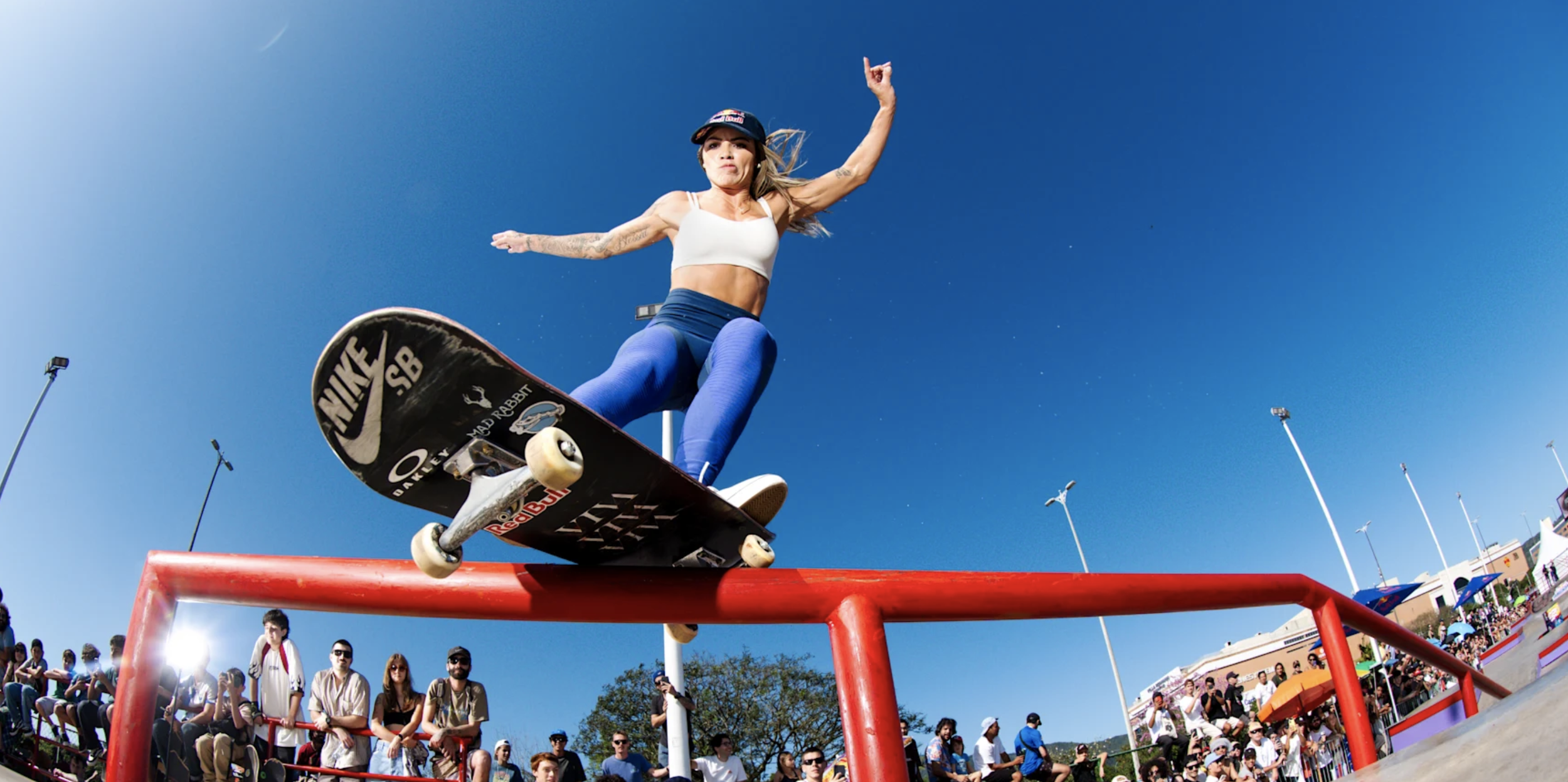
Leticia Bufoni is part of a surge of female professional athletes worldwide joining OnlyFans as creators and sponsored athletes; including Olympic pole vaulter Alysha Newman, ultrarunner Sabrina Stanley, and beach volleyballer Avery Poppinga. OnlyFans appeals as a partner by combining traditional sponsorship with the ability for athletes to independently monetise their fan base in ways other platforms cannot.
While female athletes face substantial pay gaps, this move marks a bold shift to full financial and creative independence. On OnlyFans, women retain complete ownership of their content - whether training clips, recovery routines, or behind-the-scenes moments - free from social media algorithm constraints for a more gratifying fan experience.
Outdated and harmful attitudes towards women’s sexuality and sex work seem to endure. OnlyFans’ shift from an adult content hub to a mainstream creator platform exemplifies this, serving as a reputation cleanse to attract corporate favour and commercial viability. In doing so, it has become less supportive of the sex worker community that originally built it, with even mentioning OnlyFans or OF on social media risking shadow bans. Creators are penalised for popularising a platform that now erases its origins.
OnlyFans’ high-profile sports sponsorships project a progressive image, masking the company’s hypocrisy towards its original creators. By funding elite athletes, it distances itself from the stigma of adult content and seeks cultural legitimacy. Yet, it still depends on the SW community who built its billion-pound empire. Despite attempts to ban explicit content in 2021 and enforcing restrictive policies, OnlyFans profits from adult creators without meaningful support, instead diverting earnings into glossy, safe-for-work advertising and athlete deals, using sports stars to deflect criticism while sidelining those who made it successful.
Public backlash against both NSFW creators and SFW sponsored parties exposes the real issue: moral outrage isn’t about explicit content. If it were, an Olympic athlete like Leticia Bufoni sharing training clips on OnlyFans wouldn’t face the criticism or prejudice just for sporting an OnlyFans watermark. Even if it’s as little as a silent side eye, there is still a tone and a judgement towards those associated with the platform. It’s clear that society’s real fear isn’t women’s exposure but the dismantling of a system where women no longer need men’s approval to succeed.