Millennial Skating
By Lesley Hall
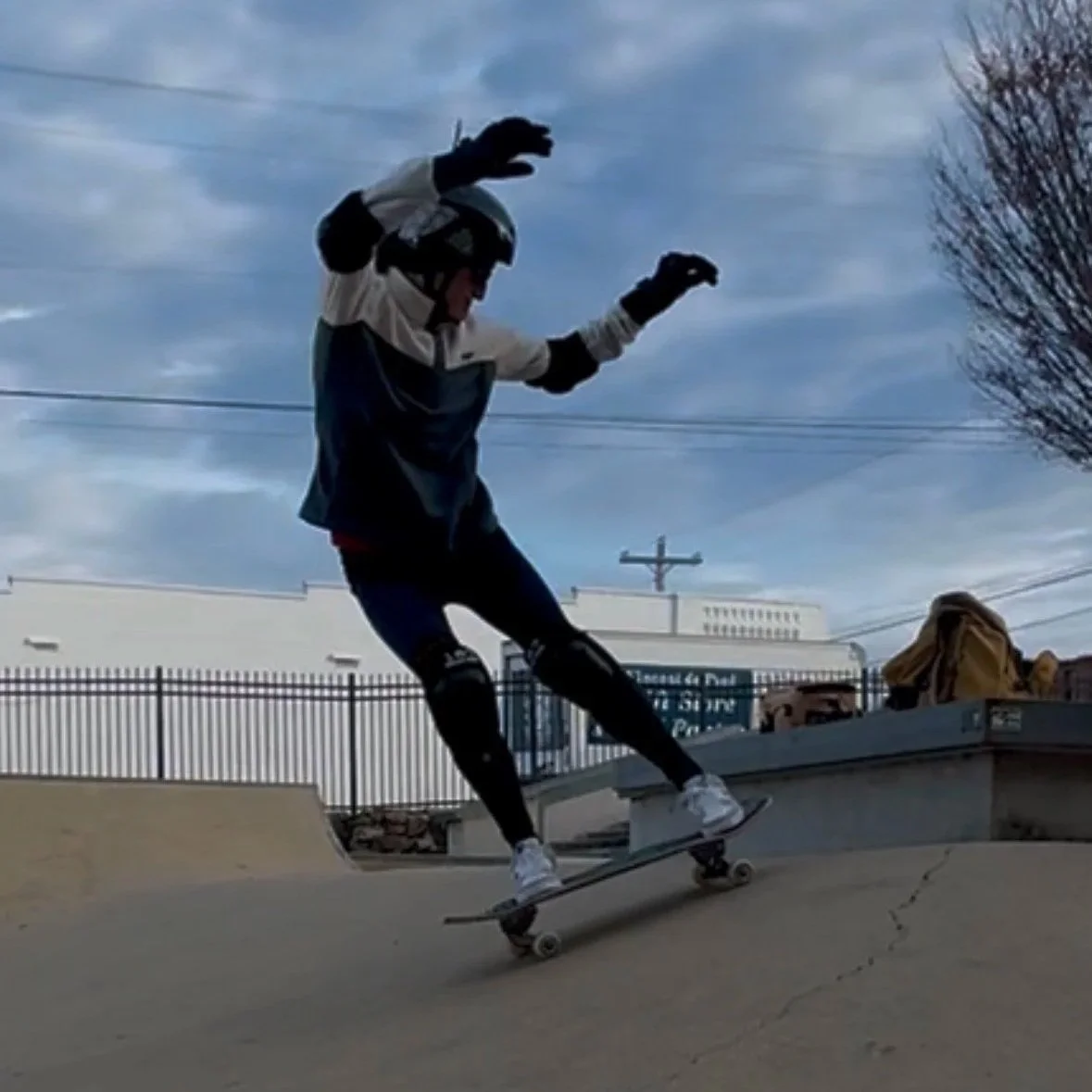
At the age of 38, I jumped back on a board after an eight-year hiatus. Growing up in the 90s, I skateboarded the streets of my hometown. During college, I longboarded, bombing hills. At 38, I took to surfskateboarding. I was unaware such a board sport existed; I stumbled upon the concept while perusing YouTube for longboarding videos.
I took my first series of spills at 38. The first slam I took on a surfskate happened quickly, much more quickly than I remembered. I rounded a sidewalk corner, carving deep, knees bent, reveling in the natural lean of the surfskate trucks. The wheels were 78a durometer, much softer than I was used to. I’d become accustomed to rolling over sticks, rocks, and sidewalk cracks with ease—an impossible feat on a skateboard. As I rounded that sidewalk corner, my front right wheel grabbed a chunk of grass and I flew forward. The concrete welcomed me like a long-lost lover. I fell hard on my hip and right arm, feet in an awkward yoga pose above my head.
I remained still on the concrete for a second, detailing its worn, granulated surface. Then I sat up, and immediately the thoughts rushed through my addled, millennial brain: how badly am I hurt? I am 38 years old; this has got to be worse, right?
Wrong. I climbed to my feet, reveling in the notion that the slam did hurt, but didn’t hurt any worse than the time my 15-year-old self ollied a short flight of stairs and flopped forward off my board. Sure, the concrete didn’t get any softer with age, but it didn’t get harder, either.
That inevitable slam boosted my confidence and disabused my misperception of myself as a millennial. Sure, the slam sucked, but it didn’t suck badly enough that I thought I should hang up my surfskate for a set of knitting needles. If anything, it vivified the idea that age meant little when it came to pursuing my passion.
We millennials are a resilient bunch. Raised by baby boomers, we latched onto their ideals until we reached an age where we started to concoct our own (much to their chagrin). We abstained from becoming pregnant at eighteen; we held off on purchasing the house with the white picket fence until we were old enough to run out of other ideas. Many of us attended college, found ways to backpack across Europe with a few dollars and a rucksack. We perfected the art of partying until the squinty morning hours, taking a shot of espresso and a quick rinse, then heading to work or class (that may have been a bit of our baby boomer upbringing resonating with us). If we skateboarded in the 90s, we became invested in the anti-establishment rhetoric of skating, and we have the scars to prove it. I have at least twenty scars on my legs, and each possesses a story of some memorable skateboarding trick.
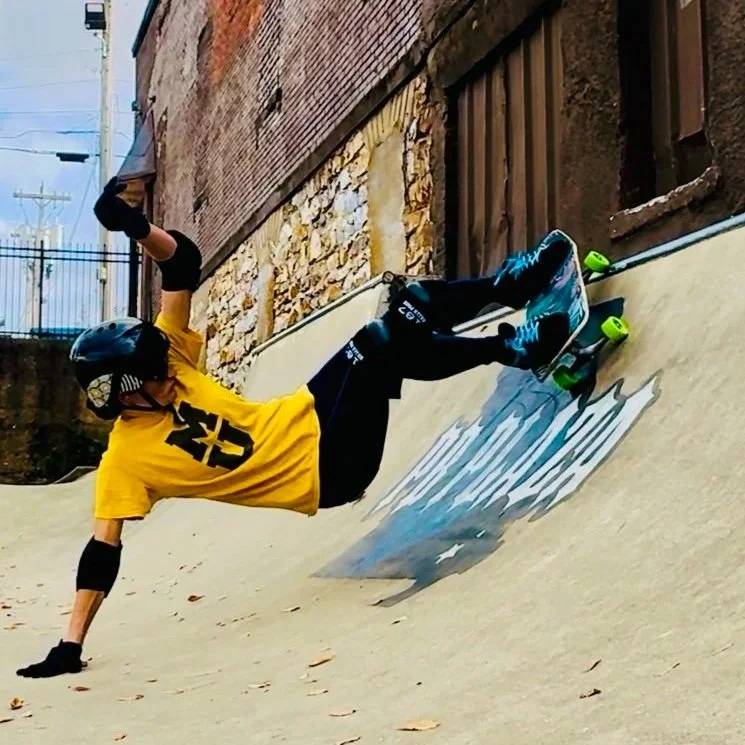
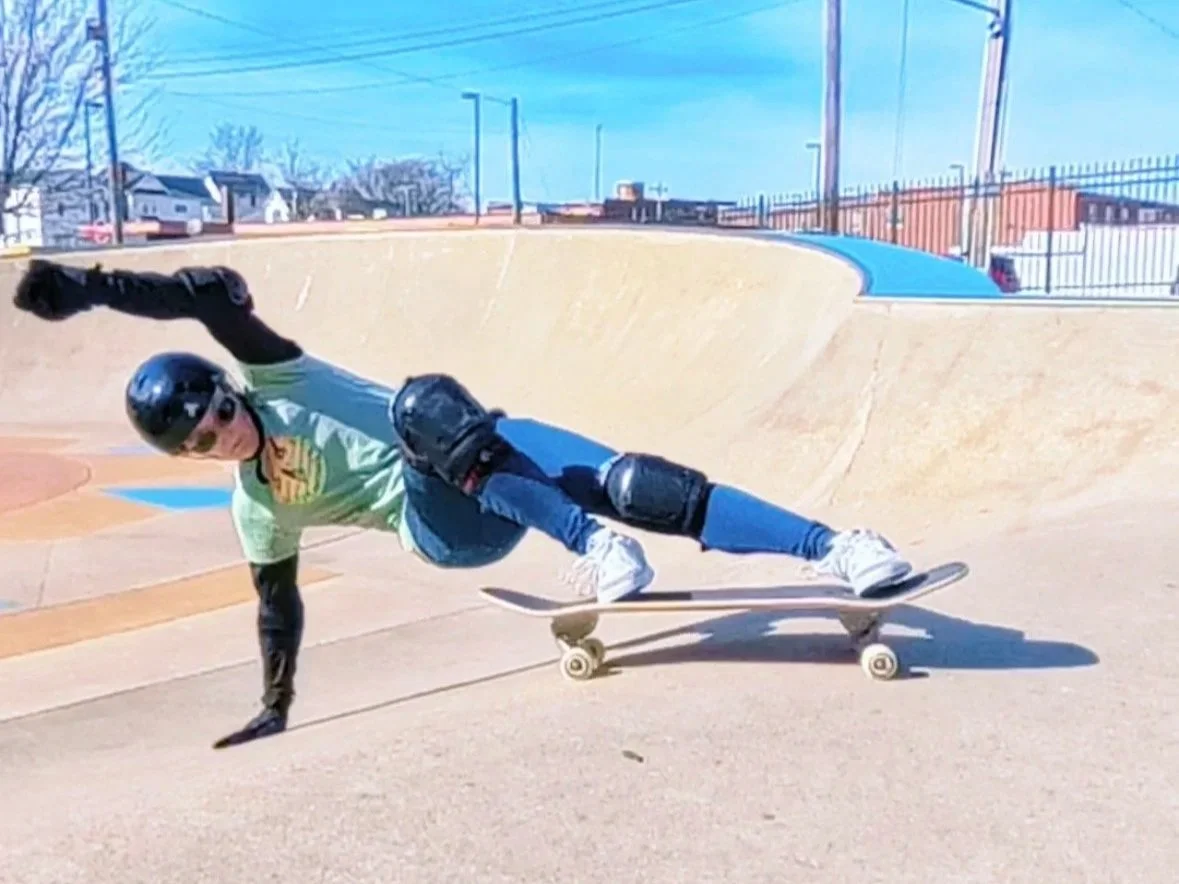
I surfskate now; I have become obsessed with learning snaps, slides, and grinds on an oversized deck and wiggly front trucks. I didn’t opt for surfskating because it was gentler on the body (although I must say it is, because the days of throwing myself down a flight of stairs are over), but because it gives my millennial brain that hit of dopamine that I used to crave during my late nights taking Jägermeister shots while Timbaland thundered in my ears. The rush of carving a bowl, catching the vertical top of the ramp, and finishing with an extended frontside bertslide is inimitable. And yes, all the while Timbaland is thundering in my ears.
We millennials are also the pioneering generation of self-education. We fully appreciate the value of online research because we were growing up just as the internet was growing up; we know that we can research a desired trick and settle on peer-reviewed tutorials. We can disregard some advice and capitalize on others. Gone are the days of changing geographic locations in order to develop our craft. When I sought to learn the frontside bertslide, I took to YouTube and watched a dozen tutorials. And I appreciated the opportunity because I skated in a world without such accessible information.
Armed with self-education, a surfskate, a helmet, and pads (another gem the years have taught me to appreciate), I set out for the skatepark with a newfound sense of excitement. Age isn’t relevant in the skatepark; the only relevant ideal is what you want and how hard you must push to get there. The slams keep coming, but so does the incredible thrill of unlocking a trick I’ve only seen online. I crave it, I have to have it, and I am going to find a way to obtain it—and that’s millennial resilience at its best.