Ode to Dodge
By Sophia Saunders
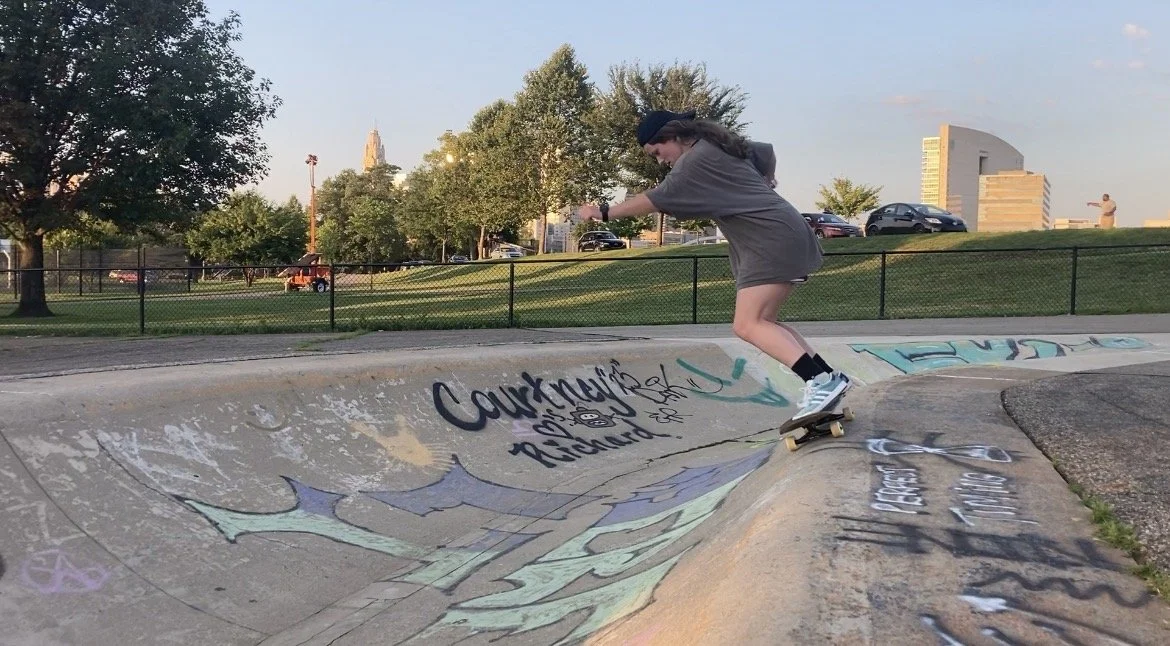
When you have lived in the same town your whole life, it’s easy to deem certain parts as valuable and others as– for a lack of a better term–complete trash. That’s how I felt about my hometown of Columbus, Ohio, for a very long time. I knew the city like the back of my hand; I knew which areas to steer away from and which ones were “worth” my time.
That is, until I started skating.
I began skating at the ripe age of 25, one of those pandemic hobbies I’m sure many people in my life thought would die off. But it had been a dream of mine since I was a kid so when my friends offered to teach me, I jumped at the chance.
One day not too long after I first started, these same friends came by to pick me up for a session. I had just graduated from the trail near my apartment to an actual skate park, so they wanted to take me to one of their favorite spots.
After driving on a series of roads I, for once, wasn’t familiar with, we rolled up to this crusty park located at the top of a hill near the highway. It was situated in a neighborhood called Franklinton, a small neighborhood in Columbus that hadn’t had a lot of love over the past decade or so. All you could hear were semi-trucks honking their horns, and all you could see were random kids running up and down the skatepark like a playground.
Dodge Skatepark was built in 1990 by none other than Tony Hawk’s father, Frank Hawk. It was the first public skatepark in my city, and it definitely had its heyday. If you do any research on it, you can see how lively it was when it was first built; skaters were all over that place, ripping and partying as you might expect.
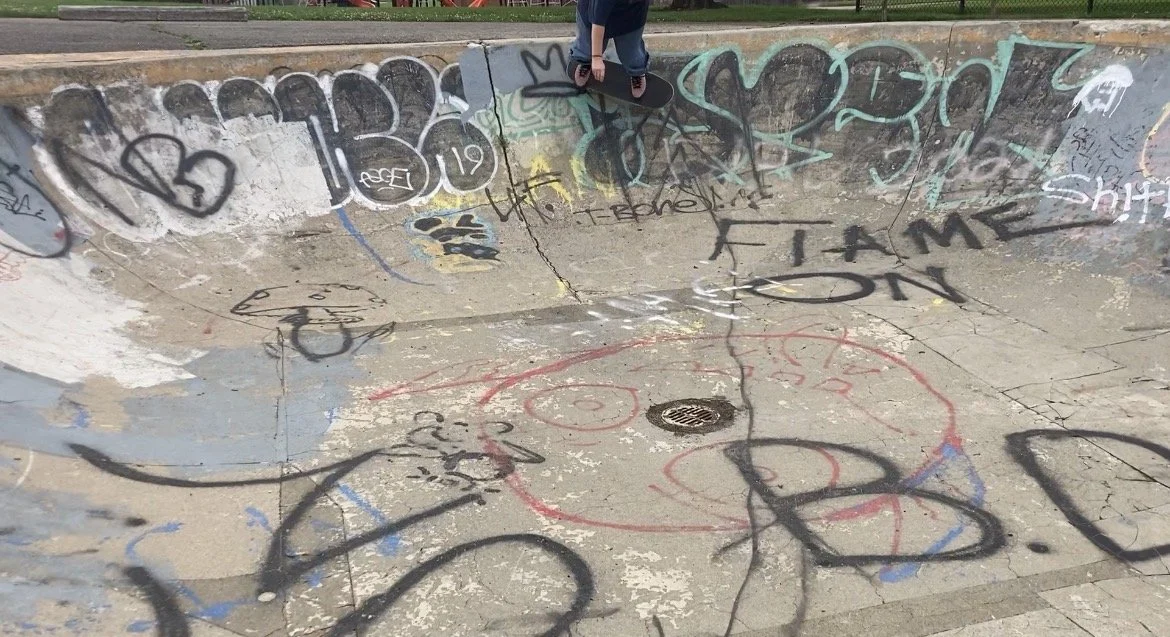
Fast forward to 2022, and it would be easy to say it was a shell of what it once was. At that point, Columbus had over half a dozen skateparks to choose from and most of them were kept in vastly better condition. If you would run into a skater and suggest going to Dodge, most would warmly reflect on its past life but also comment on how crusty it had become. It was still fun, no doubt, but not their first pick for a session.
But that wasn’t every skater, and my friends were included in that. They loved Dodge for what it was– a neglected spot that was full of opportunity for a fun skate day if you were willing to get past its appearance.
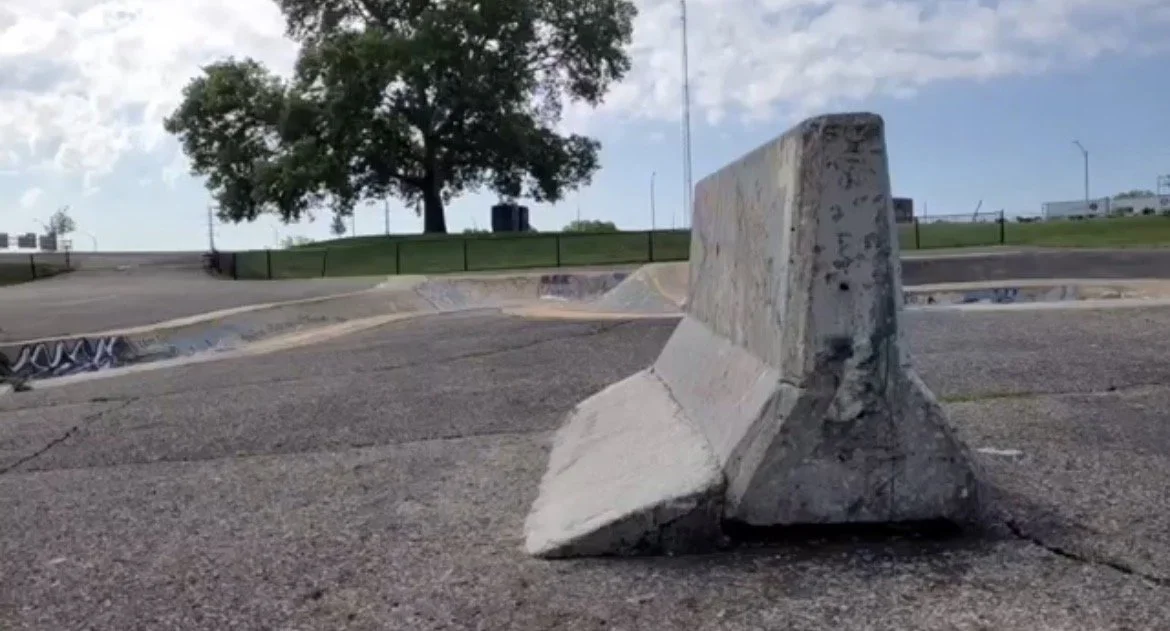
The park consisted of a snake bowl with a mid size bowl in the center and a larger one at the end. It also was the home of a chunky curb, located at the bottom of the hill. But I really can’t neglect to mention the barrier because we loved that thing HARD. It was the only barrier in Columbus besides one much farther up North, and we treated it like the precious resource it was.
Both the concrete surrounding the bowl and the concrete of the bowl had seen way better days. There were enormous cracks right where you didn’t want them, and there was about a 50/50 chance of your wheels getting caught where a piece of concrete broke off who knows how long ago. Even when you thought you knew what to look out for on your run, it was like playing a game of Russian roulette every time.
A couple of years ago, a team put a great deal of time and energy into re-doing Dodge, and I am so grateful for that. The park is now way more accessible than it was, and I hope it’s the first pick for anyone learning to skate in Columbus.
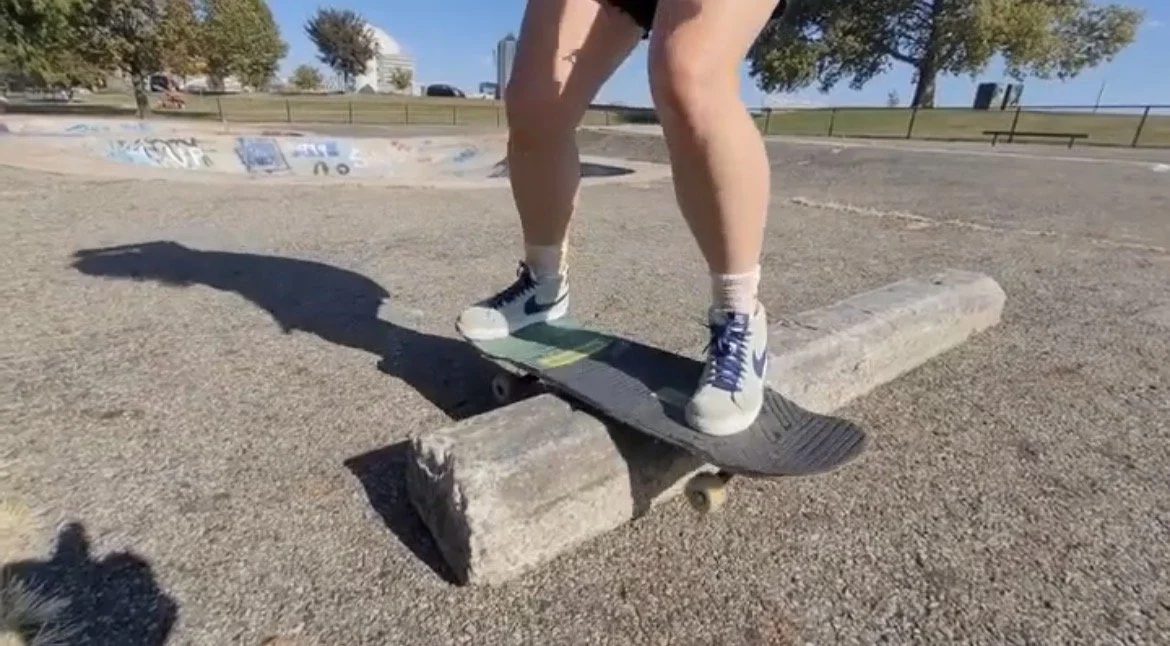
But when I look back on my early days of skating, I think about the hours upon hours I spent at the park before it became what it is today. It taught me grit and tenacity while also forcing me to break out of the mindset that the environment has to be perfect for me to skate it. I learned how to form countless runs, dodge cracks, and keep an eye out for pebbles that would spell my inevitable doom. I was forced to get creative and think outside of the box in a way I just know a brand new skate park wouldn’t have done for me.
Dodge as an entity is reflective of the skate culture as a whole. Throughout my few years of skating, I have fallen in love with how skaters give old, neglected places new purpose and meaning. While some may have seen Dodge as a dilapidated sinkhole, skaters like my friends continuously turned it into hours of community and catharsis.
Whether it’s a drainage ditch or janky curb, skaters’ resourcefulness and unassuming nature has forced me to see that I don’t know my city as well as I thought I did– and I mean that in the best way possible.
In crust, we trust.