Quad Skates at the Skatepark: Everything Beginners Need to Know
By Louisa
The popularity of rollerskates in skateparks continues to rise and obviously, we love to see it. Whether you’re a seasoned skater or new to the game, taking to the skatepark can be a whole new game to play - but may seem a little daunting at first, especially if you’re the only one on eight wheels. But we can tell you now, a skatepark is usually a super friendly place, no matter how many wheels you work.
It’s of course perfectly normal to feel a wave of intimidation when you roll up and see only skateboards, scooters and BMXs flying around. At first you might feel like you’re "in the way" or that your skates aren't "meant" for the concrete, but the truth is that the park community is generally incredibly welcoming. Everyone at the park was a beginner at some point, and once you take that first roll down a transition, you’ll realise that you have just as much right to be in the space as anyone else. We wrote this guide to help you bridge that gap from the rink to the bowl with confidence.
Gearing Up for the Concrete
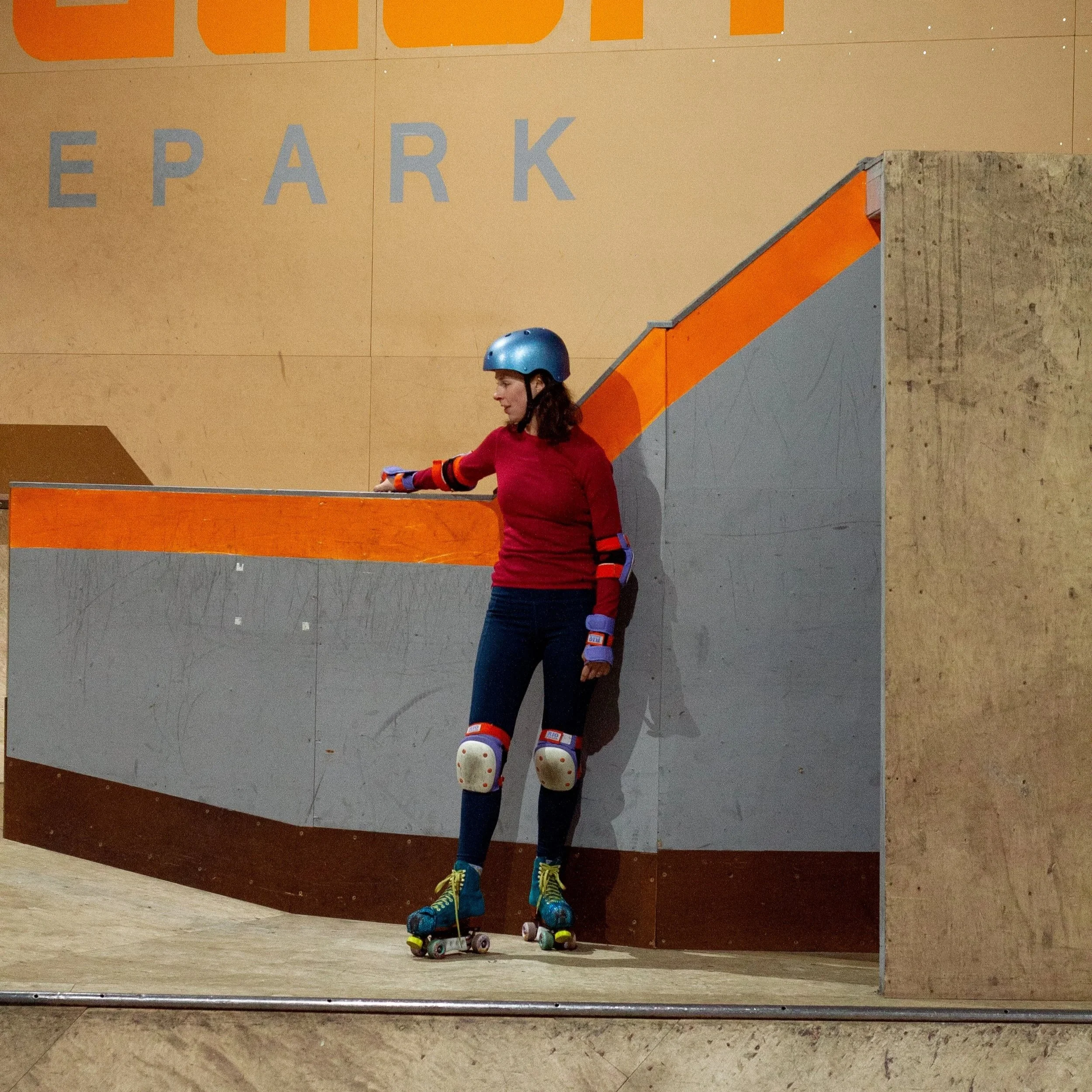
Before you even look at a ramp, you need to think about your skate armour. In park skating, falling is a skill all of its own, and having the right pads is what gives you the mental confidence to try new things. A multi-impact helmet is always an absolute priority, but for quads especially, your knee pads are your best friends. When skateboarders bail, they can jump off their boards, when you bail on quads you’re looking for the safest way to land not-on-your-feet. Vert-style pads are the best call with thick foam and hard caps; this is because the most common bail on rollerskates to drop to your knees and slide out a fall, and these pads will be your trusty partner in crime. Pair these with a sturdy pair of wrist guards, maybe derby style, and elbow pads to ensure that a minor slip doesn't end your session early. This layer of protection is what makes the concrete feel a lot less scary.
Choosing Your Hardware Wisely
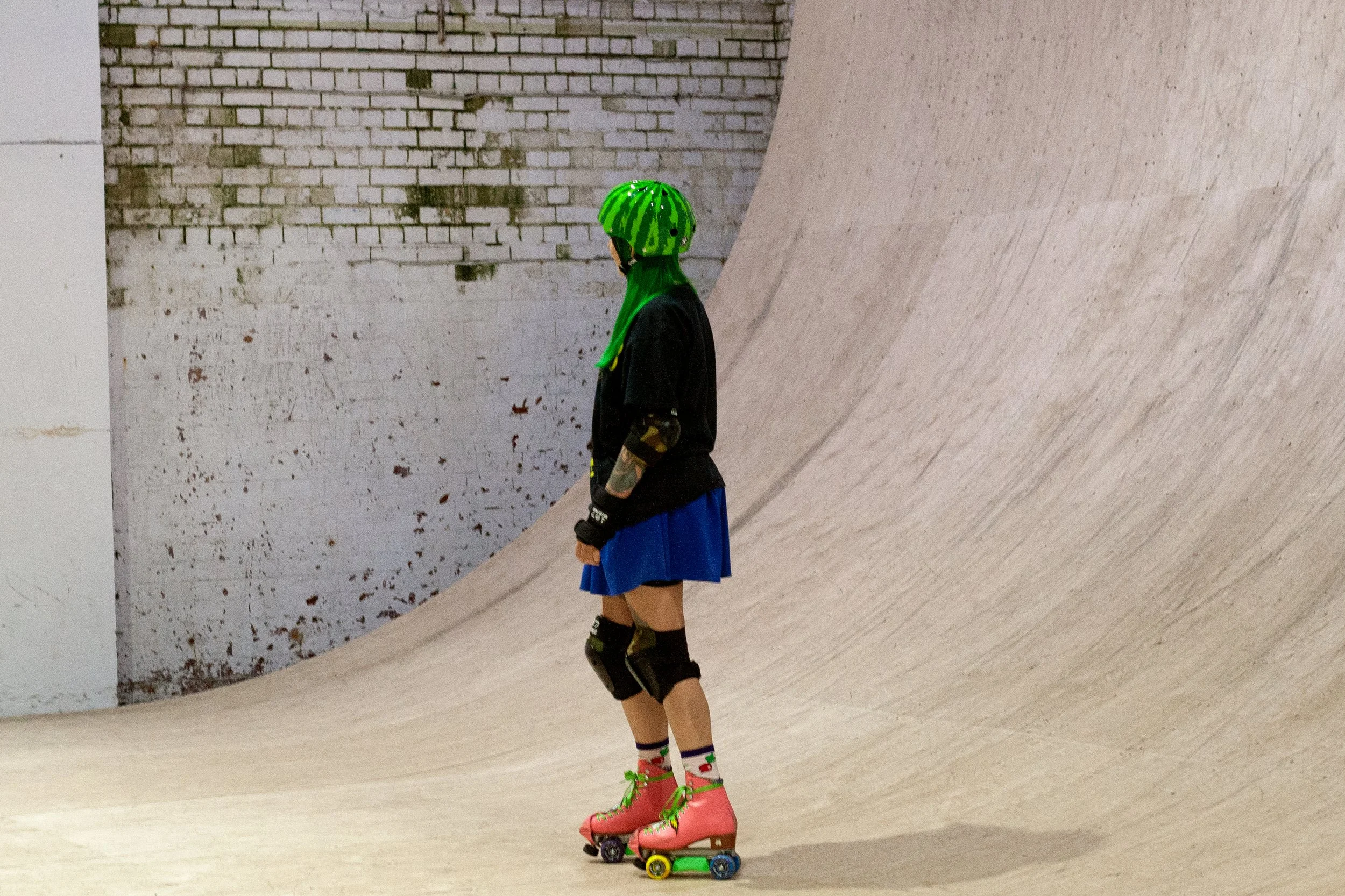
Not all quad skates are built for the heavy impact of a skatepark, so it’s worth checking your kit is park-appropriate. One of the most beneficial features for a beginner is an adjustable toe stop. Being able to tweak the height of your stopper means you can set it high enough to stay out of the way while you’re carving, but low enough to use for toe stop stalls or when running up into a steep transition. Beneath the boot, the plate is the backbone of your skate. While nylon plates are fine for the rink, the g-forces of a bowl can put them under immense stress. A tough plate made of aluminium or other high-grade reinforced materials provide the rigidity needed to feel stable when picking up speed on the ramps.
Nailing the Fundamentals First
Whether you’re finding the prospect of dropping in daunting or super tempting, we strongly advise keeping your focus on mastering the basics on flat ground first. The skatepark acts as an amplifier—any small wobble in your balance will be magnified once you’re on a slope. Before you hit the transitions, make sure you’re a confident skater who can move forwards with power, transition to skating backwards smoothly, and are able to use reliable stopping methods like the plough or T-stop. Being park-ready means having a solid relationship with your skates so that when it comes to navigating a busy park, you can focus on the obstacles on hand rather than your feet.
The Art of the Safe Fall
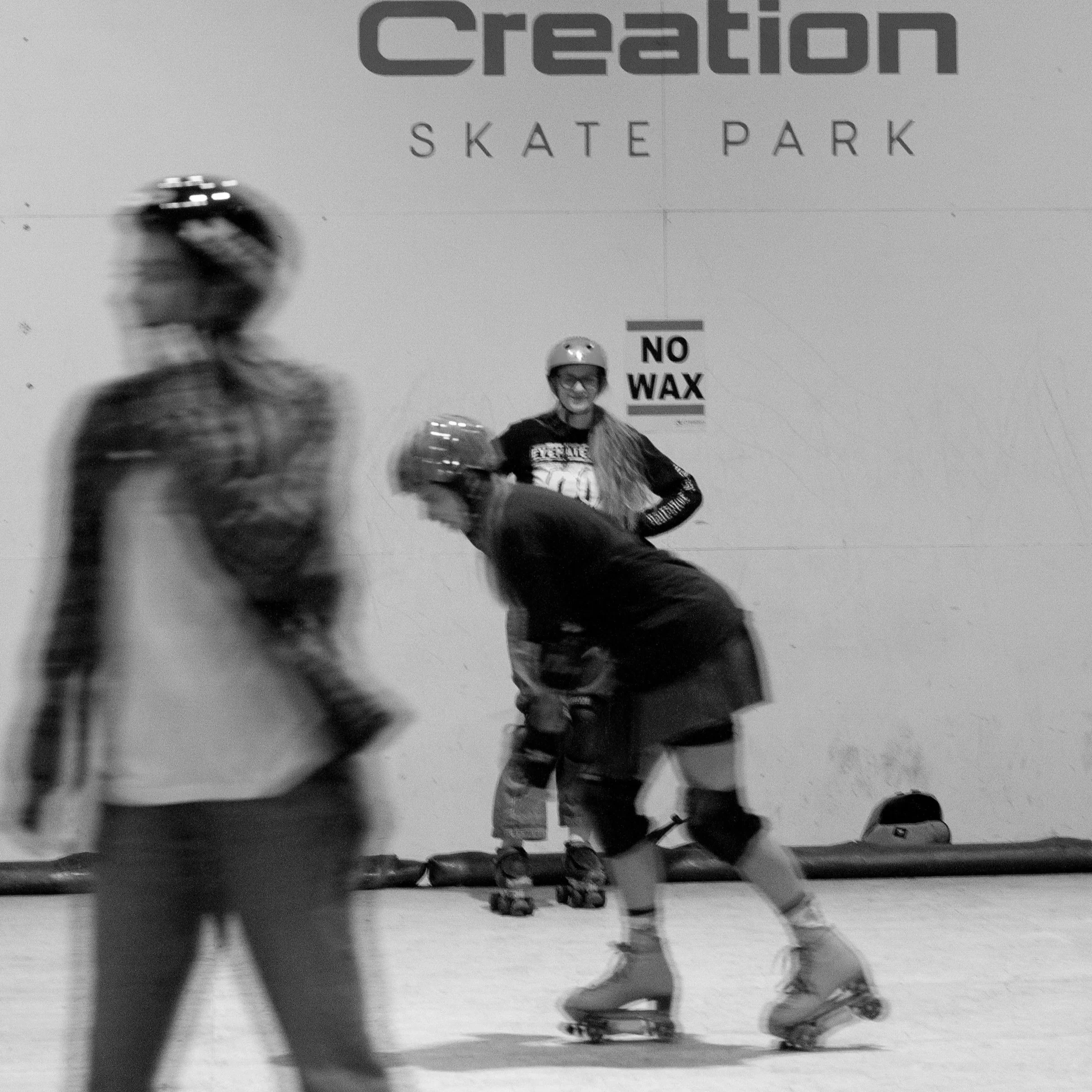
When you’re the only rollerskater in a park full of boards, you might feel the pressure to look perfect, but the pros are usually the ones who know how to fall the best. Learning how to bail safely is essential for your confidence. Instead of fighting a fall and risking a jerky injury, you want to learn to fall small. This usually involves dropping to your knees and using those thick pads to slide out the momentum. Practising these slides on a small flat bank is a great way to take the fear out of falling; once you know your gear will protect you, the park becomes a much more inviting playground.
Finding Your Flow: Basic Park Skills
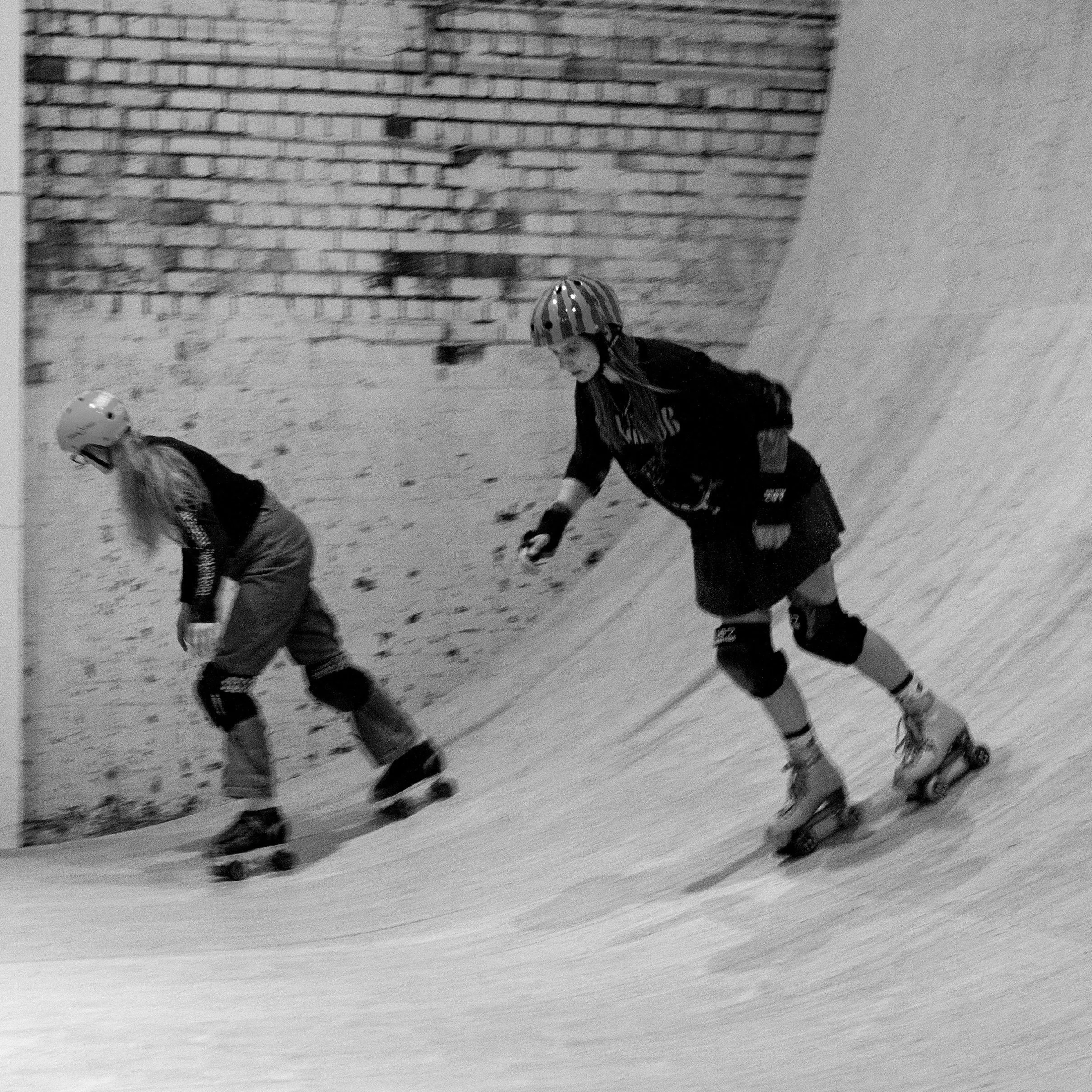
So you’re at the skatepark, and maybe you’ve found a quiet corner where you feel ready to start working on the skills that make park skating so unique. Starting with a staggered stance and dropped knees is the real first step - with lowered knees, you keep one foot slightly in front of the other to create a long, stable base that stops you from tipping over as the ground changes angle. From there, you can move on to pumping the ramps, which involves using your knees to push into the curves to gain speed, then naturally transition into carving where you skate in wide arcs along the walls of a bowl. You’ll also need to get used to the sensation of rolling backwards down a ramp; it defo feels strange at first, but the more natural this starts to feel, fluidity in your movements will follow.
Navigating the Space and Etiquette
The unwritten rules of the park are there to keep everyone safe, and understanding them will help you feel less like a visitor, and more like a local. The most important rule is to avoid snaking, which really just involves waiting your turn and not cutting across someone else's line. Take a moment to watch the flow of the park. Make note and pay attention to where people start and end their runs. Always look both ways before you roll into a bowl, and try not to sit on the deck at the top of the ramp as this is where people take off. If you’re mindful of others and give it a go, you’ll find that the park is a supportive space where skaters of all disciplines cheer each other on.