The First Fall
By Yuka Anziano
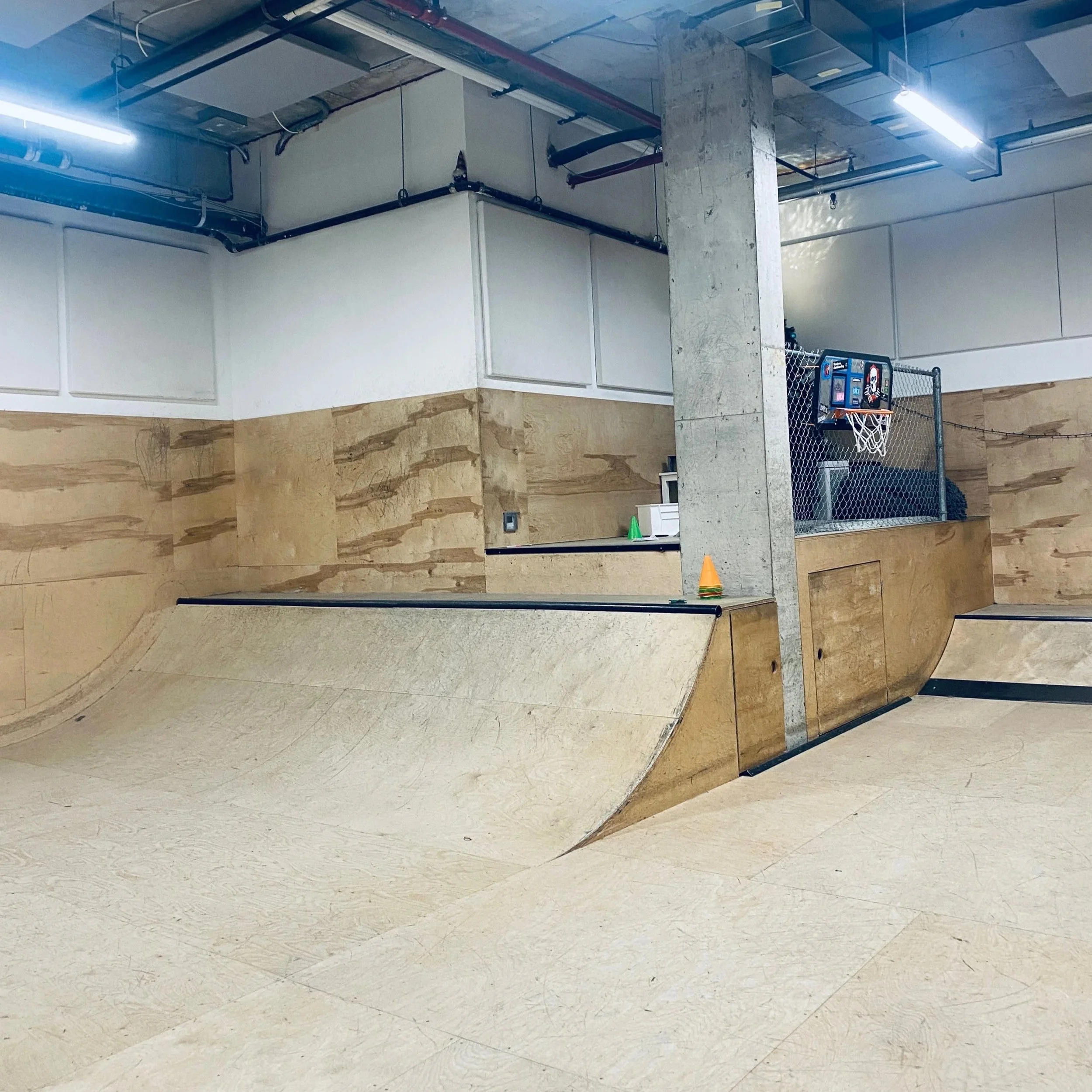
The first fall is not cinematic. There is no slow motion, no graceful roll, no lesson revealed before impact. There is just the sound, hipbone and flesh meeting ground, and the sudden realization that the ground answers back. My first fall happened at my first skate class. But it didn’t begin there.
Before I ever signed up, before I stood on concrete under fluorescent lights, I took the skateboard that had been gifted to me down into my basement. It was dark and filled with ladders, scraps of metal and discarded things nobody wanted anymore. I pushed slowly, tentatively, holding a wall, a refrigerator, and trashcan for balance, rolling a few feet at a time.
There was no audience then. No instructor. No younger skaters watching. Just me, the board, and the quiet hope that I could figure this out without being seen. I practiced in fragments, push, roll, stop, listening to the echo of wheels in a space meant for storage, not courage.
That basement was a kind of rehearsal. A private negotiation with fear and excitement. The class was different.
One moment I was upright, wobbling with cautious optimism. The next, I was on the floor, hip throbbing, pride evaporating all on contact. I remember someone asking are you ok, before politely looking away. I stood up too fast, laughed too quickly, and said I was fine when my body very clearly disagreed.
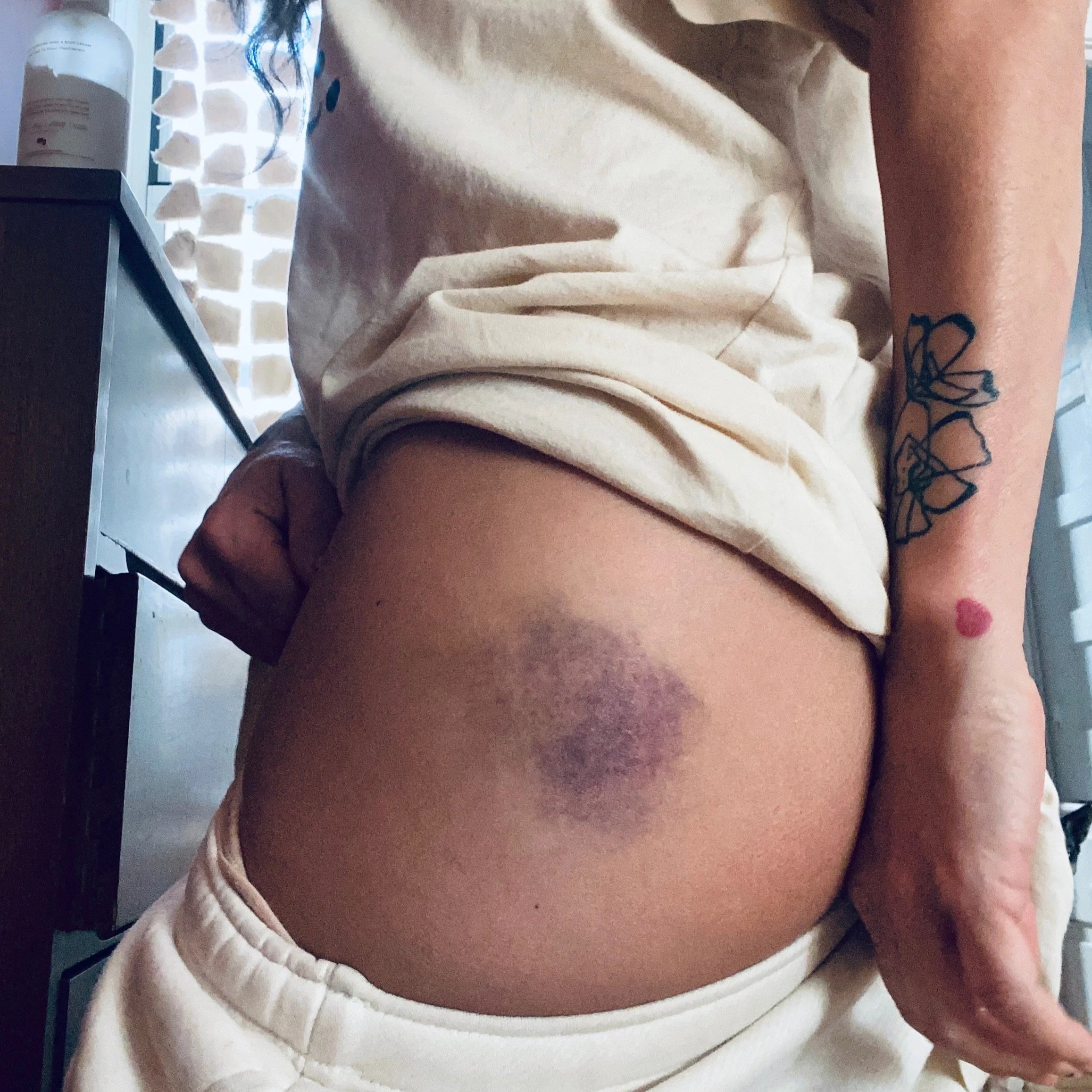
For the next eight weeks, my hip wore the memory of that moment in shades of purple, yellow, green. My ego carried it even longer, and as I rub my very sore hip even now I wonder, am I too old to skate.
Skateboarding has a mythology of youth, speed, risk, fearlessness, young bodies that bounce instead of break. Walking into that space as an older beginner, I felt it immediately. I was the oldest person in the class by a wide margin. The others seemed less afraid to fall or maybe they were just less aware of the cost of falling.
That first fall wasn’t just physical. It was cultural. There’s a quiet message that settles around older women as we move through the world, especially in athletic spaces. It says: You should already know what you’re doing. Or worse: You shouldn’t be doing this anymore. Risk is framed as irresponsible. Beginnerhood is framed as embarrassing. Falling publicly cracks all of that open and to be honest, I have fallen down a lot lately.
There is nowhere to hide when you fall in front of strangers. Your body announces itself in this big way. You are suddenly very visible
And yet. There was something unexpectedly freeing although painful in that moment, too. The fall stripped away the illusion that I could ease into this quietly. I had already tried that in the basement, gripping the walls. Stepping onto the board in public meant accepting that learning would be seen. That fear would be visible and the beginning would be messy.
But fear, I’ve learned, is not the opposite of joy. Joy lives in the attempt. In the choice to begin something knowing you will be bad at it. In the small victories invisible to anyone else sometimes made in a dark basement.
The bruise eventually faded. The memory didn’t. It lives in my hip when I shift my weight too fast. It lives in my hesitation at each skate class. It also lives in my resolve to keep showing up anyway and I am now in my second class.
This is not a story about becoming good at skateboarding. It’s about beginning something visibly, imperfectly, and later than expected. It’s about allowing yourself to be a beginner. It’s about refusing the idea that joy has an expiration date.
The first fall is not a failure. It’s an introduction to four wheels on the ground. To your fear.
To yourself. And sometimes, that’s more than enough reason to get back on the board.