The Social Skate Summit: Community, Courage, and Rolling Forward Together
By Samantha Bache
I'll be honest… I almost started the day on the back foot. Travelling down from Birmingham morning of meant I missed the meet and greet, and I won't pretend that didn't sting a little. But the moment I crossed the bridge from the train station and looked down to see City Mill Skatepark sitting there below me, boards already rolling, any FOMO melted away instantly. Sometimes a view just tells you you're exactly where you need to be.
There's something electric about being in a room full of people who just get it — who understand that skateboarding is so much more than tricks and concrete. This past weekend, that feeling was everywhere at the Social Skate Summit in East London, held at UCL East Campus.
Skaters, organisers, coaches, artists, and advocates flew in from across the globe — from Mexico to Morocco, the Philippines to India, Ghana to the UK, all gathering with one shared purpose: to talk honestly about how we build something bigger than ourselves through skateboarding. And honestly? It delivered.
"Leave No Skater Behind" — Building Spaces Where Everyone Belongs
I found a seat next to Lynsay from @ftgu.project — a social skate project pushing for care, community and change. I'd briefly crossed paths with them at Connect Festival in Bordeaux, so it was a lovely bit of serendipity to end up sitting together here. The kind of small world moment that reminds you this community, as global as it is, keeps finding ways to pull itself closer.
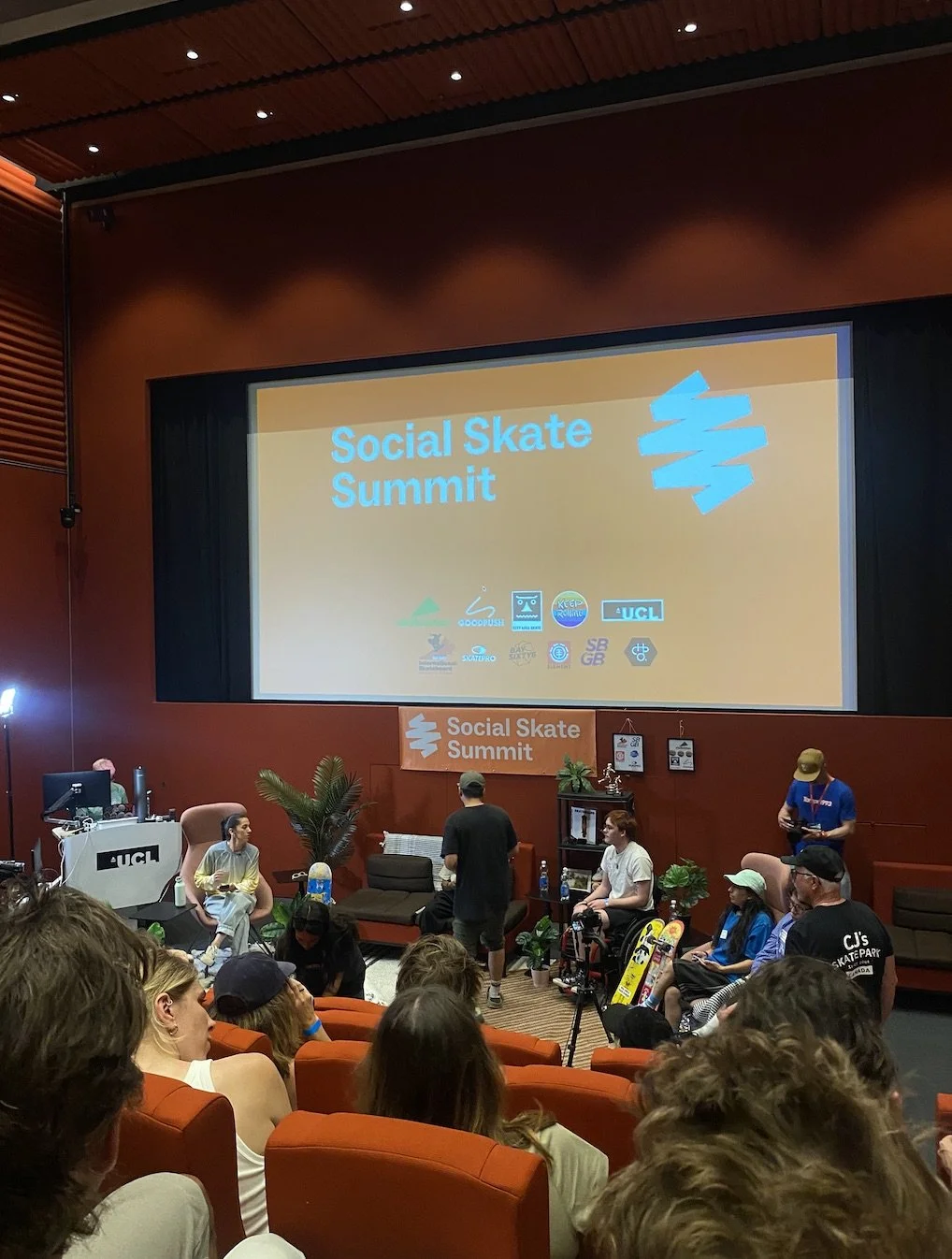
The first panel set the tone for the whole day. Hosted by Yusra Alageli (Co-Director of Skate Parlour Leicester and Mama Skates CIC), the conversation tackled one of the most important questions in our community right now: what does it actually take to create skate spaces where people feel welcome, safe, and able to show up?
The panellists brought perspectives that were as diverse as the communities they represent:
Daryl Dominguez — pro skater for Nike SB and Co-Founder of Push Philippines and Skate Nepal — His work across South and Southeast Asia is proof that community-led skating can change lives when it's done with care and intention.
Griffin Given, WCMX rider and Director of Transkaters, brought a perspective that's still too rarely centred in these conversations: disability and adaptive skating. Transkaters is doing vital work to ensure that skate spaces — both physical and cultural, don't leave riders like Griffin behind. His presence on that panel mattered.
From Mexico, Veronica Zamudio (Co-Founder and Skate Coach for Ucanskate) shared how her project has grown into a beacon for girls and young people who might otherwise never have found their place at a skatepark.
And Houda Ait Lahcen, Founder of Tifrkhin Skate and coach for Concrete Jungle Foundation in Morocco, spoke about pushing skating forward in North Africa — breaking down barriers of culture, gender, and access with every session she runs.
What tied all of their stories together was this: inclusivity isn't an add-on. It's the foundation. It has to be built in from the very beginning — in the way you design a session, the way you communicate, the way you hold space for people who've never felt like the skatepark was for them.
From Passion to Profession — Sustaining the Work We Love
The second panel hit different. Because if the first session was about why, this one was about the messy, beautiful, exhausting reality of how.
Hosted by Tom Critchley (designer, researcher, and academic at Concrete Jungle Foundation and Goldsmiths University), the conversation dug into what it takes to turn grassroots energy into something lasting — without burning out the people who care the most.
Harmonie Bataka, skatepark manager and coach at Surf Ghana, talked about building infrastructure in a scene still writing its own rulebook. The passion is undeniable, the challenges are real, and the community showing up makes every obstacle worth it.
Norma Ibarra, artist, photographer and storyteller from Mexico, brought a reminder that documentation and storytelling are as much a part of community building as any workshop or skate session. Visibility matters. Representation matters. The stories we tell about our community shape who feels like they belong in it.
Anveer Mehta, Founder of Skate Life Goa and Skateable Spaces in India, spoke to the challenge of creating not just skate communities, but skateable spaces — advocating for the physical infrastructure that makes any of this possible.
And Bella Warley from Skateable Spaces Development at SkateboardGB rounded out the conversation with insight into how that advocacy looks at a national level in the UK — building partnerships, securing funding, and pushing for skating to be recognised as the force for good that we all know it is.
The thread running through all of it? Burnout is real, funding is hard, and the work is never done. But the community — this community — keeps turning up anyway.
For this one I'd shuffled seats and ended up next to Sarah from @brighton_girls_skate_club — and honestly, that's a whole feature in itself. South East girlies, consider this your teaser. We're coming for you in a future issue.
The Bits In Between (Often the Best Bits)
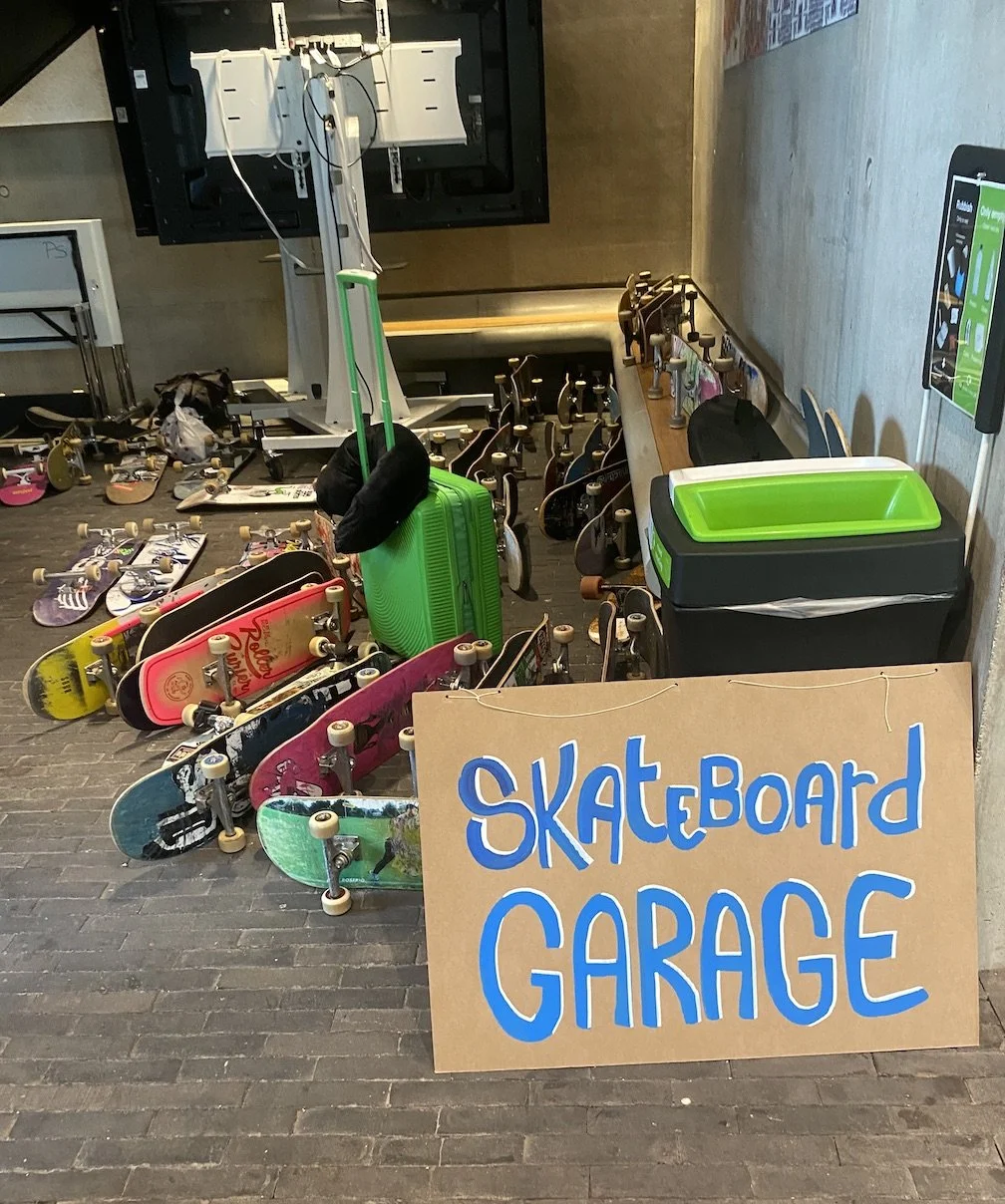
As much as the panels were incredible, some of the most memorable moments of the whole weekend happened in the spaces between them. The hallways, the breaks, the quick chats that somehow turn into the conversations you're still thinking about on the train home.
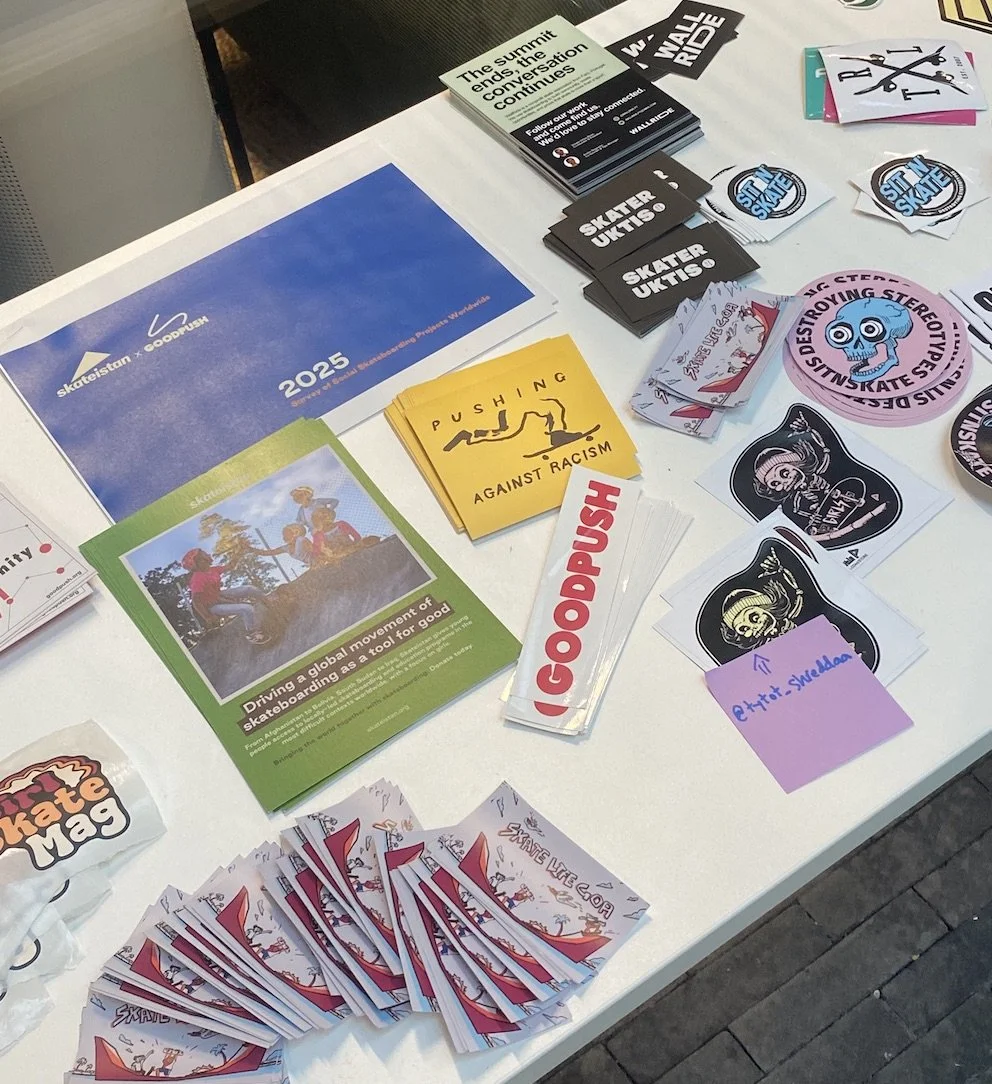
I got to meet so many inspiring people — new faces and familiar ones — and it filled me up in a way I wasn't expecting. One moment that really stuck with me: a lovely lady from London Skate Mums came over to tell me how much my blogs have been resonating with her lately — particularly the one with Yuki. I'll be honest, talking about myself doesn't come naturally to me at all, but hearing that? It genuinely made me smile. More than I let on, probably. It's a reminder of why we put the words out there in the first place.
I also got to catch up with Cora, who I haven't seen since my uni days — four or five years ago now, back when I was just finding my feet on a board. Seeing where we've both landed since then felt like its own little full-circle moment.
And to end the day on an absolutely iconic note — there was a raffle. And I won. A brand new Element beanie, which, if you know me at all, you know I absolutely needed. Hat girly through and through. No notes.
Day Two: Collective Impact — Proving What We Already Know
I could only stay until 12:30 on the second day before having to make the journey back up to Birmingham, but I wasn't about to miss the morning session — and I'm so glad I didn't.
This one felt historic. The Collective Impact panel was billed as the first ever global, in-person gathering to discuss collective impact within the social skateboarding community — and it absolutely lived up to that.
Hosted by Rhianon Bader (Head of Goodpush for Skateistan), the session opened by sharing how the Goodpush Alliance has been collecting and publishing joint data across the social skate world. In 2025, they released a Collective Impact Framework for Social Skateboarding Projects — built with input from 50 skate projects around the globe — identifying three core themes: Skateboarding for Inclusion, Skateboarding for Education, and Skateboarding for Wellbeing. Seeing that laid out in a room full of the people who lived and breathed that data? Genuinely moving.
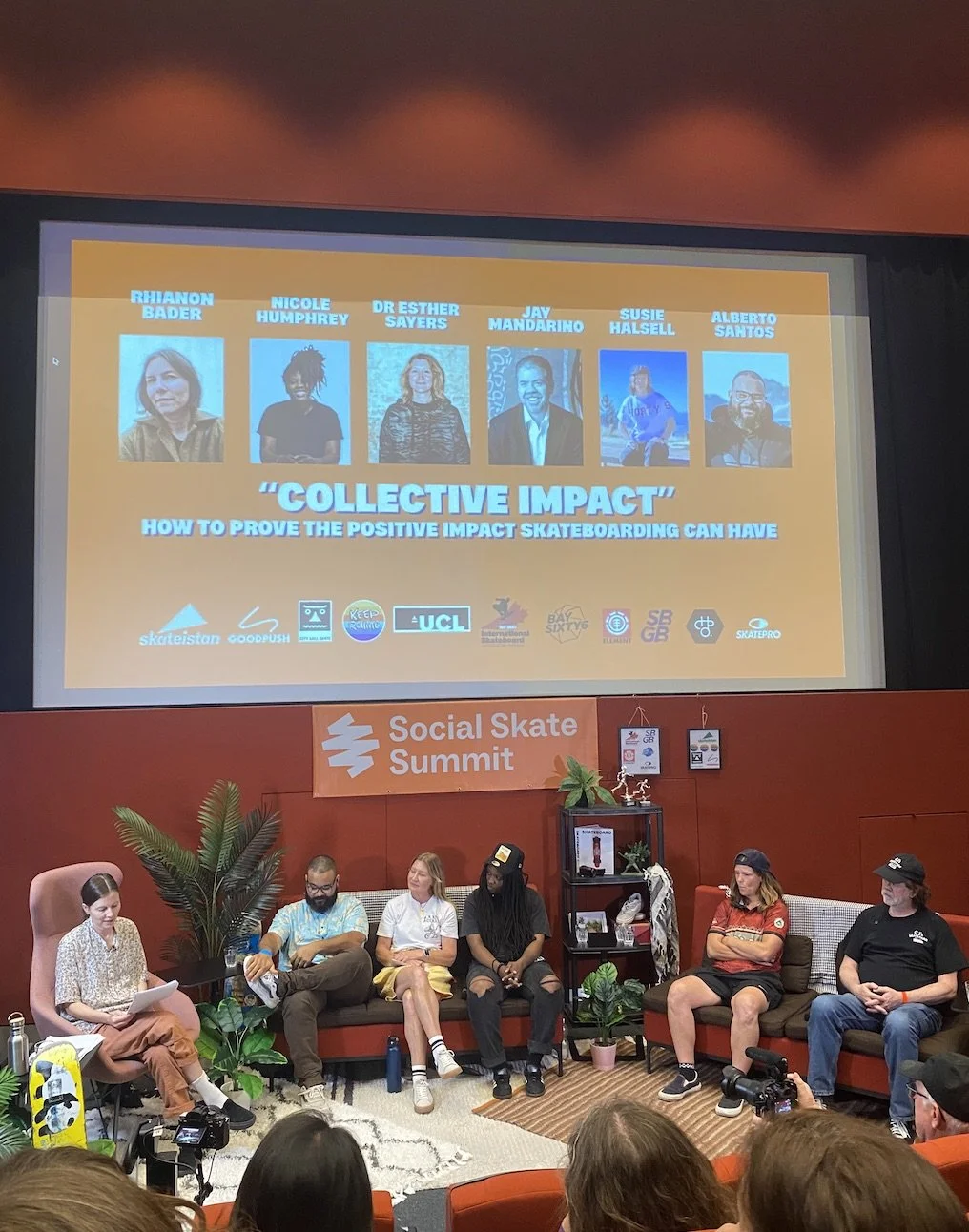
The panellists brought the research to life from every angle:
Nicole Humphreys, Founder and President of Black Girls Shred in the USA, spoke to what inclusion data actually looks like when you centre Black girls and women in the conversation — and why that specificity matters.
Dr Esther Sayers, Head of MA Arts, Lecturer and researcher at the University of London, brought the academic lens — how qualitative research can capture the things numbers alone can't, and why that storytelling is just as vital as any statistic.
Jay Mandarino, Founder of the International Skateboard Certification Program in Canada, talked about standardising how we measure and communicate impact — building a common language for a beautifully chaotic global community.
Susie Halsell, Founder of Bangladesh Street Kids Aid, shared what impact looks like on the ground in one of the most challenging contexts imaginable — and why that work deserves to be part of the global data conversation.
And Alberto Santos, sport psychologist at the Confederação Brasileira de Skateboarding in Brazil, rounded out the panel with insight into the psychological dimensions of skating's impact — the wellbeing piece that often gets overlooked in favour of harder metrics.
I had the pleasure of sitting next to WallRide Skate from Portugal and Harry Meadley from Leeds for this one — Harry being another familiar face from the wider community, which by now felt like a theme of the whole weekend. Every room, another reconnection.
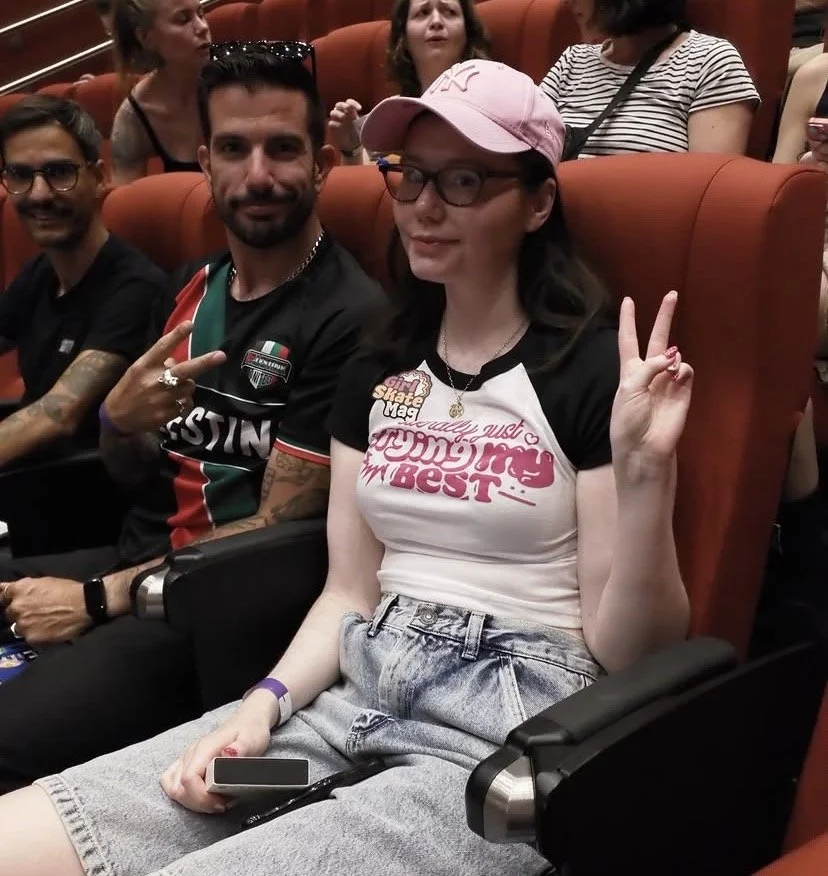
I left before the afternoon wrapped, but I left full — of ideas, of inspiration, and of that particular kind of energy you only get when you're surrounded by people who are genuinely trying to make the world better through skateboarding.
Why You Need to Watch the Livestream
If you missed the weekend, don't sleep on this. All panels were streamed live and are available now on the Keep Rolling YouTube channel. Whether you're running a skate project, thinking about starting one, or just want to feel inspired by the humans out there doing the work — go watch it. Block out a few hours. Take notes. Share it with your crew.
The Social Skate Summit was a reminder that skateboarding, at its best, is an act of community. Every session held for a girl who felt too intimidated to skate alone, every ramp built in a place that didn't have one, every conversation about how we make this culture safer and more welcoming — it all counts.
East London this weekend felt like proof that the movement is growing. And we're all part of it.
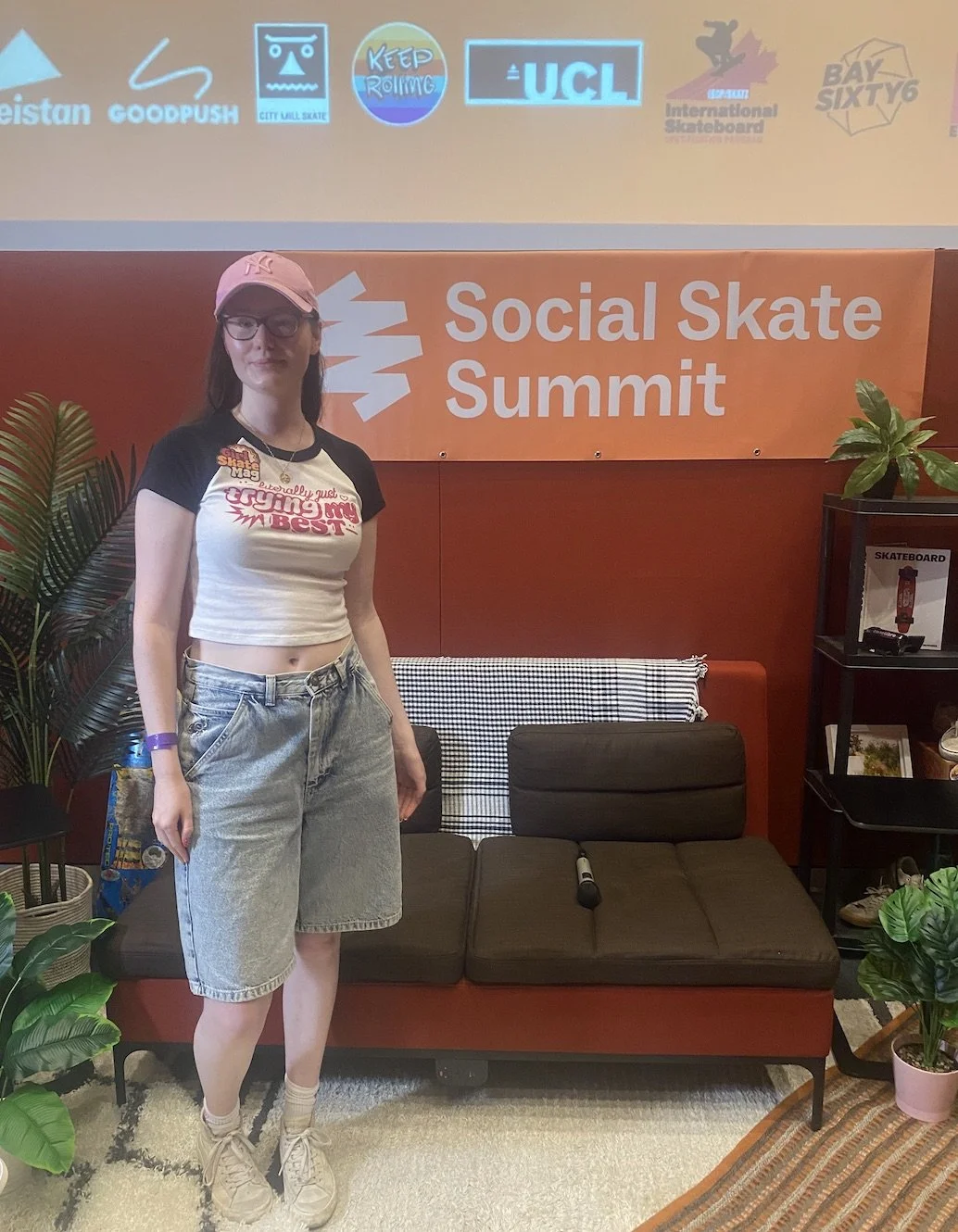
Finally — a huge thank you to Keep Rolling Project, co-founded by the brilliant Aurore and Rachael, two passionate skateboarders who took an idea and turned it into something that brought people together from every corner of the globe. None of this weekend would have existed without them. We see you, and we're grateful.
Watch the full panels on the Keep Rolling YouTube channel.